Original Korean article: kyeongin.com
Competing to take the lead in offshore wind development
30 trillion won in Incheon Bay; competition for new business opportunities
Indiscriminate projects in areas facing fishermen's opposition; need to select viable projects
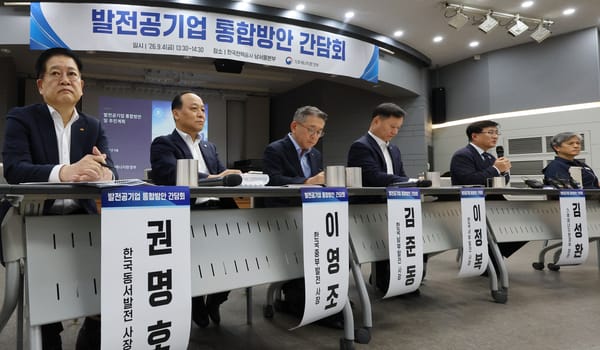
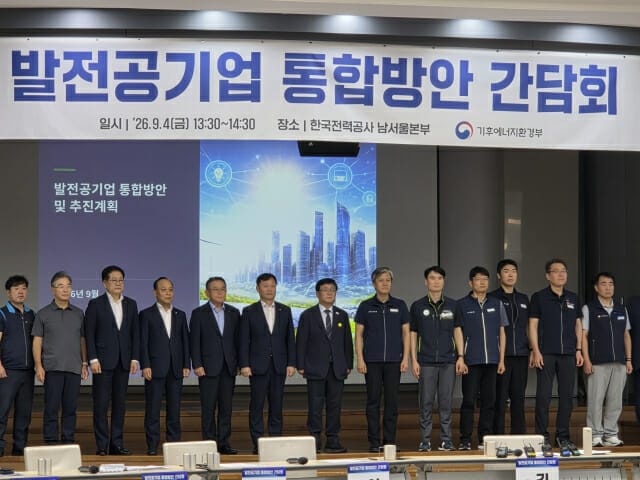
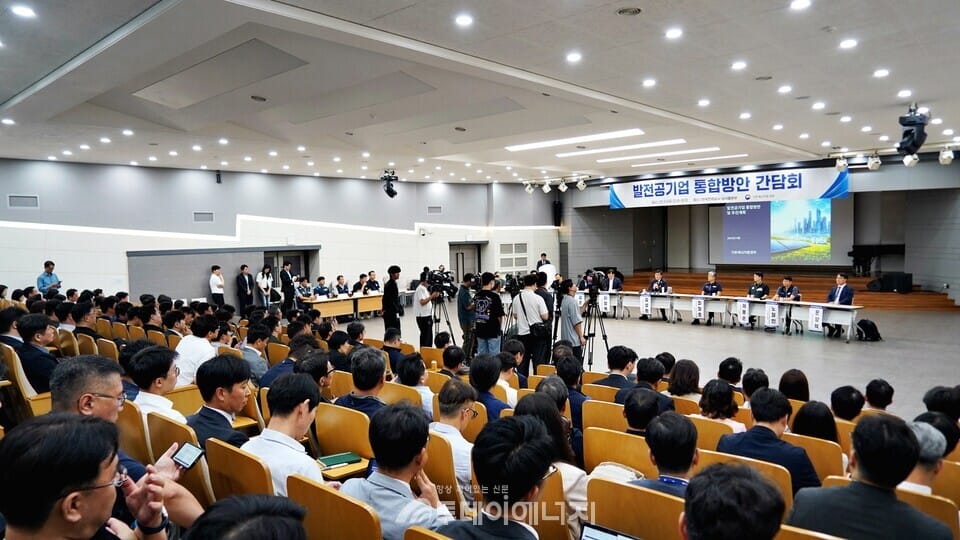
As the government recently announced a plan to integrate five domestic Gencos, adjustments to offshore wind power projects being pushed forward in Incheon waters under the leadership of these Gencos appear inevitable.
The offshore wind business investment that these Gencos have announced for Incheon waters alone amounts to 30 trillion won, and when combined with projects along the South Sea and West Sea coasts, offshore wind projects nationwide are receiving approximately 59 trillion won in investment.
There are calls for the government to use the Genco integration as an opportunity to select viable offshore wind projects, minimize social costs such as fishermen's opposition, and improve financial efficiency of the Gencos through business cost reductions resulting from integration.
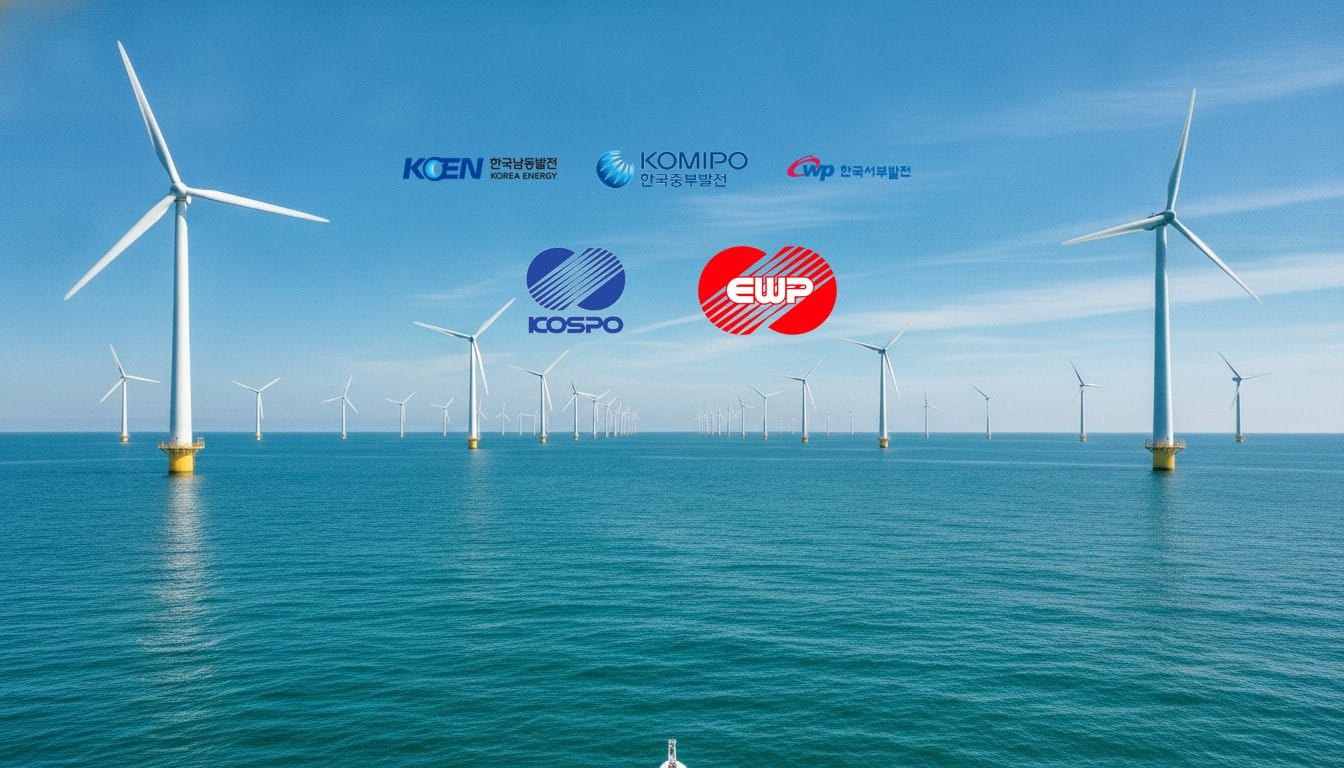
The government recently announced that it would integrate five Gencos—Korea South-East Power, Korea Midland Power, Korea Western Power, Korea Southern Power, and Korea East-West Power—under unified operation as "Korea Power" (tentative name).
Gencos Competing to Plant Flags in Incheon Offshore Wind
Korea South-East Power received Electricity Business Licenses in 2023 for two power generation complexes: the Yongyu and Muui offshore wind project in Incheon (320 megawatts) and the Deokjuk offshore wind project (320 megawatts).
Subsequently, facing difficulties ahead of environmental impact assessment procedures and securing community acceptance, the project has stalled.
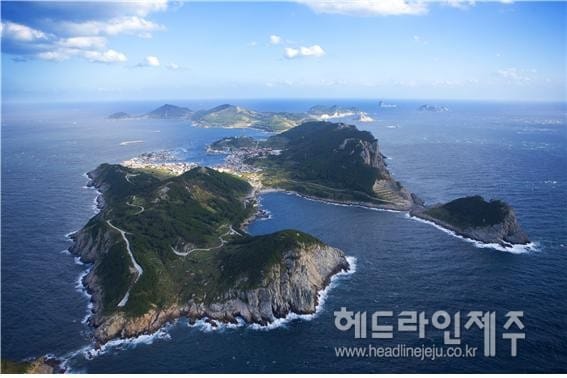
In this situation, Korea South-East Power applied to relevant agencies for an Electricity Business License for a new project called "Incheon Eco Wind offshore wind power" (435 megawatts) at a location 40 kilometers west of Gulup-do.
This site was originally pre-empted by a private developer who received a licence in 2021. Korea South-East Power submitted its Electricity Business License application just two days before the private developer's permit validity period expired on July 31, 2026.
A Korea South-East Power official stated that "we are seeking to lead the offshore wind project by receiving all authority from the private developer" and "we are reviewing ways for the private developer to participate jointly in the project once development becomes tangible."
Korea Midland Power also applied for an Electricity Business License in March of this year to build a 500-megawatt power generation complex at a location 60 kilometers west of Deokjeok-do, an area that Incheon City had previously pursued for public-led site development but abandoned due to community acceptance issues.
Subsequently, on July 30, Korea Midland Power submitted an additional Electricity Business License application for "Incheon Ara offshore wind power" (400 megawatts) at a location 40 kilometers west of Deokjeok-do, where a private developer had completed wind resource measurement and held the site. This application was also filed just one day before the validity period expired. Korea Midland Power is known to have secured development rights with the private developer's future participation guaranteed.
Korea East-West Power took over an offshore wind project that foreign company RWE had been conducting 66 kilometers southeast of Socheon-do and submitted a new Electricity Business License application on July 10 for "Incheon Haneuibaram offshore wind power projects 1, 2, and 3" (2,000 megawatts). The RWE project site was also facing expiration of its Electricity Business License validity period in early last month.
Competition for Leadership Ahead of Integration; Need to Separate Viable from Unviable Projects
Industry observers view the reason Gencos rushed to enter offshore wind projects this year as competition to secure a leading position in the unified Korea Power that will emerge from the integration of five Gencos.
The government has announced plans to establish a Renewable Energy Division at the Korea Power headquarters to oversee offshore wind, and to create a new Just Transition Division to pursue the phase-out of coal-fired power generation. Simultaneously, the Office for Government Coordination and the Ministry of Climate, Energy and Environment presented targets at the first Offshore Wind Power Generation Committee meeting held on the 2nd to achieve construction start of 10,500 megawatts of offshore wind capacity by 2030 and supply 25,000 megawatts by 2035.
As coal-fired power generation is phased out sequentially, new business opportunities for Gencos are concentrating on offshore wind.
This situation was also influenced by the difficulty foreign companies and domestic private developers face in obtaining Electricity Business Licenses for offshore wind projects.
An offshore wind industry official who previously worked at a Genco stated that "private developers bring in Gencos to reduce opportunity costs and licensing risks, while Gencos lacking offshore wind sites secure development rights from private developers, so their interests align."
The problem is that Gencos are indiscriminately pursuing offshore wind projects even at sites lacking business viability or community acceptance. All offshore wind projects being conducted by Gencos in Incheon face opposition from fishermen and island residents.
In particular, the total capacity of offshore wind projects currently being pursued by Gencos in Incheon waters is approximately 4,000 megawatts, with project costs reaching 30 trillion won. Expanding nationwide, the total generation capacity of offshore wind projects being conducted by the five Gencos in the West Sea and South Sea as of 2024 is 9,159 megawatts, with project costs approaching 59 trillion won.
When the integrated Korea Power launches, its projected annual revenue is 30 trillion won and total assets are 73 trillion won. The Gencos lack sufficient capacity to pursue all currently ongoing offshore wind projects.
An official from the private offshore wind industry stated that "each Genco is pushing into offshore wind to increase its stake during the integration process" and "work to select viable projects will be necessary."