Original Korean article: Gyeongin Broadcasting
Broadcast: Gyeonggin Broadcasting Radio "Here is Incheon Port" (FM 90.7 MHz, Saturday 18:00-19:00)
Host: Yu Dong-hyun, former director of Incheon City Museum
Interview: Jang Jeong-gu, representative of the Climate and Life Policy Research Institute
Incheon Bay Story Between Tides
Broadcast: September 5, Saturday, 18:05-19:00
Yu Dong-hyun: Incheon Bay breathes twice a day as tides ebb and flow. These five senses make the bay deeper and richer. "Incheon Bay Story Between Tides" is a time to exchange stories steeped in Incheon Bay, along with the time and memories contained within them, like the tides themselves.
Ørsted's Project Suspension
Today we will discuss with Jang Jeong-gu, representative of the Climate and Life Policy Research Institute, diseased fish recently caught near the Han River estuary and Ganghwa Island. Representative, hello.
Recently there have been several reports about offshore wind power development being pursued in Incheon waters. Among them, there is talk that Ørsted is suspending its project. Is that correct?
Jang Jeong-gu: Yes. There is a British global energy specialist media outlet called Recharge. An article came out on August 26. Ørsted announced to its employees that it would suspend its Korean offshore wind power projects because risks have increased and business viability has weakened.
According to the report, Ørsted's Asia-Pacific chief executive stated in an internal notice that when considering profitability against risk, the offshore wind power project currently being pursued in Incheon is difficult to meet various internal approvals, particularly financial standards. The project needs to be suspended. When looking at the project's economic viability, it is difficult to say that profits will be properly generated. The project needs to be redesigned. The British media reported this, and domestic media then reported it.
Some have suggested this could mean Ørsted is withdrawing from Korea, and there have been such criticisms. However, Ørsted has not suspended or terminated development operations. The company currently maintains the position that it will continue. I should clarify this.
Yu Dong-hyun: I see. Ørsted must be a world-famous company then. What kind of company is it?
Jang Jeong-gu: It is headquartered in Denmark and is evaluated as the world's number one company in the offshore wind industry. It is a Danish state-owned enterprise. In the past, like other countries, it was a company that produced energy centered on oil and gas, but it improved its corporate structure earlier than others.
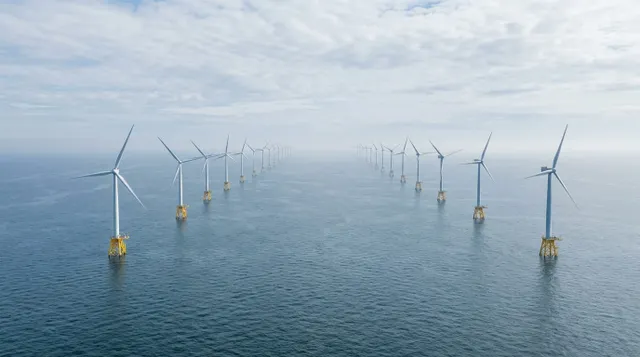
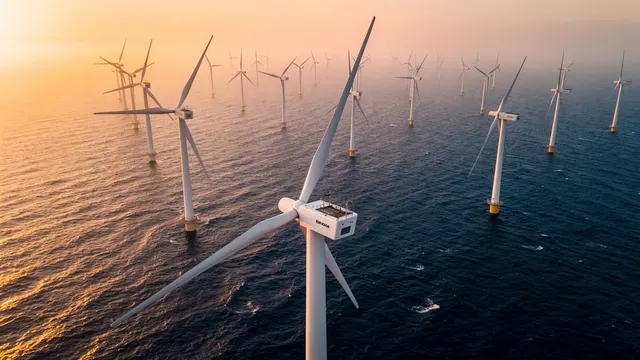
So now it is evaluated as the number one company globally in developing, constructing, and operating offshore wind power. We are also pursuing large-scale offshore wind power projects in Korea centered on Incheon waters. About 70 kilometers off the Incheon coast, a 1.4 gigawatt offshore wind farm is being developed. It received a power generation business licence in November 2023.
Currently, procedures related to environmental impact assessment are underway, and to proceed with this, approval must be obtained. So design work for approval is being conducted, and preparations are being made to participate in government bidding.
Although it is the largest company in the world, it has been the company with the largest scale and fastest project speed among offshore wind projects being pursued off Incheon.
Multiple Developers and Public Support
Yu Dong-hyun: Besides Ørsted, several other companies are participating in and pursuing offshore wind power projects off Incheon. What is the situation?
Jang Jeong-gu: During President Lee Myung-bak's administration, many people probably remember the term "green growth." We have needed to achieve carbon neutrality for quite a long time. However, I should first note that Korea has not properly pursued this until now.
In any case, with the Lee Jae-myung administration, the government has expressed firm commitment to carbon neutrality and energy transition. The Ministry of Environment has launched a new organization. Related dedicated organizations have also been established. Incheon also seems to be gaining momentum. Besides Ørsted, companies such as OW, Korea South-East Power, and Gulup Wind have obtained power generation business licences.
A publicly led offshore wind farm with Incheon City's participation is also being pursued. In this way, eight to nine public and private developers are participating, and 13 offshore wind farms are currently being pursued.
However, grid connection is also very important, not just wind power generation itself. What this means is that once electricity is generated, it must be brought in. Power generation and grid connection are different fields, so much cooperation is needed regarding grid connection.
Also, related hinterland facilities are needed. When offshore wind power is developed, equipment must later be supplemented and parts must be produced. Building an offshore wind industry ecosystem is also necessary. Ecosystem building requires absolute administrative support. So discussions with local governments to create such clusters have been ongoing until now.
Yu Dong-hyun: Why is the offshore wind farm suddenly being activated in Incheon waters? Is it because the wind is good there, or is it because there is high electricity demand nearby? That thought just occurred to me.
Jang Jeong-gu: That is a very clear question. Of course, it would be best to install offshore wind farms in places with wind suitable for offshore wind power. But is the Incheon offshore area really being pursued only because the wind is suitable? In my personal judgment, I do not think it can be viewed that way alone.
What seems to have been considered first is that the capital region absolutely needs a lot of electricity. So we need to transition from fossil fuels to renewable energy, and that converted electricity will ultimately be consumed heavily in the capital region. So rather than because the wind is good, it is being pursued more forcefully here because electricity is needed nearby. I do not think it would be wrong to understand it this way.
Fishermen's Changing Position
Yu Dong-hyun: I remember discussing this with you before. At that time, we briefly talked about how fishermen would inevitably be affected, with issues like fishing grounds and such. But you said fishermen are not just opposing it, some are supporting it?
Jang Jeong-gu: There has been such movement recently, and officially so. My remarks must be careful, but for large development projects, community acceptance is more important than anything. When we talk about community acceptance at sea, the first thing we think of is fishermen.
When windmills turn in the sea, and such large structures over 100 meters turn, fishing will inevitably be affected. So the direct stakeholders are fishermen and residents' groups. What has been widely known until now is that fishermen oppose it, so securing community acceptance has been difficult overall.
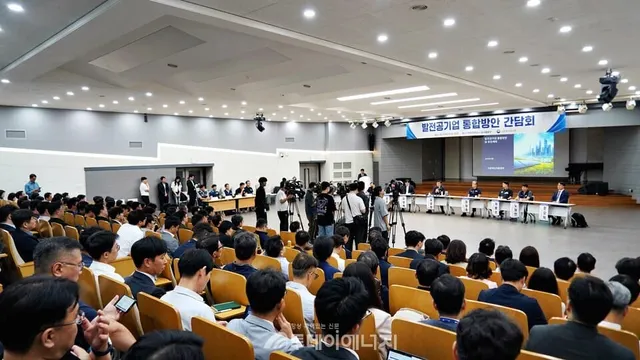
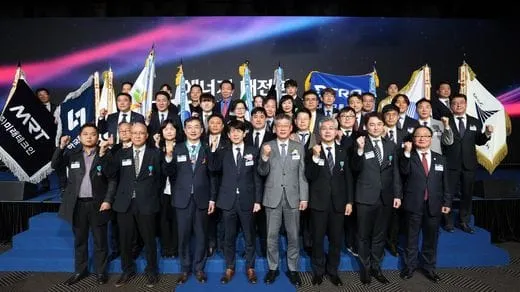
But this happened recently. The Incheon Offshore Wind Civic Promotion Committee was launched. Most members are from fishermen's groups, and citizens' organizations are also participating. The launch ceremony was held on August 20.
So it is not just opposition. Fishermen who make up the Incheon Offshore Wind Civic Promotion Committee formed this organization and held a launch ceremony with a seminar. Looking at the content, they acknowledge that fishing ground damage is unavoidable, and to bring electricity, submarine cables must also be installed.
As a result, fishing grounds will inevitably shrink. And in the case of the Five West Sea Islands, ships must pass through. There are situations where shipping routes will inevitably be affected.
While residents point this out, they ultimately acknowledge the inevitability of offshore wind power projects. They argue that since the sea is a public resource, a coexistence model should be built so that benefits generated from offshore wind power can be shared with citizens, at a level that prevents infringement of fishing rights and passage rights. According to reports, this was the general message at the launch ceremony.
Until now the focus was on opposition, but now the position is that while the necessity of offshore wind power projects is acknowledged, the question is how to share profits with residents. It appears the position has shifted toward building that model.
Yu Dong-hyun: You also spoke indirectly about it, but building a coexistence model to share benefits with citizens ultimately means sharing profits, does it not?
Jang Jeong-gu: This can be a sensitive matter. Simply put, that is what it means.
City Government Policy and Challenges
Yu Dong-hyun: This will likely continue to be controversial with both opposition and support. In any case, the core policy of the ninth-term Park Chan-dae city government is ABC Plus E, and E refers to offshore wind power, correct?
Jang Jeong-gu: That is correct. Of course, it is difficult to say it is only offshore wind power, but it is not wrong to say it is centered on offshore wind power. So the ninth-term Incheon City Government, like the Central Government, has established a dedicated department. The Climate and Energy Bureau. It has reorganized previous organizations including the Climate Response Policy Division, Energy Policy Division, and Renewable Energy Division.
Mayor Park Chan-dae strongly appealed during his candidacy to make Incheon the capital of Korea's energy transition, that is, the transition from fossil fuels to renewable energy.
But to undertake such projects, there will be various difficulties and conflicts. Incheon City has stated it will proactively engage in consultation. Particularly for community coexistence, and since Incheon is a border region, coordination with the Ministry of National Defense and related military authorities is very important.
Ultimately, the city has stated it will support the project through coordination with the Ministry of National Defense and the military. Along with this, offshore wind power requires not just power generation facilities but also a cluster for later equipment reinforcement, maintenance, and operation.
The city has announced plans to build a cluster, establish networks to supply power to companies requiring RE100, develop specialized personnel since Korea currently lacks experts in offshore wind power, and designate special zones for offshore wind power development.
Looking at this, the ninth-term Incheon City Government's current approach is to actively support offshore wind power. I can say this.
Yu Dong-hyun: But Incheon already has many existing power plants, does it not? Yeongheung Island, for example. Is there criticism that we should not use the sea as well to build more power plants? How should this be resolved?
Jang Jeong-gu: This could happen if not careful. A situation could arise where there are power plants on the coast and power plants in the sea. This is a point of considerable concern, and I think Incheon City must handle this well.
Even now, the typical entities preventing Incheon citizens from accessing the coast are ultimately power generation and port facilities, and barbed wire fences. Among these, power generation accounts for a significant portion.
So if coal power plants are replaced with renewable energy and wind power, for Incheon this should mean that the coast returns to citizens. This must go together so that energy is truly transformed and citizens can use the coast as a marine recreational space.
Looking at this Ørsted project review, various situations need to be considered, including assessment of global conditions and volatility in raw material prices. I think local governments and the Central Government need to think about this as well.
As a result, the pace of this project may be adjusted differently from the past, differently from what the Central Government and Incheon City envision. Changes in project implementation plans are being detected in the current situation. We need to watch how this will be pursued as policy. This is what I mean to convey.
Yu Dong-hyun: What is clear is that we must think about fossil fuels and how to produce new electricity. Incheon has good conditions for offshore wind power. But it is not something to do unconditionally, and we must think about various considerations.
Today we have discussed offshore wind power development off Incheon with Jang Jeong-gu, representative of the Climate and Life Policy Research Institute. Thank you.
KWI developer profile — Ørsted
2 projects in Korea totalling 1,470 MW. Compiled from the KWI database. Not part of the source article.
Incheon 1 Offshore Wind — this article
| ![]() |
Incheon 2 Offshore Wind — this article
| ![]() |
Project data: KWI database — Electricity Business Licence records, EIA filings (ME2025C009, ME2025C010), Electricity Regulatory Commission minutes, and pre-EBL permit filings.