The 130 billion won profit-sharing condition that is cited as the reason for the failed bid on the Chuja offshore wind power project, Jeju's largest-scale initiative, may be withdrawn.
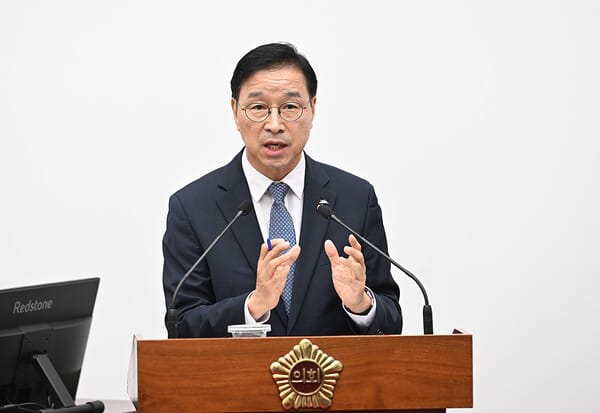
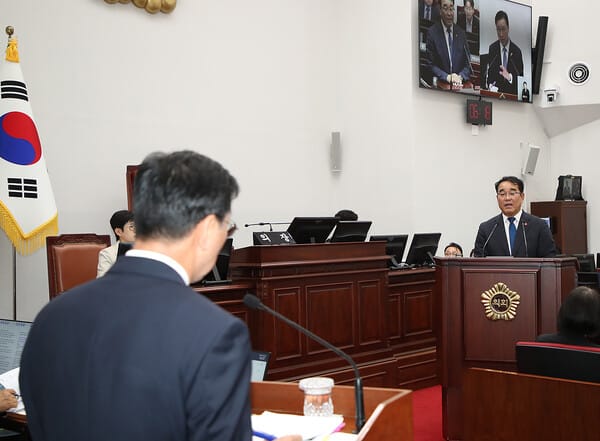
Jeju Special Self-Governing Province Governor Wi Sung-gon made this clear on December 4 during a policy question session at the 454th first regular session of the Jeju Special Self-Governing Province Assembly, in response to a question from Democratic Party member Kim Seung-jun (representing Hangyeong and Chuja-myeon) about follow-up measures for the failed Chuja offshore wind power developer recruitment.
Kim asked how the province analyzes the reasons for the failed recruitment, how it will improve the recruitment system, and requested specific measures to address the grid connection issue, which he called the biggest obstacle. He also proposed that renewable energy projects above a certain scale should institutionalize or mandate resident participation, suggesting that allowing residents to participate through bonds or funds would provide stable income to residents while helping developers with financing and project implementation.
Grid connection and profit-sharing as obstacles
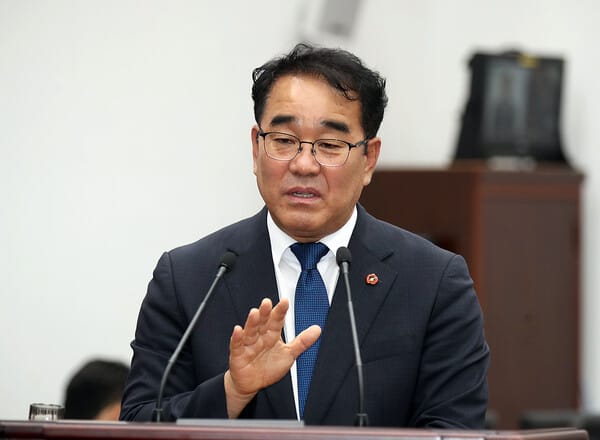
Governor Wi identified the causes of the failed bid as uncertainty over profit-sharing and grid connection access. He stated that the grid connection being designed to link to mainland Jeju was the biggest problem.
He added that the annual minimum 130 billion won in resident profit-sharing set as a recruitment condition was also a major issue, and said the province aims to resolve both conditions.
Regarding grid connection, Wi said the government's 12th Basic Electricity Plan is under development, and the province is requesting and negotiating for access to the national grid. On the profit-sharing condition, he said the 130 billion won requirement is inappropriate.
Redesigning the profit-sharing model
Wi explained that the profit-sharing system must be overhauled entirely, similar to the Western Hangyeong offshore wind project, to allow any Jeju resident to participate in wind power development through public recruitment. He stated that Chuja-do residents would have priority, followed by Jeju residents.
Wi said the province will create a resident benefit-sharing model for offshore wind and solar industries. Wind power projects are currently required to pay a 17.5 percent socialization fund, which he said the province will improve.
He explained that the socialization fund currently accrues to Jeju Province rather than individual residents, making project implementation difficult. The province will revise the system to address this problem.
Governor Wi's remarks are interpreted as meaning the province will remove the 130 billion won profit-sharing requirement from the Chuja offshore wind power developer recruitment conditions and redesign wind and solar development projects so that profits go directly to residents and Jeju citizens who invest in these projects.
Project background and previous failure
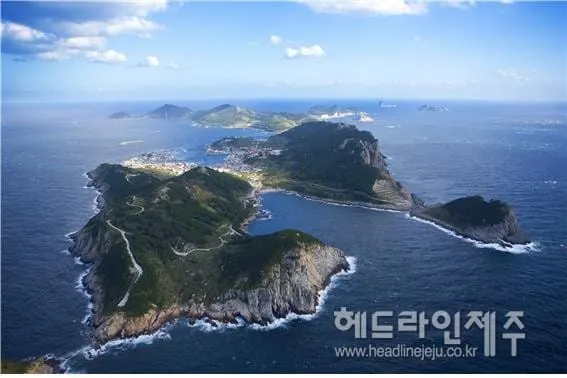
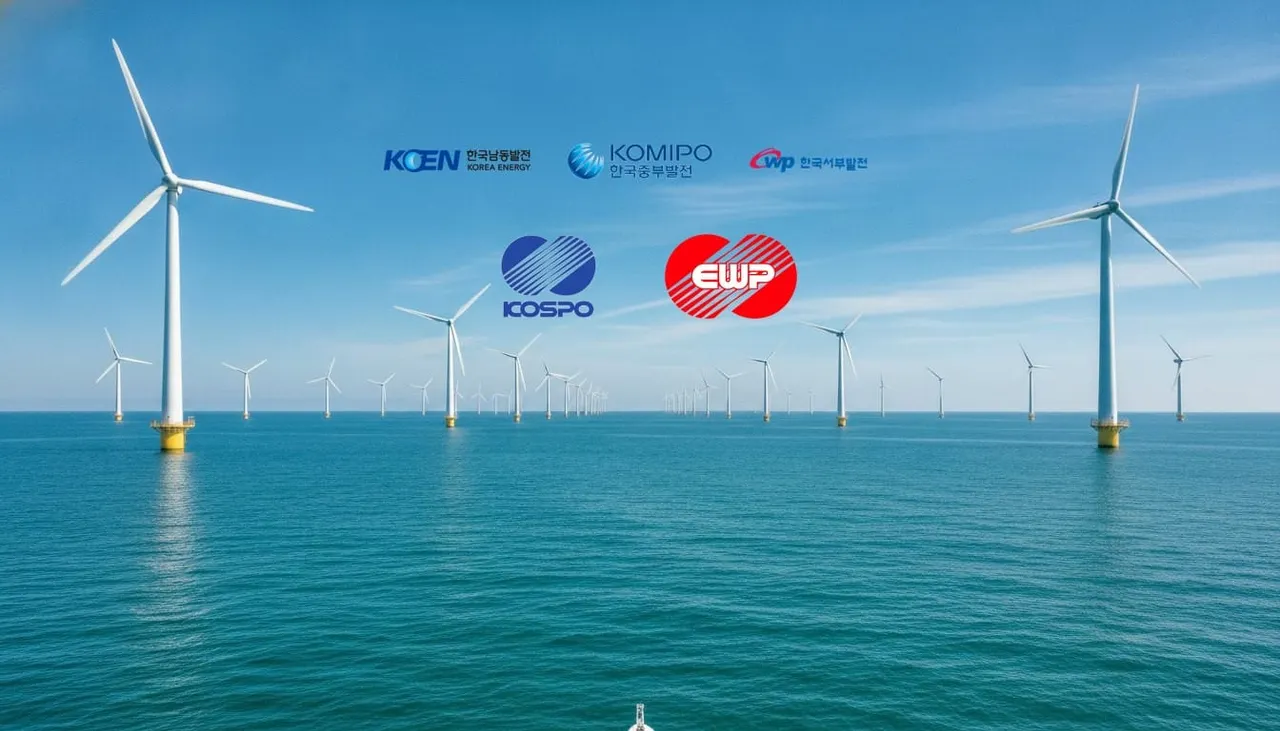
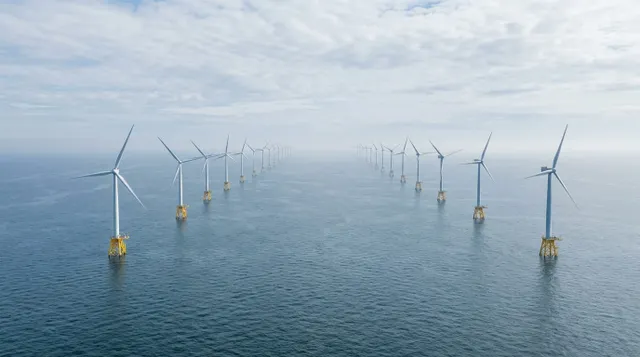
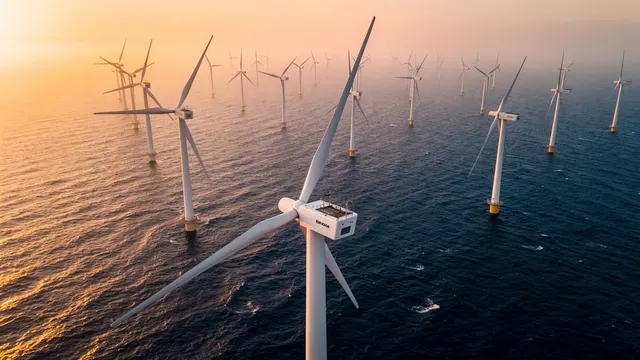
The Chuja offshore wind power project centers on developing a 2.3 GW offshore wind farm on the east and west sides of Chuja-do.
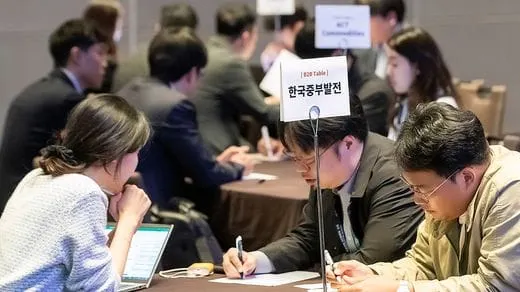
Jeju Province conducted a public-led 2.0 wind project developer recruitment following its development plan, but the bid ultimately failed after a second round. Korea Midland Power, a domestic Genco, participated in the second recruitment but withdrew due to two conditions: grid connection to mainland Jeju and profit-sharing set at 130 billion won or more.
With Governor Wi announcing improvements to both conditions, attention is focused on whether the Chuja offshore wind power project will be revived.
Original Korean article: Headline Jeju