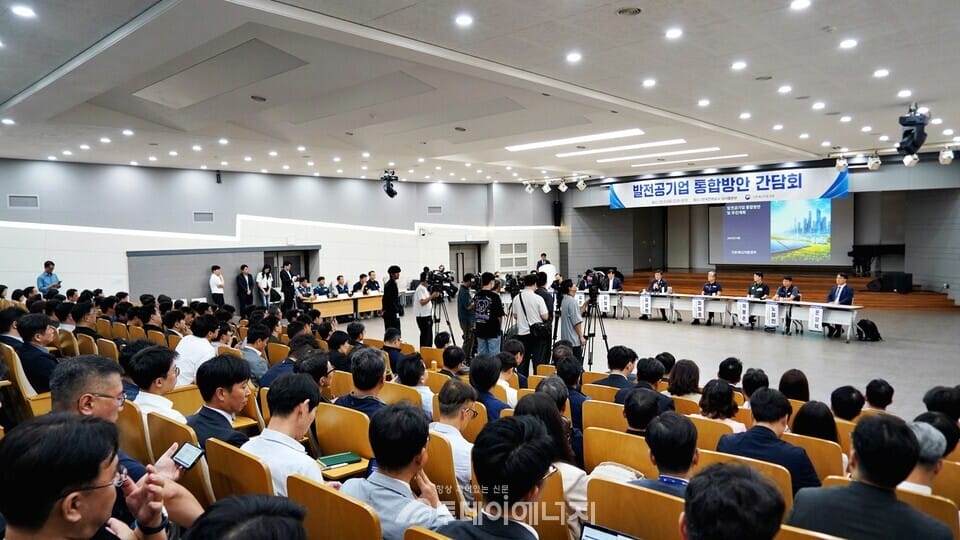
Incheon's Hanbando Offshore Wind project, backed by Spain-based Ocean Winds, faced continued opposition from fishermen and residents at a public hearing in June following an earlier residents' briefing.
Fishermen insisted they cannot surrender their fishing grounds without alternative fishing areas, while an expert stressed the importance of securing community acceptance for what is a foreign private venture lacking the public character of nearby offshore wind projects, such as designation as an offshore wind integrated zone.
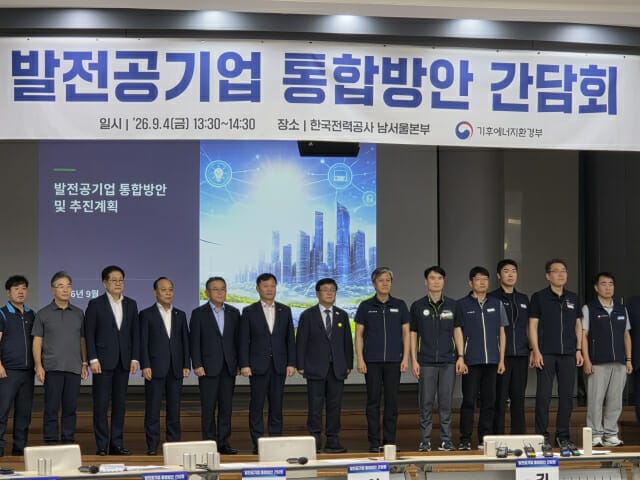
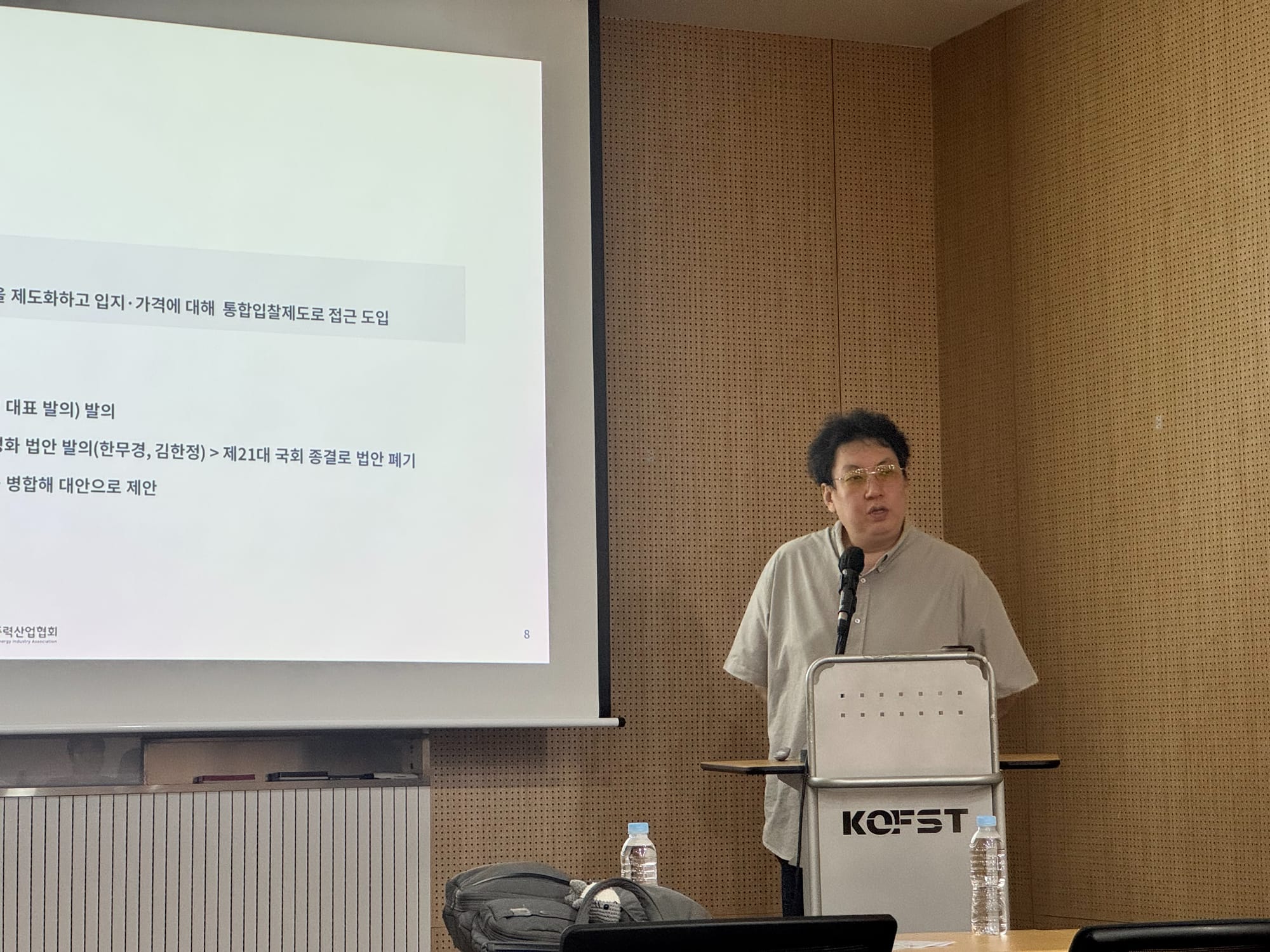
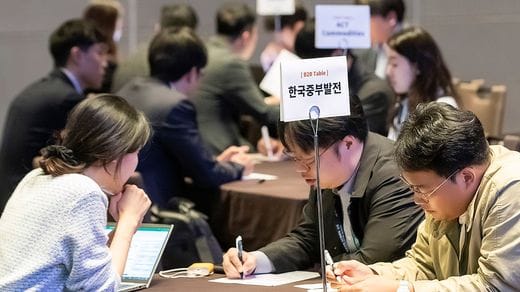
Hanbando Offshore Wind, a Korean subsidiary of Ocean Winds, held a public hearing on its environmental impact assessment draft for the Hanbando Offshore Wind projects 1, 2 and 3 on September 10, 2026 at the National Federation of Fisheries Cooperatives' Incheon Fishing Vessel Safety Operations office. The hearing came after a residents' briefing held on June 15 at Songdo Convensia ended amid objections and raised voices.
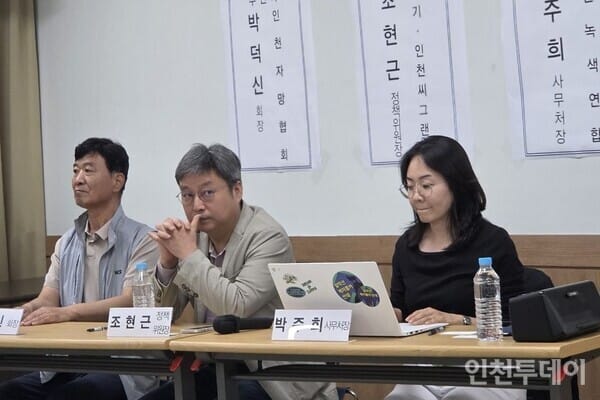
Hanbando Offshore Wind is pursuing the creation of a 1,125 MW power generation complex by installing 75 units of 15 MW generators and an offshore substation at 46 to 73 kilometers offshore from the west of Gulup-do in Ongjin County.
Fishermen: "We cannot yield fishing area 152 without alternative grounds"
Fishermen's views aligned on one point: they are not opposed to offshore wind itself, but cannot surrender the Deokjeok-do west fishing area (fishing area 152) in the West Sea specific sea area without alternative fishing grounds.
The West Sea specific sea area is divided into fishing areas 151, 152 and 153. In fishing area 153 near Deokjeok-do, Ørsted, KOEN, and Gulup Wind Development each hold licences and are pursuing offshore wind projects.
Fishermen say they yielded fishing area 153 in consideration of energy security, but they cannot yield fishing area 152, which Hanbando Offshore Wind is requesting, because it remains a zone where they must catch blue crabs.
Park Deok-shin, chairman of the Incheon Gillnet Association, said the fishing industry groups have never decided to accept fishing area 152 and currently oppose it. "Energy security is important, but we cannot abandon food security," he said.
A vessel owner who has caught blue crabs in the West Sea specific sea area for 40 years said he cannot agree to anything beyond fishing area 152 without a guarantee of alternative fishing grounds. "We must stop fishing operations the moment construction begins," he said.
Private company individual project, not an integrated zone: Public character questioned
Cho Hyun-geun, policy committee chairman of Inha University's Gyeonggi-Incheon SeaGrant Center, raised questions about the public character of Hanbando Offshore Wind.
Fishing area 153 has agreements between Ørsted and KOEN with the city, and Gulup Wind Development with Ongjin County. The Incheon public-led offshore wind integrated zone project covering fishing area 153 received final designation as a renewable energy integrated zone by the Ministry of Climate, Energy and Environment in March.
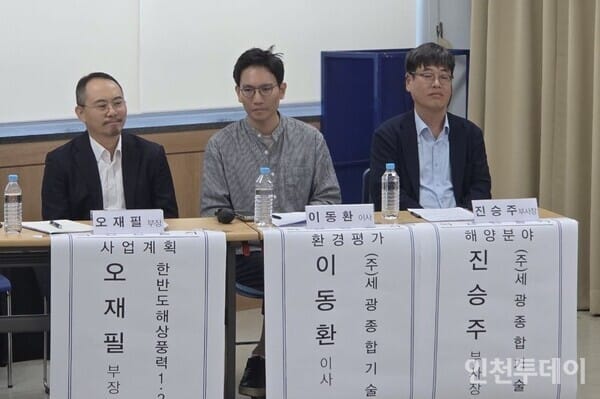
By contrast, Hanbando Offshore Wind is a project pursued individually by a foreign private company without such a framework, Cho noted.
He characterized Hanbando Offshore Wind as merely a project pursued by a private foreign company. "What matters more than formal procedures is substantive communication," he said, emphasizing the need to secure acceptance from residents and fishermen.
Project explanations have changed from initial accounts; individual contact methods also questioned
Concerns emerged that the developer's explanations have shifted from the project's early stages. Initially, fishing was said to be possible within the power generation complex and along the transmission cable route, but now fishing within the complex is difficult and fishing cannot occur within a 500 meter to 1 kilometer radius of the cable route.
Shin Young-chul, head of the Sorae Fishing Village Association, raised this point and expressed concern about reduced catches and local economic decline resulting from the offshore wind facilities reducing fishing grounds.
Jung Gyu-soo, representative of the West Sea Ongjin Fishing Cooperative, said the developer's statements at briefings differ from subsequent actions, and also pointed out the practice of contacting some fishermen separately.
The developer said it recognizes the historical significance of the West Sea specific sea area and its value as a blue crab fishing ground. Oh Jae-pil, director of Hanbando Offshore Wind projects 1, 2 and 3, said energy security and food security are both values that cannot be neglected, and that the company will not exclude fishermen's opinions or pursue the project unilaterally.
Regarding alternative fishing grounds raised by fishermen, the developer said it would objectively review fisheries impact assessments and seek cooperation from relevant administrative agencies. It characterized separate meetings with specific fishermen as a misunderstanding arising from the process of sequentially hearing opinions from various stakeholders.
However, Park said it is common for internal conflict to arise when the developer disregards collective opinions and meets individually with fishermen. "I trust that communication channels will be established smoothly and such incidents will not recur," he said, while warning once more to be mindful of the issue.
KWI developer profile — Ocean Winds
5 projects in Korea totalling 2,250 MW. Compiled from the KWI database. Not part of the source article.
Korea Floating Offshore Wind
|  |
Hanbando-1 Offshore Wind
| |
Hanbando-2 Offshore Wind
| |
East Blue Power Offshore Wind
| |
Hanbando-3 Offshore Wind
| |
Project data: KWI database — Electricity Business Licence records, EIA filings (ME2023C011, ME2026C011), Electricity Regulatory Commission minutes, and pre-EBL permit filings.
Original Korean article: Incheon Today
English brief by Korea Wind Intelligence, koreawindintel.com