Korea's Five Gencos to Merge: Scale Gains vs. Monopoly Risks
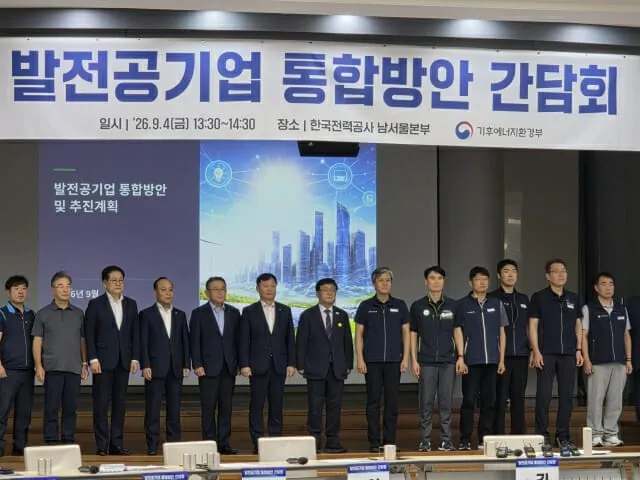
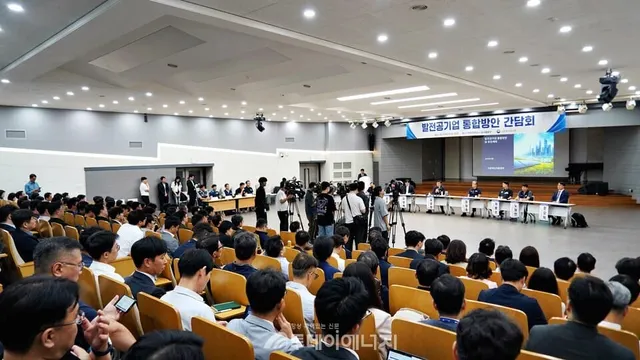
South Korea's government has decided to consolidate five state-owned power generators (Korea East-West Power, Korea Midwestern Power, Korea Western Power, Korea Southern Power, and Korea Southeastern Power) into a single entity called 'Korea Generation' after 25 years of operating separately.
The government has decided to merge five Gencos under Korea Electric Power Corporation—Korea South-East Power, Korea Midland Power, Korea Western Power, Korea Southern Power, and Korea East-West Power—into a single company tentatively called Korea Generation. This reverses course 25 years after the government split Korea Electric Power Corporation's generation division in 2001 to raise efficiency through competition.
The stated rationale for this merger is economies of scale. However, with the creation of a mega-sized public enterprise employing over 14,000 workers, there is concern that without accompanying organizational and workforce restructuring, the inefficiencies of five separate companies could simply be transferred into one massive organization.
Consolidating Scattered Investment and Workforce for Renewable Energy Transition
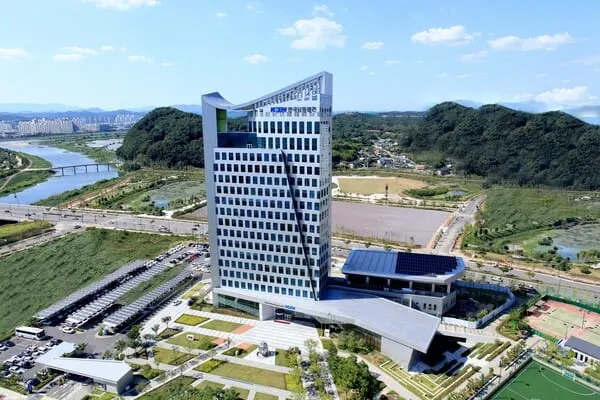
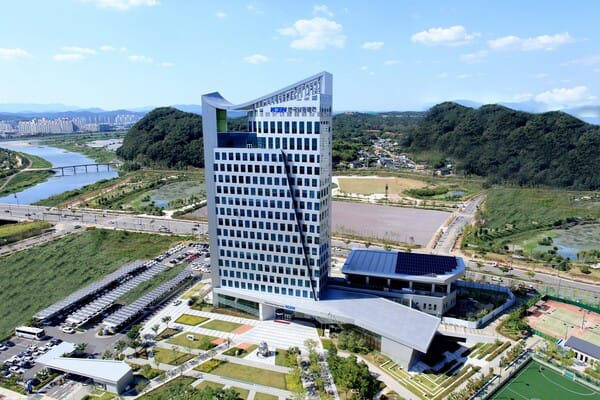
Korea South-East Power's exterior view. · Photo: thepublic.kr
The largest advantage of merging the five Gencos into one is the concentration of investment and workforce.
Currently, the five Gencos each execute roughly 50 billion won annually in research and development spending and 200 billion won in renewable energy project budgets. They pursue similar projects separately. Merging into one company would make it easier to pool funds and technical personnel to pursue offshore wind and large-scale renewable energy projects.
KWI developer profile — KEPCO
4 projects in Korea totalling 1,310 MW. Compiled from the KWI database. Not part of the source article.
Hanlim Offshore Wind
Capacity
100 MW
Location
Jeju
Developer
KEPCO · KOMIPO · Hyundai E&C · Doosan
Status
In Operation
Licence
Electricity Business Licence 2019
Southwest Offshore Wind Phase 2
Capacity
400 MW
Location
Buan, Jeonbuk
Developer
KEPCO · 6 Gencos
Status
Bid Awarded in 2025
Licence
Electricity Business Licence 2021
EIA
main-phase consultation completed (ME2021C006)
Sinan 1 Offshore Wind
Capacity
405 MW
Location
Sinan-gun, Jeonnam
Developer
KEPCO (80%) · KOEN (20%)
Status
EBL Approved
Licence
Electricity Business Licence 2026
Sinan 2 Offshore Wind
Capacity
405 MW
Location
Sinan-gun, Jeonnam
Developer
KEPCO (80%) · KOEN (20%)
Status
EBL Approved
Licence
Electricity Business Licence 2026
Project data: KWI database — Electricity Business Licence records, EIA filings (ME2021C006), Electricity Regulatory Commission minutes, and pre-EBL permit filings.
Domestic supply chain utilization in Korean offshore wind falls as turbines grow larger, according to MCEE (Ministry of Climate, Energy and Environment) data released by Democratic Party lawmaker Lee Yong-woo. Projects using 10MW turbines reached 87%, versus 71-72% for 15MW projects.
JNDC (Jeollanam-do Development Corporation) and KWANGLIM have signed a memorandum of understanding to advance the 800 billion won Future of Yeonggwang offshore wind project (160MW) off Yeonggwang County.
The Korea Marine Equipment Research Institute (KOMERI) and Malcon, a specialist in eco-friendly vessel design and construction, have signed an MOU to jointly develop offshore wind operations and maintenance (O&M) support infrastructure.
South Korea's government has decided to consolidate five state-owned power generators (Korea East-West Power, Korea Midwestern Power, Korea Western Power, Korea Southern Power, and Korea Southeastern Power) into a single entity called 'Korea Generation' after 25 years of operating separately.
Korea's five state-owned generators become one in October 2027. They hold 14.0 GW of offshore wind, a third of the national pipeline. What the merger case rests on, and what it leaves unanswered.