

The government is pursuing the integration of five state-owned power generation companies into one entity, with the overhaul of operational systems covering personnel, accounting, and contracts emerging as a major task. The five Gencos operate 575 systems and software applications combined, while concrete measures for subsidiary employment stability and debt succession remain unresolved.
Ahead of a National Assembly audit on Oct. 19, operational system integration and workforce redeployment following the Genco merger have emerged as key issues. The government plans to establish Korea Generation, a 100 percent subsidiary of KEPCO (Korea Electric Power Corporation), by integrating KOEN (Korea South-East Power), KOMIPO (Korea Midland Power), KOWEPO (Korea Western Power), KOSPO (Korea Southern Power), and EWP (Korea East-West Power). The target is to complete corporate registration and executive appointments in September 2027, with an official launch on October 1.
Integrating 575 Systems and Software
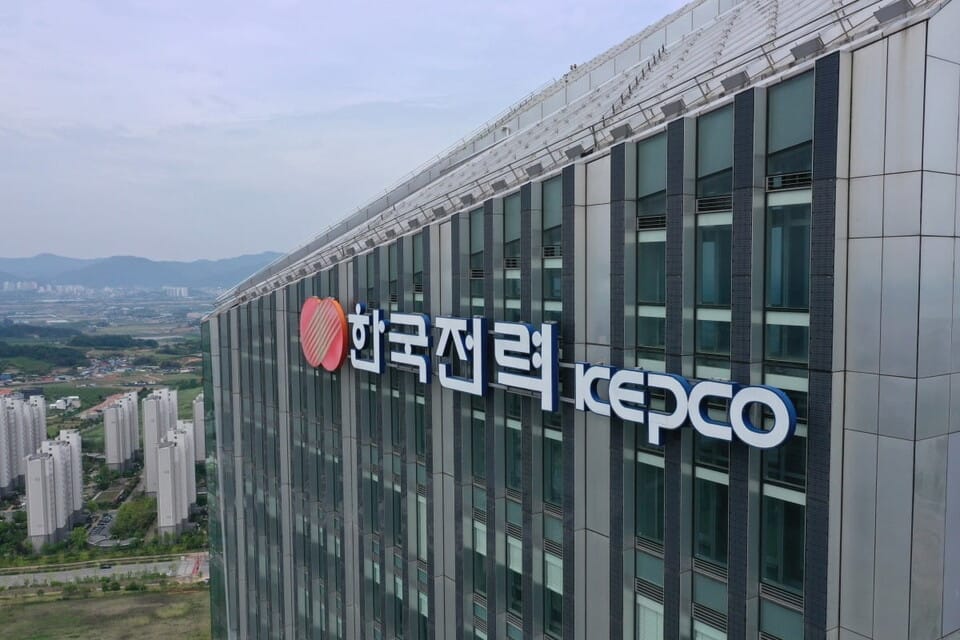
The first challenge to resolve during integration is standardizing operational systems. The five Gencos currently operate a combined 575 systems and software applications, requiring integration of major business processes including enterprise resource planning (ERP), organization, personnel, accounting, and contracts.
The government has decided that the five Gencos will jointly pursue post-merger integration management (PMI) consulting for specialized review in accounting, legal, tax, and information technology fields. The specific costs and detailed schedules required for system integration will be confirmed during the subsequent integration preparation process.
Organizational Restructuring and Workforce Adjustment
Organizational restructuring is also planned. The headquarters of the integrated corporation will consist of four divisions: the Renewable Energy Division, the Just Transition Division, the Safety and Technology Division, and the Planning and Management Division. The management structure of five presidents, five auditors, and ten executive directors from the existing five Gencos will be reduced to one president, one auditor, and four executive directors.
Headquarters personnel will be adjusted from approximately 2,400 employees across the five existing companies to around 1,800. The remaining 600 or so employees will be assigned to three or four newly established regional renewable energy divisions to handle regional renewable energy projects such as solar and onshore wind.
Subsidiary Employment and Debt Succession
Issues regarding subsidiary employment and debt succession remain outstanding. According to data submitted by the five Gencos to National Assembly member Kim Hyung-dong of the People Power Party, who serves on the Climate, Energy, Environment and Labor Committee, the five Gencos operate a combined 25 subsidiaries as of 2026: six domestic and 19 overseas.
Subsidiary workforce totals 3,619 employees, comprising 3,115 domestic and 504 overseas workers. Total subsidiary debt is estimated at 802 billion won. The five Gencos responded to the committee that they will conduct additional review and establish employment stability measures for subsidiaries according to the integration direction.
Legal procedures for integration must also proceed. The government plans to enact special legislation during the 2026 regular National Assembly session to establish the legal basis for the integrated corporation, specify the rights and obligations of existing companies, provide for succession of employment contracts, and streamline merger procedures. The government is also reviewing ways to establish grounds for exemption from merger review.
The Ministry of Climate and Energy launched an Integration Preparation Committee for Gencos on Sept. 30, chaired by Vice Minister Lee Ho-hyun. The committee includes vice presidents from the five Gencos and experts in energy, power, finance, labor relations, law, and information technology to discuss organizational structure, workforce allocation, operational systems, and integration procedures.
The government aims to consolidate dispersed capital and workforce through the Genco integration and strengthen investment capacity for large-scale renewable energy projects such as offshore wind. The government has also identified workforce and regional economic transition resulting from coal power plant closure as a major task for the integrated corporation.
Vice Minister Lee Ho-hyun stated at the launch of the Integration Preparation Committee: "What we are aiming for is not a larger power generation company, but a stronger energy company that stably and efficiently supplies electricity while leading carbon neutrality and energy security. We will carefully review various issues in the integration process and prepare thoroughly without gaps."
Original Korean article: Hans Economy
English brief by Korea Wind Intelligence, koreawindintel.com



















