The government is shifting away from the existing "developer-led site acquisition" approach to build 100 gigawatts of renewable energy capacity by 2030. Instead, it will transition to a "planned siting system" in which the state proactively identifies locations and designs them together with grid infrastructure, environmental considerations, and community acceptance. The plan involves supplying 56.2 gigawatts of new solar capacity centered on mega-flagship complexes and idle sites such as industrial zones, farmland-integrated systems, and living spaces, while also expanding public-led planned siting development for onshore and offshore wind.
However, experts have suggested that the key to expanding renewable energy lies not in simple supply targets but in location strategies that integrate ecosystem conservation, regional acceptance, power grids, and spatial planning. They have recommended more sophisticated institutional design and governance structures.
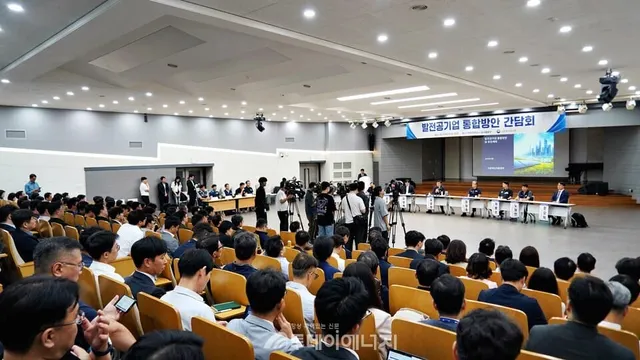
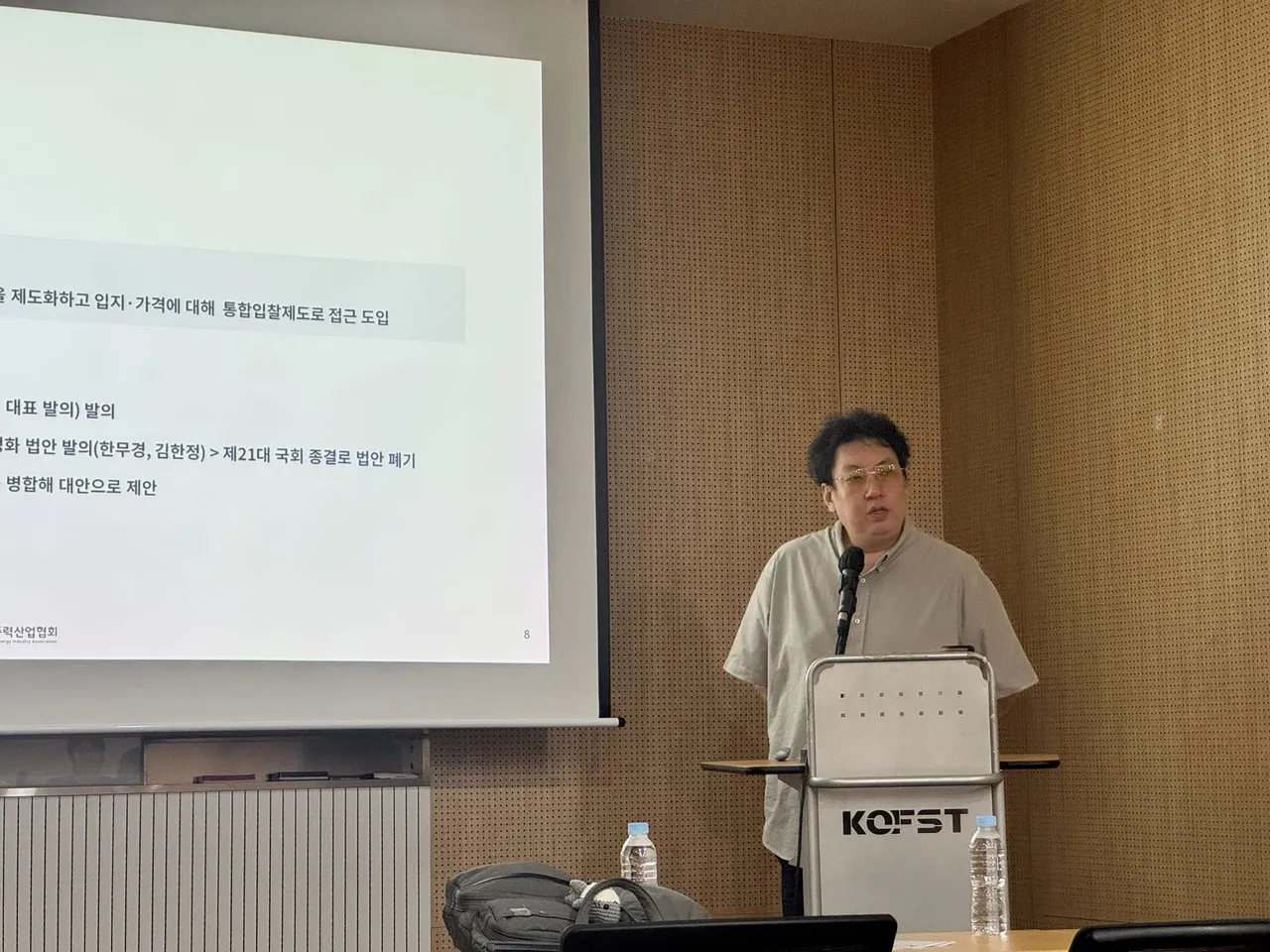
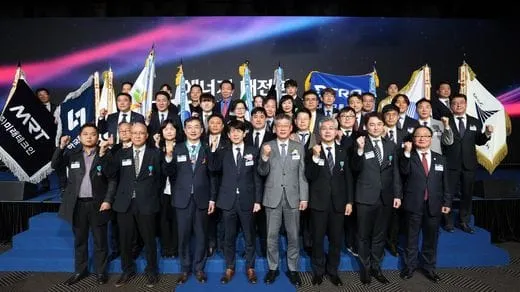
These points were presented at a forum titled "The First Renewable Energy Basic Plan: Where Should We Build 100 Gigawatts?" held on the 31st at the National Assembly Members' Hall, jointly hosted by the office of National Assembly member Park Ji-hye and the Forest and People Foundation.
Park Ji-hye stated that "the renewable energy basic plan is the first statutory plan to transition to a state and public-led planned siting system" and emphasized that "improvements in laws and institutions are needed to minimize location conflicts while securing both ecosystem conservation and community acceptance."
Jang Jae-yeon, chairman of the Forest and People Foundation, stressed that "more important than the 100-gigawatt supply target is where and how to deploy renewable energy" and called for development into "spatial planning that enables both renewable energy expansion and biodiversity conservation."
Ministry of Climate, Energy and Environment: State to Identify Sites, Achieve 100 Gigawatts by 2030
Park Gye-young, an official from the Ministry of Climate, Energy and Environment's Renewable Energy Policy Division, presented the core contents of the "First Renewable Energy Basic Plan (2026-2035)" announced in May. Park stated that "this basic plan is the highest-level statutory plan in the renewable energy sector prepared for the first time since separating new energy from renewable energy" and noted that "the target is 100 gigawatts of renewable energy capacity by 2030 and a generation share of 30 percent or higher by 2035."
To achieve this, the government plans to expand renewable energy capacity from the current 37.1 gigawatts to approximately 100 gigawatts by 2030, roughly tripling current levels. It also aims to raise the renewable energy generation share from 9.8 percent last year to 30 percent or higher by 2035.
The core of the policy shift is moving away from the current method in which developers individually secure sites and instead adopting a "planned siting" system in which the state reviews locations, grids, environmental factors, and community acceptance in advance.
Of the 56.2 gigawatts of new solar capacity, the government plans to supply 12 gigawatts from mega-flagship complexes centered on areas with grid capacity, and the remaining 44.2 gigawatts from four policy-designated sites: industrial zones and factory rooftops (19 gigawatts), farmland-integrated and floating systems (11.1 gigawatts), roads, railways, and agricultural waterways (4.4 gigawatts), and schools, parking lots, and traditional markets (2.5 gigawatts).
To support this, the government will operate a "mega-scale planned siting discovery task force" involving the Ministry of Climate, Energy and Environment, the Ministry of Agriculture, Food and Rural Affairs, the Ministry of Industry, local governments, Korea Electric Power Corporation, and state-owned power generation companies. This task force will provide integrated support from candidate site discovery through approval and grid connection.
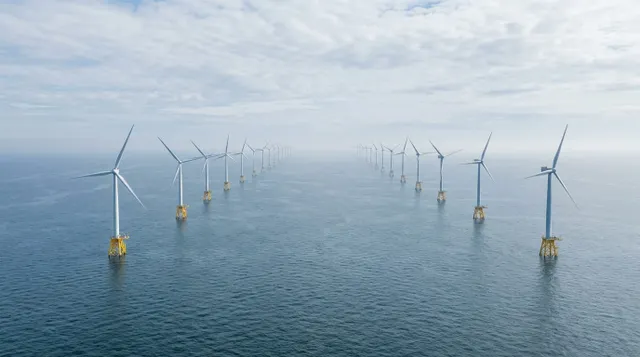
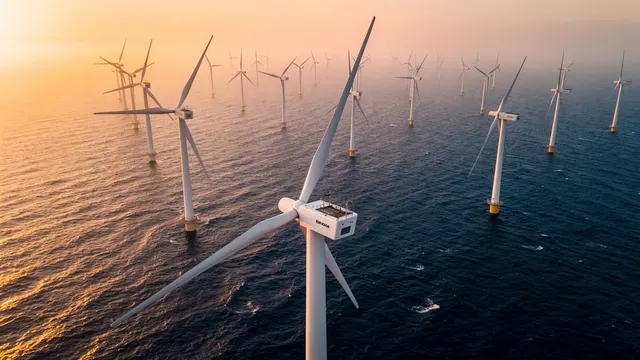
In the wind sector, the government will also expand public-led planned siting development. For onshore wind, it will establish pilot projects using state forests and areas affected by forest fires, along with a one-stop approval system. For offshore wind, it will designate development zones under special legislation and pursue a 10-year bidding roadmap for 55 gigawatts of capacity.
Additionally, the government plans to pursue institutional improvements to site development, including legislation on national maximum setback distance standards, construction of an integrated site and grid information system, community-participation-based grid priority access, introduction of shared grid connection facilities, and expanded exemptions on state property rental fees.
Park stated that "the biggest obstacle to renewable energy supply has been site and grid issues" and added that "we will now transition to a system in which the state identifies sites and designs them together with grids to accelerate the pace of supply."
Planned Siting Success Requires Ecology, Spatial Planning, and Community Acceptance
Shin Jae-eun, director of the Forest and People Foundation's Pulsse Action Research Institute, agreed with the direction of the government's basic plan but emphasized that planned siting development must be supported by more sophisticated spatial planning and ecosystem protection principles.
Shin stated that "the government's transition from developer-led individual site selection to public-led planned siting development is a very meaningful change" and assessed that "site identification considering grids and the public's advance review of community acceptance and environmental factors can reduce sprawl and conflicts." However, she pointed out that "the current basic plan often presents only rough site outlines such as public parking lots or idle sites, and concrete standards and principles for actually implementing projects are still lacking."
She particularly emphasized that gigawatt-scale mega solar complexes being pursued in the Seoul metropolitan area, Chungcheong region, and Gangwon region may conflict with ecologically sensitive areas such as migratory bird habitats, wetlands, and the DMZ, and that location strategies minimizing ecosystem damage are necessary.
Shin stated that "ecologically excellent areas should be excluded in advance using national-level data, and site reviews should be conducted using urban ecological status maps and migratory bird habitat data" and stressed that "risks must be blocked at the planning stage rather than resolving environmental conflicts after project implementation."
She also suggested that securing sufficient candidate sites is important for planned siting success. When only a single candidate site is presented, community conflicts are likely to intensify, so procedures to identify multiple candidates and compare and review environmental factors and acceptance through strategic environmental impact assessment are necessary.
She further recommended mandatory legal spatial planning linking renewable energy sites to national and urban planning, and building multilateral governance involving not only energy experts but also ecologists, urban planning specialists, conflict resolution experts, and civil society.
Shin emphasized that "renewable energy expansion and biodiversity conservation are not conflicting goals but tasks to be achieved together" and stressed that "national-level specialized support organizations and regional planned siting support units should be operated to enable local governments to stably identify sites and connect them to power grids."
Forum Discussion: Feasible Planned Sites and Social Acceptance More Critical Than 100-Gigawatt Target
In the subsequent designated discussion, participants agreed with the government's 2030 renewable energy target of 100 gigawatts but stated that achieving actual results requires establishing a planned siting system that considers ecosystem conservation, grids, and community acceptance together. Consensus formed that spatial planning, institutional design, and strengthened local government roles are more important than simple site acquisition.
Park Eun-jeong, policy team leader at Green Korea United, emphasized that renewable energy expansion is necessary but must be preceded by energy demand management and ecosystem conservation. She stated that existing developed spaces such as industrial zones, factory rooftops, and parking lots should be prioritized, and that ecologically important areas such as state forests, migratory bird habitats, and reclaimed land should be developed only after careful review. She also proposed mandatory solar installation in new industrial zones and just energy transition principles.
Ko Jae-gyeong, senior research fellow at the Gyeonggi Research Institute, said that securing actual grid-connected and operating capacity is more important than the 100-gigawatt target. He proposed developing planned sites into spatial planning integrating space, grids, environment, and community acceptance rather than simple site discovery, and recommended establishing an onshore renewable energy development zone system, local government authority, and regional specialized support systems.
Jung Ok-sik, senior research fellow at the Chungnam Research Institute, emphasized that in the renewable energy site selection process, the principle of first identifying areas to avoid development is more important than identifying areas where installation is possible. He also recommended using both national ecological data and local government regional ecological information, and institutionalizing governance in which residents and experts participate from the early stages of site discovery.
Lee Jae-hyuk, research fellow at the Korea Environment Institute, diagnosed that the core of planned sites lies in decision procedures and governance rather than sites themselves. He emphasized that existing grid utilization in coal power plant closure areas, strategic environmental impact assessment, and resident participation should be institutionalized from the planning stage, and that site and grid planning should be managed as a single integrated system.
The discussants agreed with the government's planned siting policy direction but shared the view that achieving the 100-gigawatt target requires establishing a feasible planned siting system that reflects ecosystem conservation, grids, community acceptance, and local government roles.
Original Korean article: Energy Daily