Original Korean article: thepowernews.co.kr
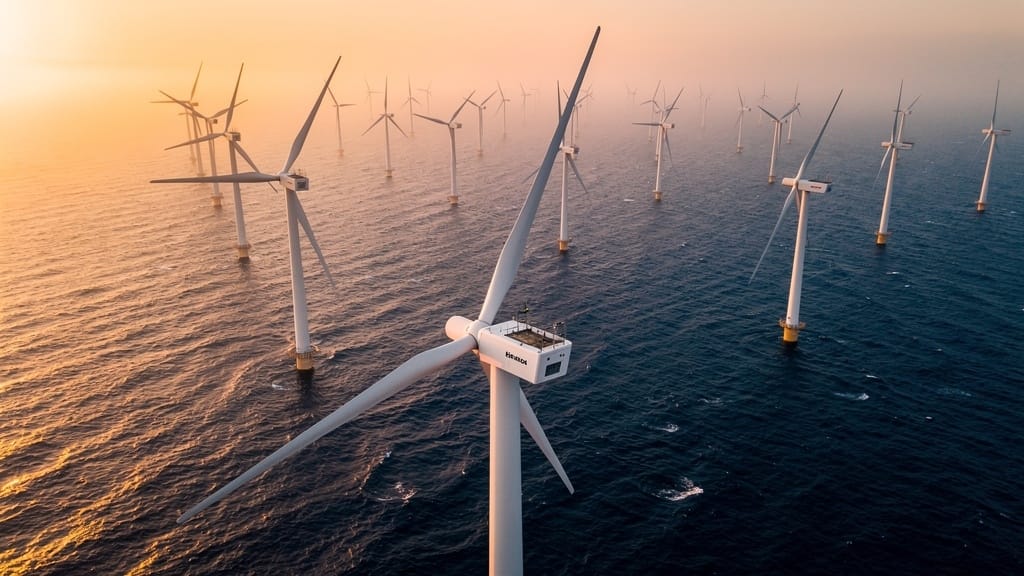
Domestic offshore wind auctions are expanding from 4 gigawatts this year to 7 gigawatts by 2029, with government-led Power Generation Zone competitive auctions beginning in earnest. Auctions totaling 55 gigawatts are planned for 2026 to 2035, with a target of 25 gigawatts of cumulative installed capacity by 2035, raising expectations for benefits to the domestic supply chain.
New data center installations in the United States are forecast to exceed 10 gigawatts this year, expanding more than fivefold in just four years compared to 2022. Gas-fired generation faces local opposition and environmental concerns, while fuel cells are emerging as an alternative, citing lower carbon emissions and minimal water consumption.
Two Growth Drivers in Power Infrastructure
Two distinct axes are simultaneously expanding in the power infrastructure market. Domestically, offshore wind is shifting to a government-led long-term auction market, while in the United States, surging data center power demand is driving rapid growth in fuel cells as an alternative to conventional gas generation.
The common thread is power security. One process involves increasing generation capacity itself, while the other addresses how to supply rapidly growing power demand near data centers. Policy is simultaneously reducing uncertainty in offshore wind development, while artificial intelligence data centers are driving fuel cell demand.
Offshore Wind: From Individual Projects to Government-Directed Auctions
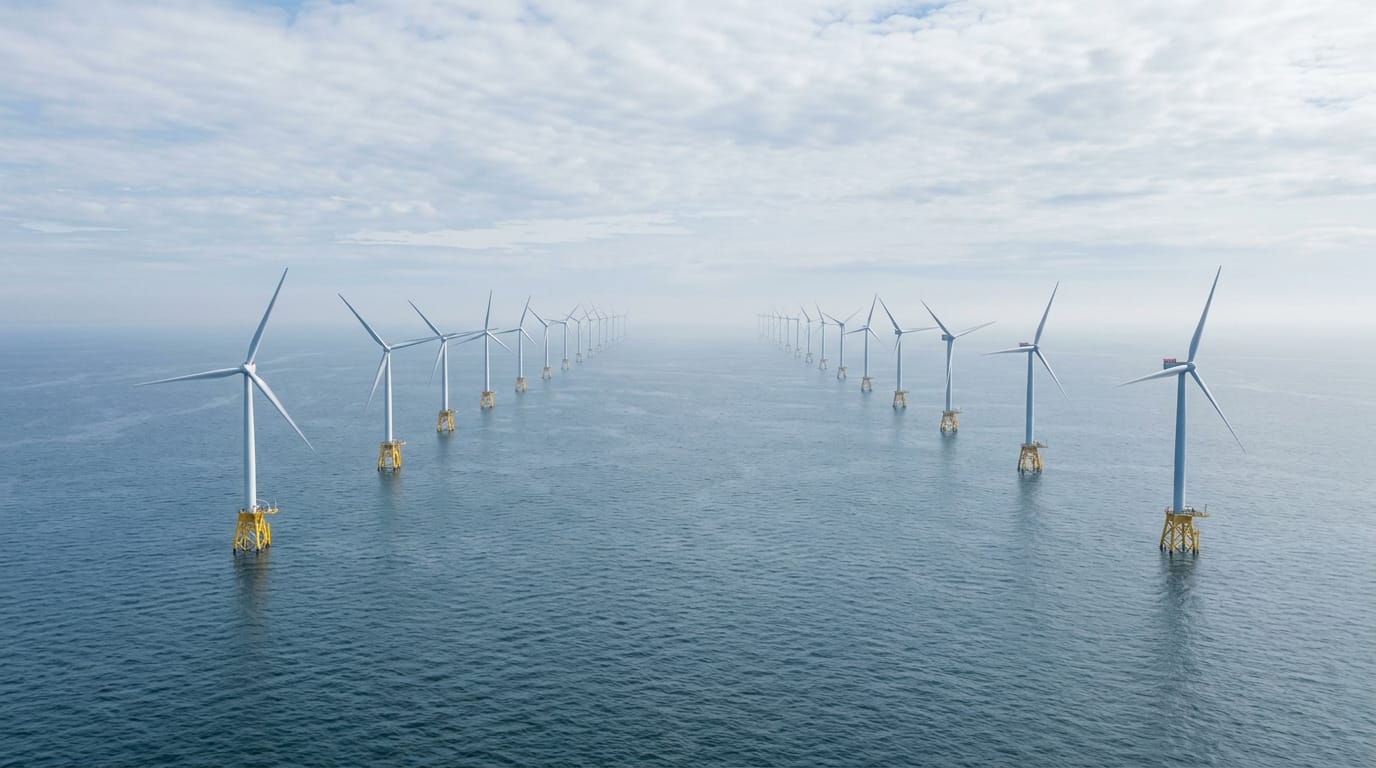
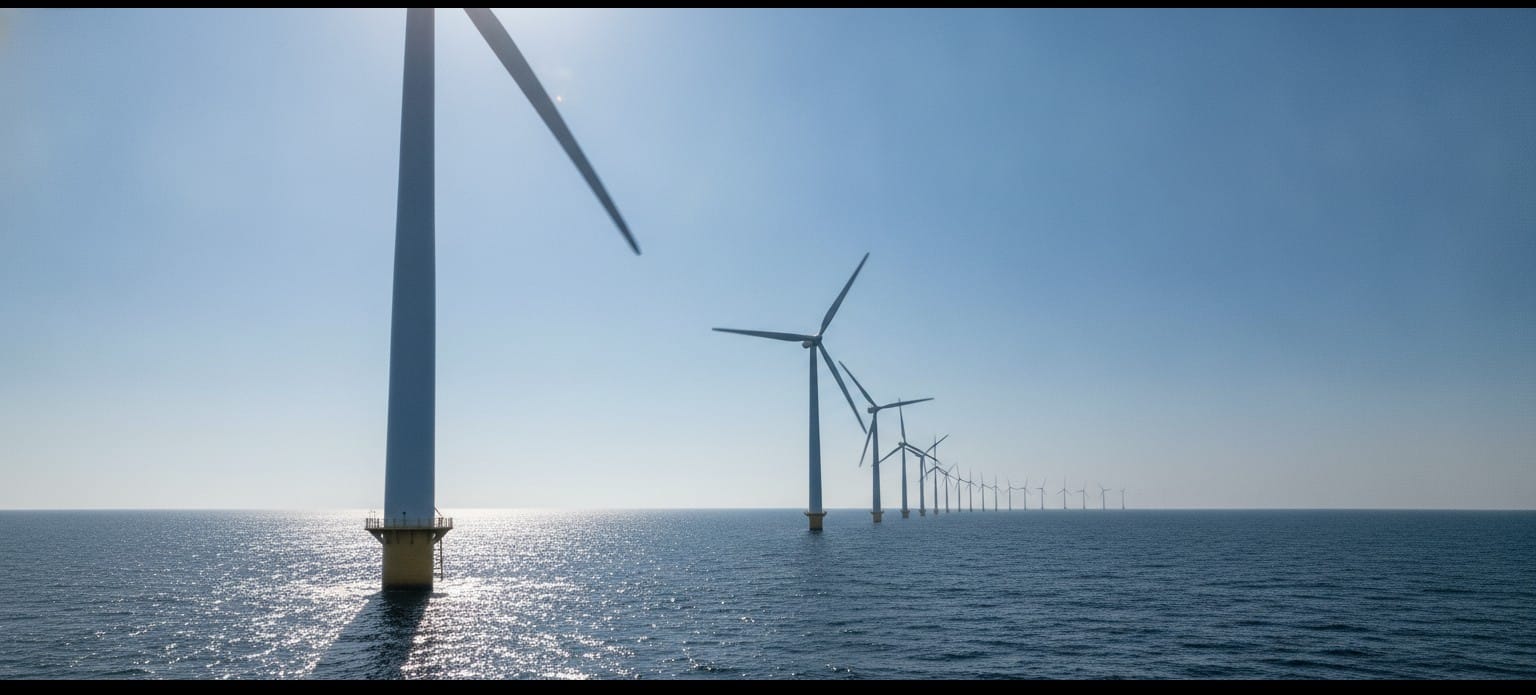
According to financial investment industry sources on September 7, 2026, the domestic offshore wind market is rapidly shifting from private individual development to a model where government designates locations and presents auction volumes in advance. Offshore wind auction volumes, which remained in the 1 gigawatt range annually over the past three years, are planned to expand from 4 gigawatts this year to 7 gigawatts by 2029.
The core of this change lies in business methodology rather than volume. Until now, domestic offshore wind developers had to secure sites themselves and individually handle licensing, community acceptance, and grid connection. This structure inevitably led to lengthy initial project phases and repeated trial-and-error across projects.
The Power Generation Zone competitive auction system, introduced from 2029 onward, transforms this structure. Developers are selected from public sites designated by the government, moving away from a model where individual companies bear all development risks from the outset.
The government's disclosure of long-term auction volumes also enhances market visibility. According to government plans, approximately 55 gigawatts of offshore wind auctions will proceed through 2035, with the goal of completing 25 gigawatts of cumulative installations by 2035.
Based on this benchmark, new domestic offshore wind installation capacity is expected to enter the 1 gigawatt annual level from 2029, expand to 2 gigawatts after 2030, and reach approximately 4 gigawatts annually from 2032 onward.
Rather than a few large projects, the market is increasingly likely to shift to one with consistent procurement at certain levels over the next decade.
South Korea is notably rare among nations in presenting offshore wind auction volumes by year for a ten-year period. The planned scale is also considered substantial in the global market, excepting China and the United Kingdom.
The domestic supply chain stands to benefit first from this development. Offshore wind is not an industry that ends with installing a single turbine. Large-scale value chains move together, including substructures, towers, submarine cables, bearings, blades, and cable installation work.
In the wind turbine sector, Unison and Doosan Enerbility are cited as major players. In substructures, SK Ocean Plant, GS Entech, HSG Sungdong Shipbuilding, Hyundai Steel Industry, and Samil C&S are key companies. Towers are supplied by CS Wind, Seonghyun, and Hyundai Steel Industry. Submarine cables come from LS Cable and Taihan. Bearings are supplied by CS Bearing and Shinra Precision. Blades are included from Human Composite. In cable installation, LS Marine Solution and Taihan are cited as relevant companies.
In the past, domestic offshore wind order expectations fluctuated significantly based on individual project licensing and construction start decisions. If government auction volumes are secured by year going forward, related companies can plan order backlogs and capital investment over longer timeframes.
US Data Centers and Fuel Cells: Meeting Surging Power Demand
While offshore wind grows on the basis of policy visibility, the US fuel cell market is directly driven by surging power demand.
US data center new installations are expected to exceed 10 gigawatts annually beginning this year. New installation capacity, which was only 2.3 gigawatts in 2022, is expanding more than fivefold in just four years.
The pace of increase is steep. US data center new installations are projected to grow from 5.4 gigawatts in 2023 to 6.4 gigawatts in 2024, 8.5 gigawatts in 2025, and then expand to 13 gigawatts this year. Thereafter, large-scale installations of 18 gigawatts in 2027, 17 gigawatts each in 2028 and 2029, and 18 gigawatts in 2030 are projected as possibilities.
The question is what will supply this power.
Solar and wind account for most of the increase in new US generation capacity, but annual new installation capacity stands at approximately 50 gigawatts. Applying a conservative average capacity factor of around 20 percent, the actual power that can be reliably supplied is significantly reduced.
This is why analysis suggests that once new data center installations exceed 10 gigawatts annually, it becomes difficult to meet all required power from renewable energy alone.
Additionally, the United States is closing more than 5 gigawatts of coal-fired power plants annually. As new data centers expand rapidly while existing baseload generation declines, pressure on power supply shortages could intensify.
The traditional solution is gas generation. Generation facilities can be built relatively quickly where needed, and output is more stable than solar or wind.
However, as data centers expand to urban and industrial areas, another problem is emerging: local opposition.
So-called NIMBY phenomena surrounding data centers are strengthening across US regions. The issue is not simply opposition to data center buildings themselves, but environmental concerns about accompanying generation facilities, cooling systems, and transmission networks.
Gas and diesel generation carry air pollution, carbon emissions, and noise problems. The massive water consumption used by data centers is also a source of conflict with communities.
Fuel Cells as an Environmental Alternative
Fuel cells are emerging as an alternative in this context.
Fuel cells can also produce power by reforming natural gas, but they offer advantages in that carbon emissions are approximately 30 percent lower than gas generation and nitrogen oxide emissions are nearly zero.
The difference in water consumption is even greater. While average water consumption for gas generation is approximately 830 gallons per megawatt-hour, fuel cells consume approximately 1 gallon per megawatt-hour.
For data center operators, licensing and community acceptance have become as important as generation efficiency. In situations where power is necessary but building large gas plants next door is difficult, fuel cells with relatively lower environmental burden are emerging as an option.
Data centers must receive stable power supply 24 hours a day. Relying solely on power sources like solar and wind, whose output varies with weather conditions, is difficult, and the waiting period for grid connection is also lengthening.
Fuel cells are distributed power sources that can supply power directly near data centers, reducing such constraints.
Opportunities are opening for domestic companies. Doosan Fuel Cell is cited as a representative company with potential for US market entry. As data center power demand and regional environmental regulations intensify simultaneously in the United States, fuel cells' relative competitiveness could increase.
Convergence: AI-Driven Power Demand Reshaping Markets
Ultimately, domestic offshore wind and US fuel cells appear to be separate markets, but their growth backgrounds converge on one point: as AI and electrification rapidly increase power demand, existing generation and transmission infrastructure cannot keep pace.
Domestically, the government is responding by reducing offshore wind development risks and presenting long-term auction volumes. In the United States, fuel cells, which have higher community acceptance than conventional gas generation, are beginning to be chosen to quickly secure the power data centers require.
The change is also different from an investment perspective. Renewable energy industries have been evaluated as having low earnings visibility due to interest rates, project delays, and licensing variables. However, domestic offshore wind is transforming into a market where order bases can be calculated in advance as a ten-year auction roadmap emerges.
Fuel cells are also shifting from an industry dependent on policy support to one driven by actual power demand. As US data center new installations have already exceeded 10 gigawatts annually, securing generation capacity is becoming less a choice and more a necessity.
The key issue going forward is how quickly plans translate into actual orders and revenue. Domestic offshore wind is likely to see accelerating installation growth after 2029 when Power Generation Zone competitive auctions begin in earnest, while US fuel cells could see demand arise more rapidly alongside data center construction starts.
Investment logic in the power market is also changing. While the lowest generation cost of any power source was once the key issue, whether power can be supplied when needed, whether community and local society consent can be obtained, and whether supply chains can be reliably secured are now more important.
Government is reducing uncertainty for domestic offshore wind, while fuel cells are emerging as an alternative solving environmental and siting issues in the US data center market. As power shortages intensify, the growth visibility of both markets is increasingly likely to rise together.