Skip to content

Doosan's Offshore Wind Growth Slows; Value Chain Results Urgent

The article discusses Doosan Energy's slower-than-expected progress in offshore wind development and the growing pressure on leadership to deliver tangible results in the value chain. It highlights th

Share:
Doosan's Offshore Wind Growth Slows; Value Chain Results Urgent
Published:

Original Korean article: Asia Today

Park Ji-won, chairman of Doosan Enerbility, has invested considerable effort in offshore wind power as a next-generation growth engine for the company. The business has now reached a critical juncture. While Doosan Enerbility has expanded its business scope beyond turbine manufacturing to include power generation project development and investment, building an offshore wind value chain, its turbine competitiveness and results from follow-up development projects remain unclear. Although the offshore wind market itself is growing rapidly, whether Doosan Enerbility can capture a proportional share of that growth is a separate question. The company must respond to global market trends toward larger turbines, expand production capacity, and secure new development projects. Analysts say Park's manufacturing-development-investment value chain strategy has now entered a phase where it must prove results through actual orders, sales, and profits rather than merely expanding the company's external footprint. If the company's own turbine scaling, production capacity expansion, and follow-up project acquisition do not proceed as expected, the offshore wind strategy itself that Park has envisioned could face scrutiny.

Growing offshore wind market, but limited presence for Doosan turbines

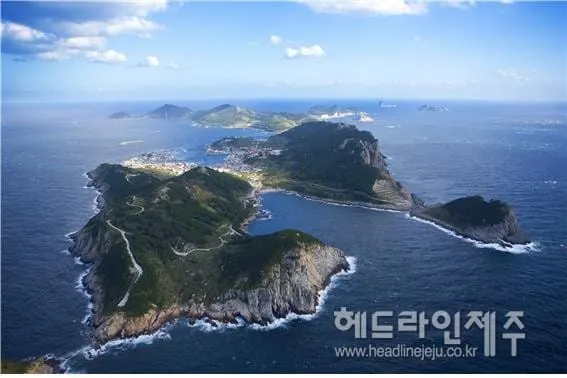
According to industry sources on the 26th, of the total 1,786 megawatts selected in the government's offshore wind competitive auction in the first half of this year, projects using Doosan Enerbility's proprietary turbines accounted for only 410 megawatts, including Gulup-do and Geumo-do. While the government is accelerating the expansion of offshore wind deployment, the growing market is not directly translating into expanded orders for Doosan Enerbility's proprietary turbines. Doosan Enerbility's position in the domestic market has also weakened somewhat. The company's domestic offshore wind market share was 70.4 percent in both 2023 and 2024, but fell to 59.6 percent last year. The global offshore wind market has already entered full-scale competition over turbine scaling. To improve power generation efficiency and reduce installation and operating costs, commercialization of ultra-large turbines rated 14 to 15 megawatts and above is advancing rapidly. By contrast, the offshore wind turbines that Doosan Enerbility has developed and commercialized remain in the 3 to 10 megawatt range. Given the pace of technological evolution in the global market, the company faces clear limits in responding to the scaling competition with its own technology alone. Experts point out that this could create distinct limitations in future domestic bidding competition and overseas market entry. Government policy changes also present a double-edged sword for Doosan Enerbility. The government is strengthening the weight of non-price indicators such as industrial and economic effects and supply chain considerations in offshore wind competitive auctions. Doosan Enerbility is responding to market changes by collaborating with global companies to assemble large turbines domestically. However, if the company increasingly relies on overseas technology rather than developing its own technological capabilities to compete in the global large turbine market, the challenge of securing independent turbine competitiveness could become heavier in the long term. Production capacity is also a constraint. As of the end of last year, Doosan Enerbility's annual production capacity for offshore wind turbines stands at approximately 220 megawatts. If large orders materialize in line with market expansion, verification is needed on whether the company has sufficient production infrastructure to handle them reliably. Ultimately, growth in the offshore wind market alone does not guarantee the company's expansion. If the company's own turbine scaling fails to keep pace with global competition speeds and production capacity expansion is delayed, there is a real possibility that the benefits of domestic market expansion could accrue instead to companies based on overseas technology.

Slow development expansion after Yawol project tests Park's value chain strategy

The power generation development division is also failing to gain momentum. The only offshore wind project that Doosan Enerbility has entered into the full commercialization phase through its subsidiary Doosan Geosolution is the Yawol offshore wind project in Yeonggwang, Jeollanam-do. Doosan Geosolution was launched in 2023 as a carbon-free energy development platform to expand its business structure from power generation equipment manufacturing to power generation project development and investment. The core concept was to directly identify and develop offshore wind projects and link them with Doosan Enerbility's turbine supply to build a value chain encompassing everything from development to equipment manufacturing. The result has revealed only the limits of market competitiveness. While Doosan Enerbility and Doosan Geosolution participated in the development consortium for the Jeonbuk Southwest offshore wind diffusion phase 1 project, they did not join the subsequent diffusion phase 2 development consortium. As a result, the ambitiously launched development platform has failed to demonstrate the presence expected during the market expansion phase, and Park's value chain strategy is now facing scrutiny to prove its results. Choi Jung-chul, professor of mechanical, shipbuilding and ocean engineering at Mokpo National University, said: "Currently, the global offshore wind market is dominated by German and Danish companies, so the overseas sales channels for Doosan turbines are limited in reality."


KWI developer profile — KEPCO

2 projects in Korea totalling 130 MW. Compiled from the KWI database. Not part of the source article.

Hanlim Offshore Wind

Capacity100 MW
LocationJeju
DeveloperKEPCO · KOMIPO · Hyundai E&C · Doosan
StatusIn Operation
LicenceElectricity Business Licence 2019

Tamra Offshore Wind

Capacity30 MW
LocationHangyeong-myeon, Jeju
DeveloperKOEN · Doosan Enerbility
StatusIn Operation

Project data: KWI database — Electricity Business Licence records, Electricity Regulatory Commission minutes, and pre-EBL permit filings.

Found this useful?

Share this article with your network.

More in Daily News

See all