

A 3.07 trillion won offshore wind power project being pursued by Mijo Wind Power in waters near Gudeulyeo in Mijo-myeon has hit a new obstacle in the form of a military operational review. Although the project has passed major procedures including the Electricity Business Licence (EBL) and environmental impact assessment (EIA), difficulties in project advancement are expected as the MND (Ministry of National Defense) has raised concerns that offshore wind turbines could interfere with military radar operations and maritime surveillance activities.
Military radar interference concerns raised
On October 14, a preliminary consultation on the military operational review related to Mijo Wind Power's offshore wind project was held at the MND in Yongsan-gu, Seoul. In connection with this, the military plans to observe the consultation process between the developer and military authorities and grasp future response directions.
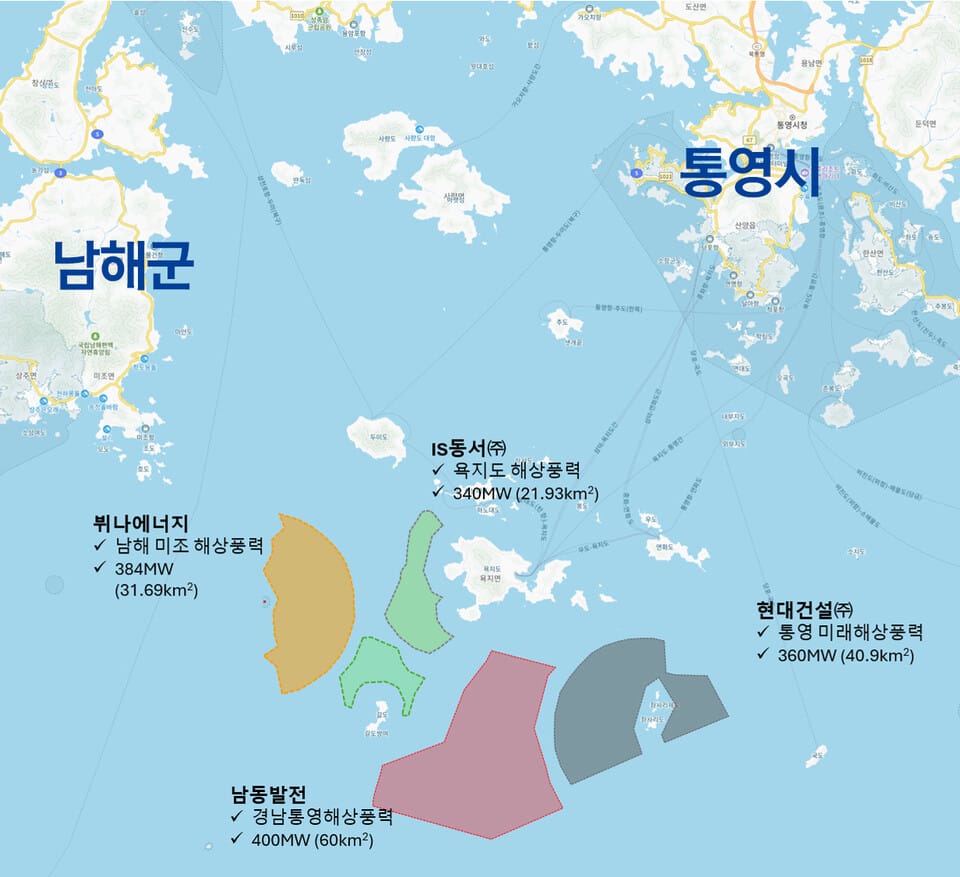
The military operational review is a procedure to evaluate the impact that large-scale wind power facilities have on the military's surveillance, detection and defense systems. In particular, the main subject of review is the possibility that the structures of large wind turbines installed at sea and their rotating blades could reflect or interfere with military radar waves, affecting the detection and tracking of vessels and other objects.
According to the military, the MND is understood to have taken a position of non-approval regarding the Mijo offshore wind project in the preceding military operational review process. The reason is that the impact on military radar systems and maritime surveillance systems operating in nearby waters has not been sufficiently resolved.
Mijo Wind Power is reviewing technical supplementary measures such as radar performance improvements, but military authorities are reported to be taking a cautious stance on whether operational issues can be sufficiently resolved through these measures.
A military official stated, "A problem has been raised that offshore wind turbines could affect military radar operations, and the MND and the developer are continuing to consult. Through this preliminary consultation, we plan to confirm the military's position and the possibility of supplementary measures."
Construction start in 2028, completion target in 2031
The Mijo offshore wind project is a large-scale private power generation project being pursued jointly by Mijo Wind Power and KOMIPO (Korea Midland Power). The plan is to install 28 units of 14MW-class wind turbines across approximately 32 square kilometers of sea east of Gudeulyeo in Sangju-myeon, Namhae-gun, to secure a total generation capacity of 384MW. The total project cost is approximately 3.07 trillion won, with a current plan to begin construction in 2028 and achieve completion in 2031.
The project obtained an Electricity Business Licence (EBL) in March 2019 and concluded a power transmission facility usage contract with KEPCO (Korea Electric Power Corporation) in April 2021. In August 2024, it completed a cultural heritage survey, and in September 2025 received final approval for the environmental impact assessment (EIA).
In 2026 the project also reorganized its implementation structure. In March, it concluded a memorandum of understanding (MOU) with the Namhae County Fisheries Cooperative, and in June changed the corporate name from the existing Yokji Wind Power to Mijo Wind Power and the project name from the Tongyeong Yokji Offshore Wind Power Generation Project to the Namhae Mijo Offshore Wind Power Generation Project. The company's head office was also relocated from Tongyeong to Namhae.
Mijo Wind Power is reviewing a local resident equity participation scheme and has proposed a plan to secure at least 4 percent of the total project cost through resident participation investment. It can also pursue support projects for residents in the vicinity of the power plant. Under relevant laws, certain support funds are provided to areas surrounding power generation facilities and used for resident welfare improvement, living environment enhancement and income increase projects.
Four offshore wind projects advancing off the south coast
Meanwhile, in waters near Namhae and Tongyeong, offshore wind projects of 360MW by Hyundai E&C (Hyundai Engineering & Construction), 340MW by IS Dongseo and 400MW by KOEN (Korea South-East Power) are being pursued in addition to Mijo Wind Power. The combined generation capacity of the four projects reaches 1,484MW. These projects also differ in their advancement stages but face challenges including military operational review and securing maritime traffic safety.
What supplementary conditions the military authorities will present in this MND consultation and whether the developer can devise practical solutions will be an important turning point in gauging the future implementation schedule of the Mijo offshore wind project.
Original Korean article: Namhaesinmun
English brief by Korea Wind Intelligence, koreawindintel.com
KWI project profile — Mijo (former Yokji) Offshore WindCompiled from the KWI database. Not part of the source article.
|  |
Project data: KWI database — Electricity Business Licence records, EIA filings (ME2023C022), and Electricity Regulatory Commission minutes.



















