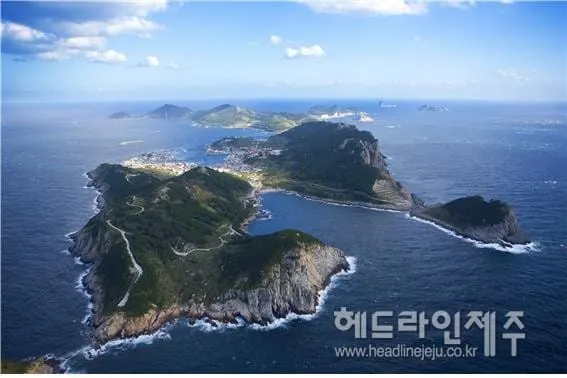
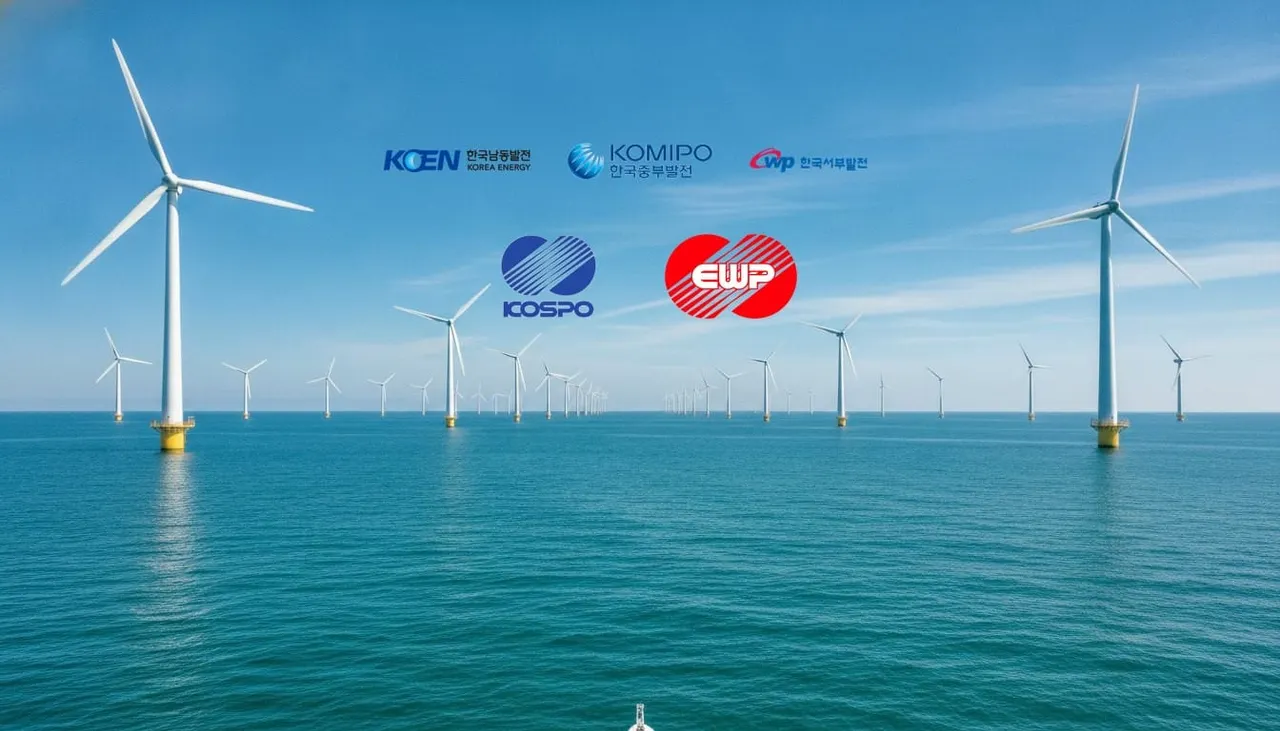
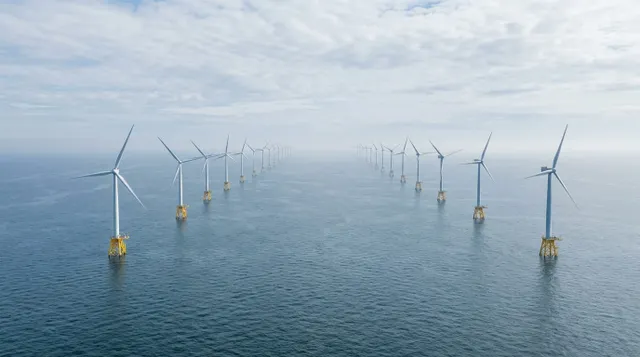
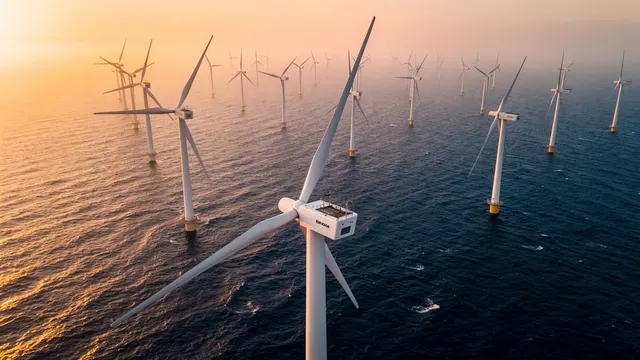
"There is growing conflict with fishing communities. Securing local acceptance is the biggest problem." This is the lament of an official at the offshore wind power project site in Yokji Island, Tongyeong, South Gyeongsangnam-do. In March, the government enacted a special law on offshore wind power and launched a speed competition to directly review wind resources, fishing activities, and environmental impacts. However, the situation at Yokji Island is different. In these waters, four large-scale offshore wind power projects are underway, promoted by individual operators including Buena Energy, Hyundai Engineering and Construction, Korea South-East Power, and IS Dongseo. The problem is that all of these projects began before the special law was enacted, so they exist in a legal gray zone where conflicts between fishing communities and operators are deepening.
The core of the conflict lies in the fact that the project sites overlap entirely with major fishing grounds. An official at the site stated, "The distance between wind turbines is approximately 1 kilometer, but typically the range of fishing gear installation exceeds this, making conventional fishing methods practically impossible." From the perspective of fishing communities whose livelihoods are threatened, there is a structural inability to accept the projects without adequate compensation or measures.
Operators face difficulties as well. Since the incorporation notice under the offshore wind power special law has not yet been issued, there is no alternative but to follow existing project procedures. Even if operators wanted to relocate sites to accommodate fishing communities' demands, collecting wind resource measurement data and obtaining permits would require several more years. The designation as a "priority assessment target" for environmental impact assessment—which would allow the formation of a conflict mediation council comprising stakeholders, experts, and the government—has also fallen through.
Having already invested considerable time and funds, operators find themselves in a dilemma: they can neither withdraw the projects nor proceed against fishing communities' opposition. There is no clear mediation standard to resolve this confusion. Because there are few demonstration cases of domestic offshore wind power, it is difficult to objectively calculate the scale of fishing damage, and compensation systems or profit-sharing models have not been clearly established. Currently, fishing communities at Yokji Island are demanding the introduction of a profit-sharing system to divide power generation revenues, while operators take a cautious stance, resulting in a stalemate.
Officials at the site say that the only solution to prevent project delays is the swift enactment of the incorporation notice under the special law. Since these are individually promoted projects rather than publicly led ventures, it is also difficult for local governments or the government to step in as active mediators, as they have done with offshore wind power in the southwestern region of North Jeolla. Ultimately, there is a call for urgent legal frameworks to bring existing projects under the regulatory system.
The government plans to proceed with administrative notice for the incorporation notice in September, but as time passes helplessly, the concerns of both fishing communities and operators only deepen. If the special law is to be a guide for future offshore wind power projects, Yokji Island poses a question: how will conflicts borne by projects implemented before the system took effect be resolved? Early implementation of the incorporation notice, as well as environmental impact assessments placed under government supervision, must be conducted objectively and rigorously to minimize the transition period caused by local conflicts. The government's genuine commitment to offshore wind power must be demonstrated not only on the west coast, where it is highlighted through large public-led complexes, but also over the waters of Yokji Island, which remains adrift in a legal gray zone.
Original Korean article: DealSite