Whose sea is it? The Constitution allows the use of fishery resources and "natural forces that can be utilized economically" to be granted by special permit according to law, and places national territory and resources under state protection and planning. On this basis, law defines the sea as a natural public asset owned by the state—that is, public waters. Fishing licenses granted to fishermen and permits for power generation produced by wind are ultimately rights made concrete by law on the same constitutional foundation.
As offshore wind farms enter the sea bearing the era's task of energy transition, conflict between traditional fisheries and new power generation projects is intensifying. The core issue of this collision is unquestionably "compensation." In situations where operational restrictions become unavoidable due to offshore wind farm development, who must bear responsibility and to what extent?
The Court's Legal Standard

In April, the Gwangju District Court dismissed in full damage claims brought by fishermen holding near-shore and coastal fishing permits against offshore wind developers. The court interpreted strictly the range of rights holders protected by the Public Waters Act, drawing a clear line against claims for compensation without legal basis. The Fisheries Act defines fishing rights acquired through "licensing" as real property rights and protects them by applying provisions of civil law concerning land. By contrast, "permitted" fisheries and "reported" fisheries do not confer exclusive rights to specific waters, so the manner and degree of protection differ. The Public Waters Act likewise limits the range of rights holders requiring consent for occupation and use permits to those holding fishing "licenses" and, among permitted fisheries, those holding structured fishery permits.
Accordingly, the court determined that near-shore and coastal fishing permit holders cannot be regarded as exclusive rights holders over specific sea areas. It also clarified that the loss compensation logic applied to land reclamation, which makes fishing permanently impossible, cannot be directly transferred to offshore wind. Exclusive property rights called "fishing rights" and "incidental benefits" gained through free use of public waters are plainly different.
The establishment of legal standards serves as a starting point for remedying fishermen who suffer actual harm, beyond merely blocking indiscriminate claims. Requests without legal foundation must be sorted out so that limited resources can address fair compensation and coexistence. Clear standards are also a prerequisite for project financing involving trillions of won. No financial institution will invest massive capital in projects where compensation risk cannot be predicted.
Three Stakeholders at the Table
Three parties sit at this conflict's table. First, government and local authorities bearing the national task of carbon neutrality and power security. Second, power developers. Developers invest hundreds of billions of won in development costs and fishermen compensation, yet if they fail to reach completion they lose everything without compensation—they bear this risk alone while facing the perception of "making money from free wind." Third, fishermen experiencing the loss of a narrowing livelihood. Their voice deserves respect.
Government has established a resident participation system in which renewable energy certificate (REC) weights are added to projects in which residents invest, allowing power generation profits to be returned to local communities. Developers, for their part, provide compensation to fishermen expected to suffer harm even where there is no legal obligation, and commit hundreds of billions of won in donations to local governments. This is a heavy burden in the project's early stages, but without it the project becomes difficult to start and maintain.
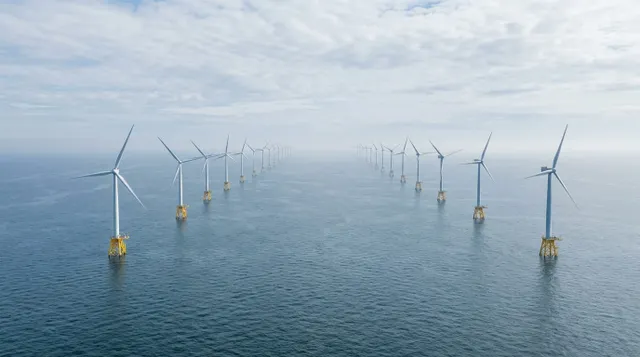
Fortunately, this coexistence is not an empty slogan. Research accumulated over more than 20 years in Europe's North Sea consistently reports that the foundation structures and scour-prevention stones of offshore wind farms function as artificial fish reefs, increasing fish biomass. At Tamla Offshore Wind near Jeju, voices from the field report that structures have served as fish reefs, diversifying fish species and increasing catches.
Balance and the New Framework
The issue is balance. If fishermen insist on demands exceeding legal grounds, the resources for coexistence dry up. If local authorities demand excessive donations, the project founders and the cost is ultimately borne by the region and nation as a whole. Developers too cannot succeed merely by wielding and pushing only the rights law guarantees. A court judgment does not heal residents' sense of deprivation. When all three parties step back one step each, the sea becomes truly a space for all.
The Offshore Wind Special Act, implemented in May, placed "planned siting" in which government identifies locations and stakeholder consultation procedures at the center of the system. This is a shift in thinking—addressing conflict in advance through consultation procedures rather than in post-hoc litigation—and law has provided a table where the three parties can sit together.
Returning to the original question: whose sea is it? The sea belongs to the state and community, is the long-standing livelihood foundation of fishermen, and is our shared public space where sustainable energy must be produced. When firm legal standards are woven together with flexible and inclusive coexistence systems, the successful rule for offshore wind is completed. In the first year of the Special Act's implementation, it is time to draw together on the sea a map of both rights and coexistence.
Original Korean article: Electric Times