The so-called "Power Grid Three Laws," designed to respond to increased electricity demand from advanced industries such as artificial intelligence and semiconductors and to rapidly expand the national power grid, passed the National Assembly plenary session on the 20th. The Power Grid Three Laws consist of amendments to the 'Electricity Business Act' and 'Electric Power Source Development Promotion Act' that permit joint grid connection of renewable energy facilities, and an amendment to the 'Special Act on the Expansion of the National Power Grid' that allows private operators to participate in national power grid construction.
The government is pursuing an energy transition policy centered on renewable energy to implement the '2035 National Greenhouse Gas Reduction Target (NDC),' realize carbon neutrality, and foster advanced industries such as artificial intelligence. The plan concentrates all capabilities on supplying 100GW of renewable energy by 2030 and securing the power grid to accommodate it.
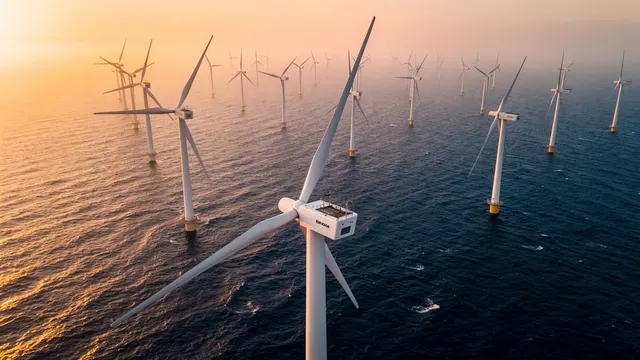
Accordingly, renewable energy generation facilities such as offshore wind have recently been increasing. When renewable energy facilities are individually connected to the power grid, excessive connection facility construction costs occur and concerns about inefficient land development arise, making improvement necessary.
Permitting Joint Grid Connection for Renewable Energy
Under the amendments to the 'Electricity Business Act' and 'Electric Power Source Development Promotion Act,' multiple renewable energy generation facilities can now be jointly connected to the power grid. The Electricity Business Act amendment establishes legal grounds for 'renewable energy joint connection facility construction projects and construction permits.' The Electric Power Source Development Promotion Act amendment grants renewable energy joint connection facility construction operators the status of electric power source development operators, enabling rapid construction through permit and approval deeming when building renewable energy joint connection facilities.
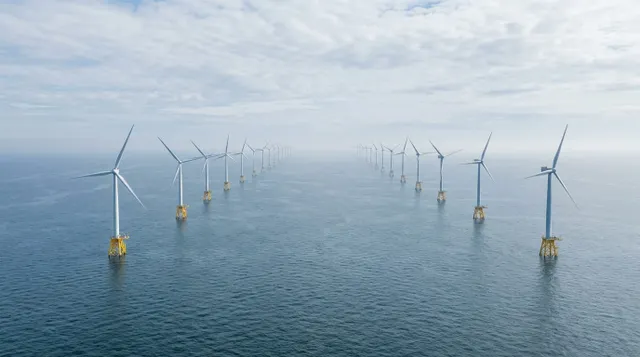
This amendment is expected to be applied for the first time to offshore wind projects in the Haenam region. Five offshore wind power companies—Korea Electric Power Corporation, CIP (Haegeum and Haesong), KREDO (Sinan Blue), DWO (Cheonghae Jin), Jodo Wind Power Generation (Oebbyeongdo), and Dado Wind Power (Unglim)—signed a memorandum of understanding on May 15 to construct joint connection facilities for offshore wind in the Haenam region.
Previously, offshore wind power projects proceeded through an "individual connection" method in which each operator built long-distance lines to onshore substations. However, to enable rapid connection and widespread deployment of large-scale offshore wind in the future, joint connection facilities (including integrated facilities)—collective substations where multiple offshore wind operators can jointly connect—are planned to be proactively constructed in island or coastal hub areas under public leadership. The government's policy is that the cost of constructing joint connection facilities will be shared proportionally to the facility capacity of each offshore wind operator (or Korea Electric Power Corporation) using the facilities.
As joint connection is permitted, connection cost reduction is possible, and thus lower offshore wind generation costs and reduced power purchase costs for Korea Electric Power Corporation are expected. In sections where Korea Electric Power Corporation's public grid and offshore wind connection lines are adjacent, cost savings in grid investment are also expected through integrated facility construction. Additionally, it is projected to contribute to efficient use of national land and securing community acceptance.
The Haenam offshore wind joint connection is a project that directly connects large-scale offshore wind from islands or coastal areas to the West Coast HVDC. The existing power grid construction distance of 703km is expected to be shortened to 287km, a reduction of approximately 416km (59%), and investment costs for both Korea Electric Power Corporation and power generation companies are projected to be reduced by approximately 3.6 trillion won. Offshore wind generation costs are expected to decrease by an average of 20 won/kWh.
Starting with Haenam, Korea Electric Power Corporation plans to construct nine joint connection complexes nationwide, including Saemangeum, Gochang, Goheung, Yeongheung, and Taean. The company also plans to reflect the Haenam joint connection project in the '12th Basic Plan on Long-term Electricity Supply and Demand' and 'Long-term Transmission and Substation Equipment Plan.'
Private Operators Participating in National Power Grid Construction
The 'Special Act on the Expansion of the National Power Grid,' which took effect on September 26 last year, designates Korea Electric Power Corporation (transmission operator) as the national power grid construction operator. Accordingly, only Korea Electric Power Corporation can construct the national power grid; however, in the current situation where power grid construction volume is surging, it is difficult to complete construction on schedule with Korea Electric Power Corporation's workforce alone.
According to the '11th Basic Plan on Long-term Electricity Supply and Demand,' renewable energy is planned at 121GW by 2038. The volume of renewable energy generation permits in the Honam region reaches 52.2GW by 2033. Power grid expansion is urgent. According to the 11th Basic Plan, Korea Electric Power Corporation's '11th Long-term Transmission and Substation Equipment Plan' shows that by 2038, an additional 25,587 circuit-kilometers of transmission lines—1.7 times (70% increase) the currently constructed transmission lines—and 391 substations—1.4 times (40% increase)—must be built. Investment costs require 72.7 trillion won, a 1.3-fold increase.
Moreover, Korea Electric Power Corporation's financial condition is poor. Despite achieving a surplus in the first half of this year, due to the aftermath of soaring fuel costs from the Russia-Ukraine war, the company still carries 210.7 trillion won in debt and 133 trillion won in borrowings, bearing daily interest costs of 11.5 billion won.
The amendment to the 'Special Act on the Expansion of the National Power Grid' allows private operators other than Korea Electric Power Corporation to participate in national power grid development projects when approved by the Power Grid Expansion Committee (chaired by the Prime Minister). This is interpreted as an intention to accelerate power grid construction speed by leveraging private sector expertise and capital.
However, for stable system operation, facilities are immediately transferred to Korea Electric Power Corporation upon completion of development, and the basis for private operator participation (amended provision) is set with an expiration date of December 2029. After December 2029, private operators cannot participate even if they wish. This is because construction volume is most concentrated in 2028–2029 according to the '11th Long-term Transmission and Substation Equipment Plan.'
At the '1st National Power Grid Expansion Committee' held on October 1 last year, a total of 99 projects were designated as national power grid projects under the Special Act (10 for advanced strategic industry power supply, 73 for connecting zero-carbon power sources such as renewable energy, and 16 for transmission lines and substation construction projects linked to these projects). Among these, the 1st project—major power grid construction including 345kV Sinhaenam-Sinjangseong and Sinhaenam-Singangjin transmission lines with site selection completed by the end of 2025—is scheduled to begin in earnest from 2028.
Original Korean article: Today Energy