

Renewable energy projects in the Jeonnam-Gwangju integrated special city region, which have been blocked from grid connection since 2024 due to system saturation, are now moving to restart after more than two years as the power grid reopens to new connections.
According to government plans, the Honam region's renewable energy capacity by 2030 will expand from 37 gigawatts to 64 gigawatts on the transmission network and from 18 gigawatts to 30 gigawatts on the distribution network. The timing for new projects to enter the grid is also expected to move forward by three to four years, from 2034 onwards to earlier.
However, as the threshold for connection lowers, concerns are rising that output curtailment, which forcibly stops power generation, will become more frequent. Friction with the offshore wind industry is also expected as the government reclaims connection rights from delayed projects. The extent to which the region can attract demand to consume the increased power is being cited as a key variable determining policy success.
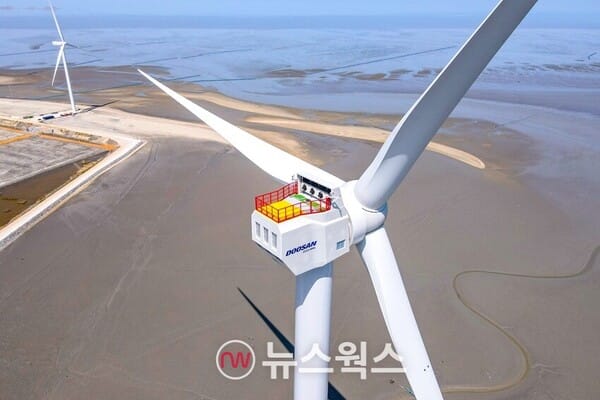
According to MCEE (Ministry of Climate, Energy and Environment)'s "Power Grid Innovation Plan for 100 gigawatts of renewable energy by 2030 (plus additional capacity)" reported to the cabinet on September 29, 2026, the government has adopted an approach that bundles flexible connection, energy storage systems, and connection rights redistribution to increase the capacity of existing transmission and distribution networks. Through this, the nation's renewable energy capacity by 2030 is projected to expand from 119 gigawatts to 171 gigawatts on the transmission network and from 84 gigawatts to 110 gigawatts on the distribution network.
103 Substations Unlocked, Clearing Connection Backlog
In Jeonnam-Gwangju, 103 substations that had been designated as grid management substations were released from that designation on October 1, 2026. Grid management substations are those where transmission and distribution networks are saturated and new power generation facilities are blocked from connecting. The secured spare capacity will first go to existing operators waiting for connection, with new project applications to be accepted from January 2027.
The city explains that 6.4 gigawatts of capacity can be secured by 2027. This calculation suggests that a substantial portion of the 8.1 gigawatts currently waiting for connection can be resolved within this period.
The MCEE explained that flexible connection, which takes effect in January 2027, will expand the solar capacity that can be attached to a single distribution line from 14 megawatts to 16 megawatts, and transformer capacity at substations from 50 megawatts to 60 megawatts. This would allow the Honam region to accommodate an additional 2.6 gigawatts of solar power without building new grid infrastructure. Autonomous connection, which allows developers with ESS to install equipment at two to three times the connection limit, is also planned to be fully introduced from 2027 following pilot projects.
However, 41 substations in the Honam region where saturation is severe are scheduled to have their connections opened in phases between 2028 and 2030, so the timing of regional impact is expected to vary.
KOWEPO (Korea Western Power) announced on October 2, 2026 that it has begun joint development of onshore wind through a memorandum of understanding with JNDC.
Rising Output Curtailment and Conflict Over Offshore Wind Connection Rights
Flexible connection is a system where KEPCO (Korea Electric Power Corporation) stops power generation during time periods when the grid cannot handle the volume, making connection conditional on this curtailment. As connection volumes increase, concerns are rising that output curtailment will also grow. The city estimates that regional output curtailment increased more than 150-fold, from 260 megawatt-hours in 2023 to 7,191 megawatt-hours in 2024 and then to 39,527 megawatt-hours in 2025. Additionally, autonomous connection requires developers to fund battery equipment themselves, which could create a barrier for small-scale developers and community-level projects run by residents.
The Korea Solar Energy Association reportedly requested in May that the government disclose the criteria for selecting output curtailment targets and regional conditions, and establish a compensation system. Secretary General Kim Suk stated at the time that the current structure, where developers must repeatedly endure unpredictable output curtailment with no compensation system, requires improvement, and that the output curtailment issue is no longer a problem for some regions but is directly linked to the survival of solar developers nationwide.
The government estimates that of the 15.8 gigawatts of transmission network connection rights held by offshore wind projects in the Honam region by 2030, actual entry volume will be around 3 gigawatts. This means only about one-fifth of the secured connection rights will actually use the grid. The government is known to be planning to defer the connection timing of projects that failed to complete environmental impact assessments by five years before grid use begins or failed to secure fixed-price contracts by three years before to around 2033. This means the government plans to reclaim more than 10 gigawatts in the Honam region by 2030.
A Korea Wind Energy Association official stated in June that offshore wind is a large-scale infrastructure project taking years to complete, and schedules often slip due to circumstances beyond developers' control, such as environmental impact assessments, military authority coordination, and changes to grid reinforcement plans. The official argued that evaluation should consider not just schedules but also the reasons for delays and implementation progress to date.
The method of allocating connection rights is also planned to shift from first-come-first-served to competitive auction starting in January 2027. The evaluation criteria will be gathered from developers in October 2026 and included in amendments to KEPCO's transmission and distribution equipment usage regulations in November 2026, with industry attention focused on how economic viability, public interest, and grid conditions will be weighted.
Self-Sufficiency at 213 Percent Yet Output Curtailment Continues: Semiconductor Cluster and Tiered Rates on Trial
Jeonnam's power self-sufficiency rate in 2025 before integration was reported at 213.4 percent, the highest in the nation. However, with limited pathways to send surplus power to consumption areas, power generation repeatedly stops, and experts point out that simply expanding the grid will not ease the output curtailment burden. President Lee Jae-myung reportedly stated at the cabinet meeting on September 29, 2026 that drawing Honam's renewable energy all the way to the Seoul metropolitan area does not make sense, and urged that policy resources be focused on making it beneficial for companies to use power where it is produced.
The largest demand source is the Honam semiconductor cluster being developed around the Gwangju military airport site. KEPCO projects that more than 6 gigawatts of power demand, equivalent to four to five nuclear reactors, will be generated there. A power supply agreement signed on August 12 by the city, the MCEE, KEPCO, Samsung Electronics, and SK Hynix is known to include provisions for supplying approximately 3 gigawatts from 2029 in the first phase.
Jeonnam-Gwangju Mayor Min Hyung-bae reportedly presented a so-called "semiconductor triangle" concept at a special lecture at a future industries forum on October 2, 2026, positioning western region renewable energy as the power foundation for semiconductor production. Mayor Min stated that semiconductors are not completed by building a single fab alone, and emphasized that the region would create its own industrial ecosystem where semiconductors are manufactured in Gwangju, materials and components are supplied from the eastern region, and renewable energy from the western region provides power support.
According to the regional industrial electricity rate plan disclosed by the MCEE and KEPCO at a public hearing on August 26, industrial rates in the southern region including Jeonnam-Gwangju are projected to fall by 13 to 18 won per kilowatt-hour. Applied to the 2025 average industrial selling price of 181.9 won per kilowatt-hour, this would be around 164 to 169 won, a difference of more than 60 won from Mayor Min's campaign pledge of 100 won per kilowatt-hour for industrial electricity.
However, concerns are also being raised about fairness issues arising from different rates by region and worries about KEPCO's financial burden from accumulated debt.
A regional business figure stated in August that despite Jeonnam-Gwangju having the nation's highest renewable energy potential, the region had failed to link the power it produced to regional industrial competitiveness. If cheap power supply becomes reality, the figure predicted, it could become a competitive advantage that other regions do not possess in attracting semiconductor and artificial intelligence data center investments.
The timing and scale of transmission and distribution equipment expansion are scheduled to be included in the 12th Basic Plan on Long-term Electricity Supply and Demand to be established in the second half of 2026 and KEPCO's long-term transmission and distribution equipment plan. The effect of reopening connections is expected to vary depending on how much of the region's share is reflected in these plans.
Original Korean article: newsworks.co.kr
English brief by Korea Wind Intelligence, koreawindintel.com



















