Sea Steel Group Holdings made a bold decision to preemptively clear potential risk factors from its books ahead of future new business ventures. Although consolidated results turned to a loss, the company's mainstay steel pipe business remains solid and all underperforming new ventures have been resolved, positioning the company for a performance rebound going forward, according to assessments.
Sea Steel Group Holdings recorded a consolidated operating loss of 50.8 billion won in the second quarter of this year, but this resulted from reflecting initial depreciation expenses on production facilities and estimated future costs related to the "Norfolk Vanguard Project" undertaken by its British offshore wind subsidiary Sea Wind as a one-time provision on the books in advance. The mainstay subsidiary Sea Steel is supporting results with solid performance, recording 32.6 billion won in operating profit on a separate basis in the second quarter on the back of favorable conditions in the Americas market, and from the second half onwards, a two-track growth strategy through expanded production of offshore wind substructures and increased supply of specialty steel pipes for AI data centers is expected to gain full momentum.
According to second-quarter results announced by Sea Steel Group Holdings on the 18th, sales grew 14.3 percent year-over-year to 1.1669 trillion won, achieving top-line growth, but the company recorded an operating loss of 50.8 billion won and a net loss of 74.6 billion won, returning to losses.
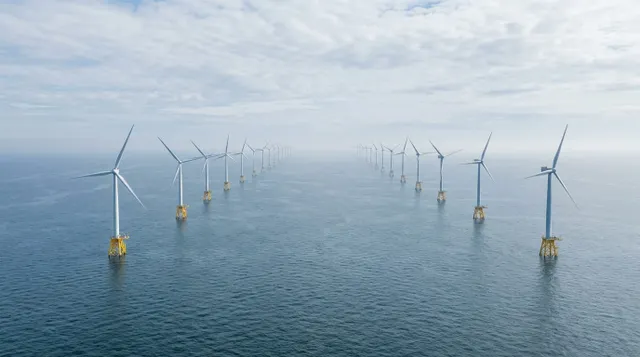
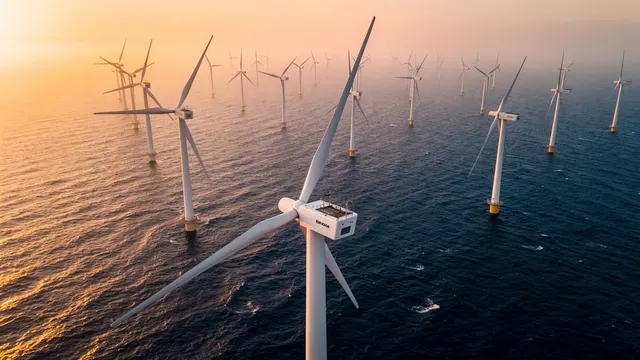
Sea Steel Group Holdings' second-quarter consolidated loss is the result of preemptive risk management conducted ahead of full-scale operation of the British offshore wind substructure (monopile) manufacturing plant in the second half. The market views this loss as a strategy to enhance earnings transparency from the point of commercial production in the second half by preemptively reflecting potential costs of subsidiary Sea Wind.
Such accounting treatment was possible due to the outstanding profitability of mainstay subsidiary Sea Steel. In contrast to the holding company's overall results turning to a loss, Sea Steel is comprehensively targeting the North American energy infrastructure market centered on the United States. The company is diversifying profitability by raising sales prices of high-value-added product categories essential to North American energy development, including oil well pipes used in crude oil and gas extraction as well as large transmission pipelines for transporting them.
Sea Steel achieved sales of 457.7 billion won and operating profit of 32.6 billion won in second-quarter standalone results, a figure that surged 54.3 percent compared to the same period last year.
Sea Steel Group Holdings officially announced its entry into the "explosively growing AI data center infrastructure market" with this earnings announcement as a turning point. This is because recent global AI data center construction booms have led to a sharp increase in demand for large-scale power generation facility steel pipes and specialty pipes for cooling equipment. The company plans to position this sector as a future core growth driver and actively expand sales of high-value-added project products.
This is interpreted as strategic confidence to transcend the limitations of traditional steel companies that relied on economic cycles and transform the company's nature into an essential infrastructure partner for advanced IT industries.
The company's loss this time is interpreted as a measure to preemptively reflect potential problem factors at a time when capital soundness is favorable. With balance sheet risks completely resolved, Sea Steel Group Holdings is pursuing a swift performance rebound in the second half through a two-track strategy centered on offshore wind and AI infrastructure.
However, for the company's blueprint to take root, it will need to overcome variables such as global supply chain stability and initial production yield rates. According to industry sources, if maritime logistics become constrained due to geopolitical crises originating from the Middle East or steel raw material prices fluctuate, the margins secured in the North American market could collapse at any time.
There are also concerns that if the British offshore wind plant, which preemptively reflected potential costs in the second quarter of this year, fails to secure initial yield rates (pass rates) due to factors such as insufficient local expertise shortly after entering commercial production in the second half, fixed cost burdens could accumulate again.
The fact that major domestic and international steel and piping companies including POSCO, Hyundai Steel, U.S.-based Nucor Corporation, and Switzerland's GF Piping Systems have begun full-scale entry into the AI data center specialty pipe market is also cited as a variable.
Sea Steel Group Holdings stated, "In the second half, the effect of product price increases at mainstay affiliates such as Sea Steel is expected to become visible, and profitability improvements are expected to gain full momentum backed by expanded sales volumes of high-value-added oil and gas steel pipes in the Americas."
The company added, "In addition to responding to energy transition projects such as LNG (liquefied natural gas), CCUS (carbon dioxide capture), and hydrogen, we plan to gradually strengthen sales of data center-linked specialty steel pipe products (STS pipes, transmission pipelines, etc.) in line with the sharp increase in power demand from AI data centers."
Original Korean article: NewsFreezone