

As South Korea's offshore wind market expands toward large-scale projects, the ability to manage interfaces, contracts and on-site risks across the entire engineering, procurement and construction (EPC) process has emerged as a critical factor determining project success.
Offshore wind is a complex project that combines diverse equipment such as large turbines, substructures and subsea cables in a special marine work environment, making it more complicated in terms of stakeholders and contract structures than onshore wind. Accordingly, experts point out that risk management across the entire EPC cycle is essential, from the reliability of data acquired during marine surveys to design responsibility, ground conditions, weather and vessel availability, and force majeure.
The Korea Wind Energy Industry Association held an "Offshore Wind EPC Specialist Forum" on September 17 at BEXCO in Busan to discuss major issues across the entire offshore wind EPC cycle, domestic and international project cases, and future response directions.
Safety zones set at 500 metres from wind turbines
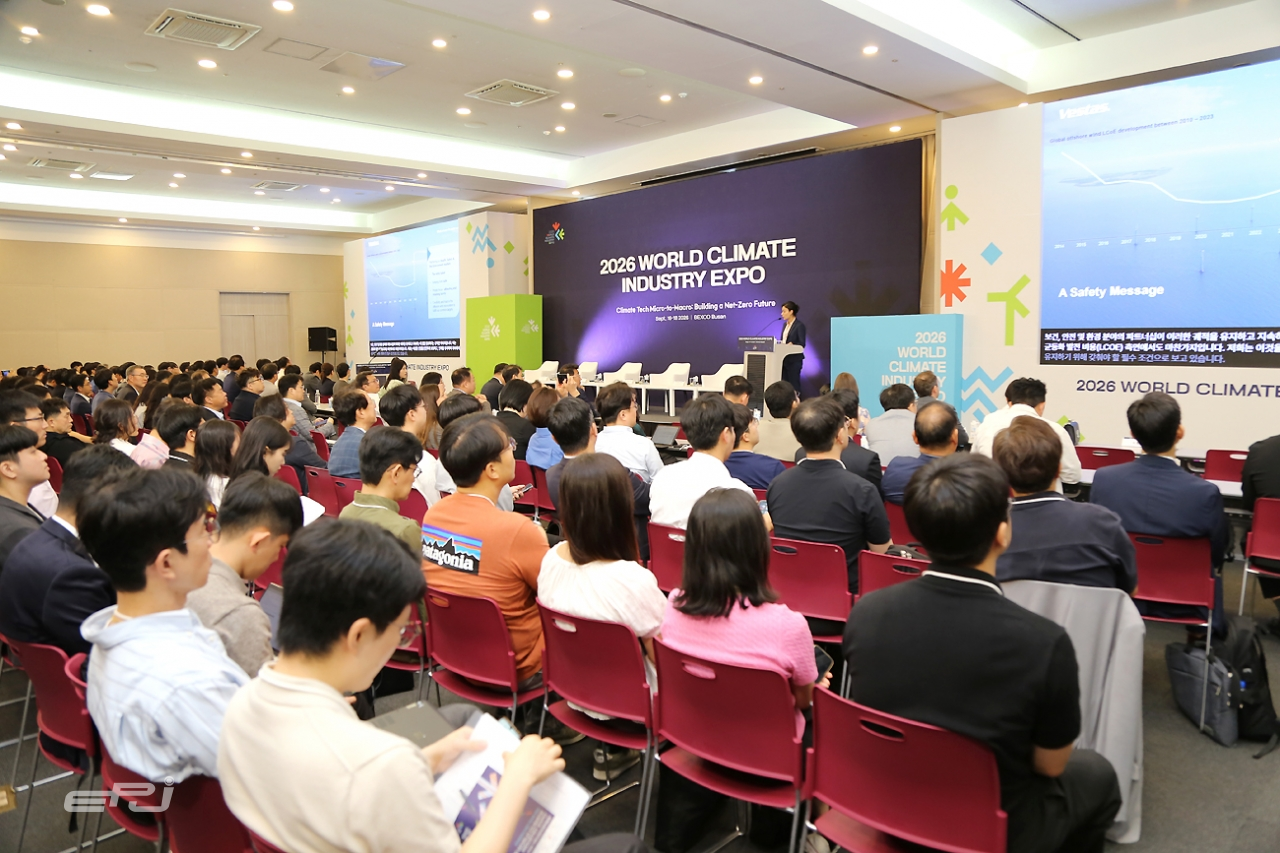
The topics covered in this forum demonstrated that offshore wind EPC projects are an industry that must manage marine environment, maritime traffic, design, contracts and construction in an integrated manner, going beyond simply procuring and installing equipment.
Yoon Yong-seok, an official at the Ministry of Oceans and Fisheries (MOF), explained the direction of comprehensive maritime traffic safety management across the entire lifecycle of offshore wind farms, from site selection through post-installation water area safety management and disaster response, under the theme "Direction of Maritime Traffic Safety Management for Offshore Wind Power Plants Throughout Their Lifecycle".
Amendments to the Maritime Traffic Safety Act are currently being pursued. Under discussion is a plan to designate waters near wind turbines as safety zones and require developers to establish safety zone management plans.
Safety zones are designated waters established to ensure safety near turbines and protect facilities. A radius of 500 metres from turbines has been presented as the planned scope. However, designation as a safety zone does not uniformly prohibit all vessel activities; operations will be conducted considering conditions specific to each offshore wind farm. The government plans to promulgate the law by year-end and implement it in the second half of 2028.
Project success depends on interface management
Another key issue identified in offshore wind EPC is interface management.
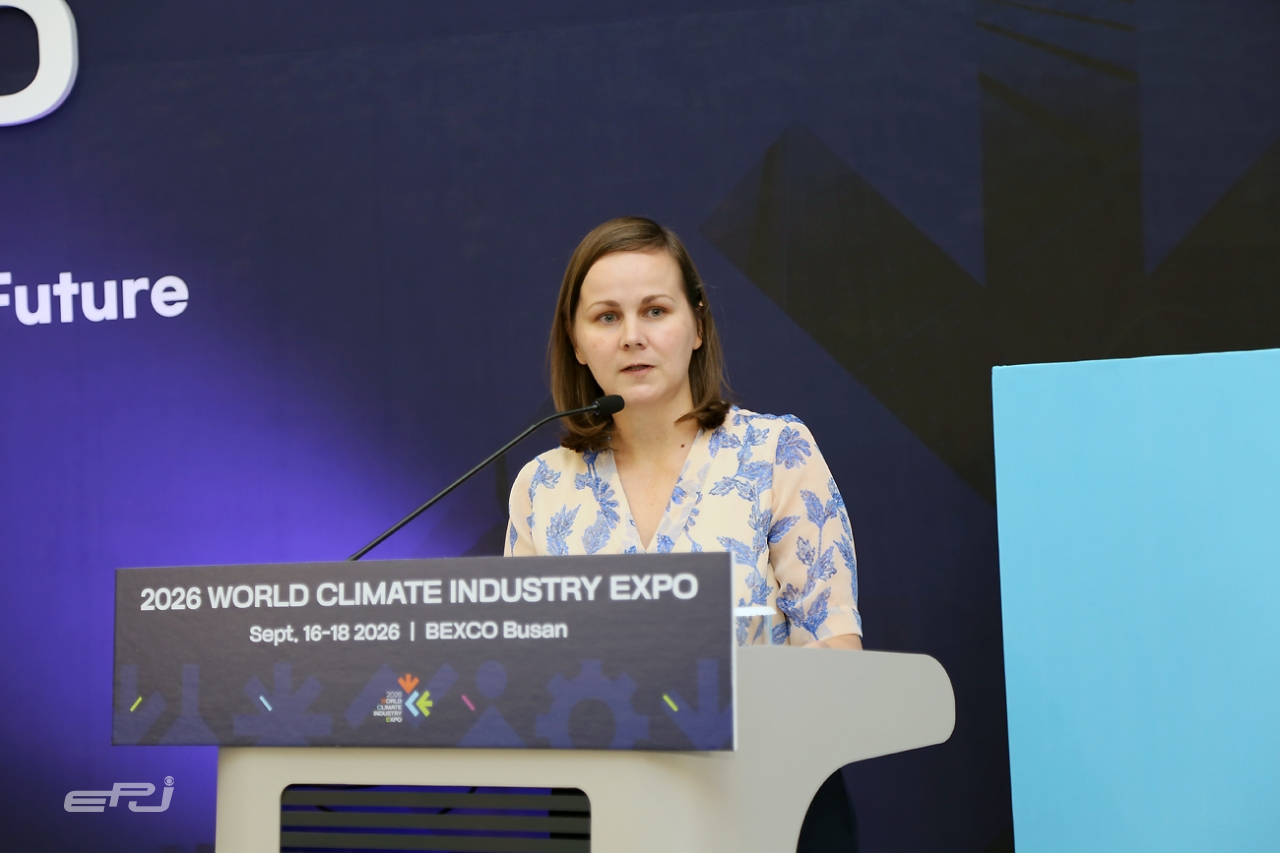
Mira Rosten, senior engineering manager at COP Korea, introduced the case of Jeonnam P1 - SK E&S and emphasized that effective management of interfaces between different trades and project participants is important for project success.
Jeonnam P1 - SK E&S (96 MW) was noted to have had a substructure contractor with no prior experience installing monopiles during construction. The experience of COP and the contractor proceeding with the project through continuous communication and mutual exchange of opinions was presented as a case applicable to future domestic offshore wind projects.
Rosten emphasized that the capacity of EPC contractors grows not through individual company efforts alone but through collaboration with developers. She explained that this experience and capacity are also being applied to projects such as the Taean offshore wind project (504 MW) currently being pursued by CIP.
This suggests that in terms of contribution to the domestic industry, it is important to accumulate experience through collaboration between overseas developers with advanced technology and domestic contractors.
Ground conditions, weather and vessel availability are major contract variables
From a contracting perspective, the complex procurement structure of offshore wind projects was identified as a major issue. Lee Hyun-kyung, a lawyer at HFW, explained that offshore wind projects are proceeding under various contract models including multi-contract, EPC/BoP, and EPCM/T&I.
He also noted that recent trends show changes in the balance of power between developers and contractors during contract negotiations, due to some developers scaling back projects and market entry by contractors from South Korea, China and Japan.
Currently, dedicated standard contracts are not sufficiently established in the offshore wind sector, so the "Modified FIDIC Yellow Book 1999" is mainly used. However, concerns have been raised that if developers apply overly complex customized clauses, there may be limitations in application and management in actual projects.
Key risks to be managed in offshore wind EPC contracts include design responsibility and performance standards, ground conditions, weather, vessel availability, K4K (mutual indemnification), and force majeure.
Among these, ground conditions are identified as a typical source of disputes in offshore wind. Differences between subsea ground survey reports and actual site conditions can affect construction costs, construction schedules and design changes.
Therefore, it is important to clearly establish the reliability of ground survey data and the scope of the contractor's responsibility for interpreting the data at the contract stage, and to carefully adjust how much risk each party will bear.
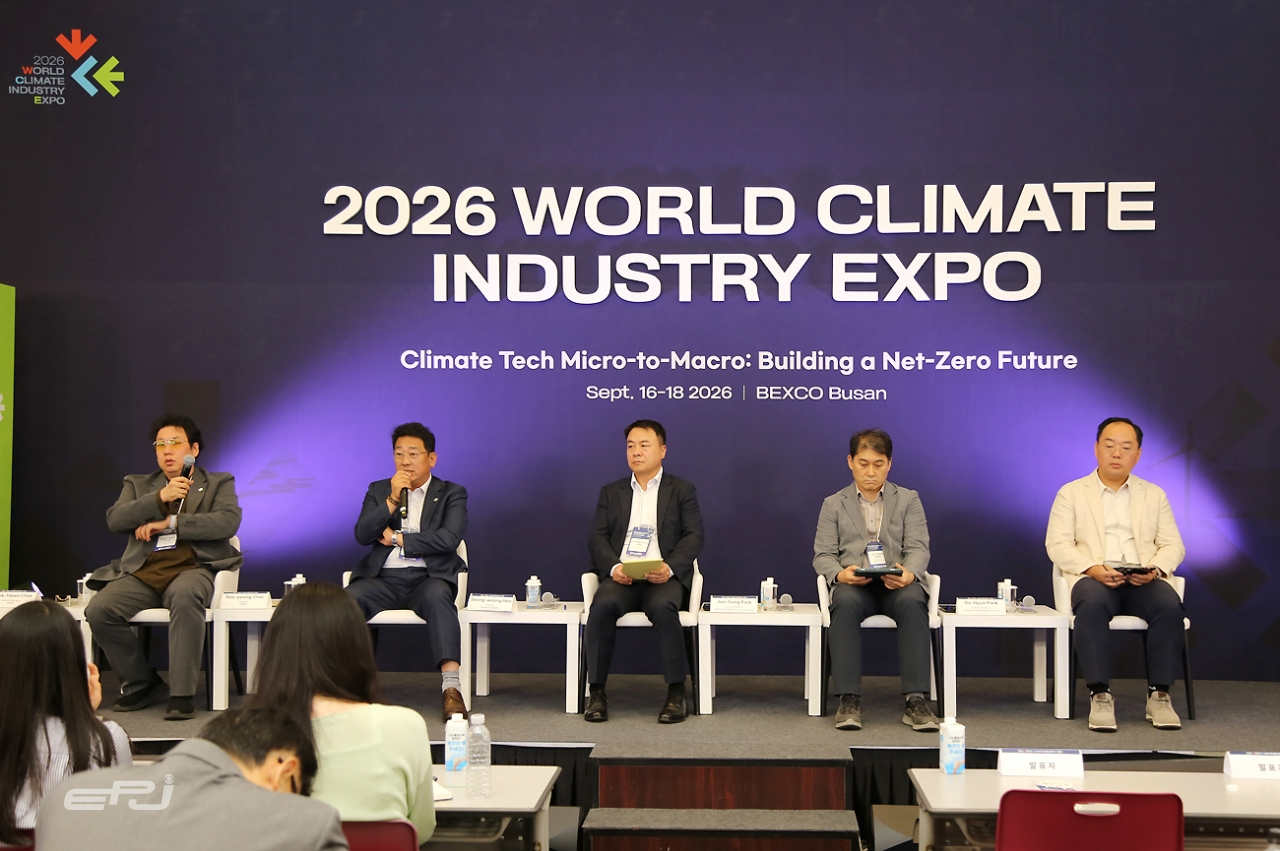
Following the presentations, a panel discussion was held with Choi Deok-hwan, director of the Wind Energy Industry Association, as moderator. Panelists included Choi Su-young, director of KOMS; Heo Sung-ung, team leader at Doosan Enerbility; Park Jun-sung, vice president of Segwang Engineering & Technology; and Park Do-hyun, CEO of Eoulim Partners, who discussed major issues in the offshore wind EPC sector and future response directions.
Original Korean article: Electric Power
English brief by Korea Wind Intelligence, koreawindintel.com



















