LS Cable is expanding from general wire and cable business into high-value power infrastructure projects including ultra-high voltage, HVDC, and submarine cables. CEO Gu Bon-gyu is leveraging technology accumulated in the existing wire business to pursue large-scale power grid project contracts and expand overseas production bases. As power grid investment demand grows due to the spread of AI data centers and expansion of renewable energy generation, business opportunities are increasing, particularly in North America. LS Cable is broadening its order base through expanded domestic and overseas production capacity and securing overseas bases, but faces challenges in managing the debt burden raised by large-scale upfront investments and profitability.
Securing ultra-high voltage and HVDC technology for major power grid contracts
LS Cable has expanded its business foundation in the domestic wire market by producing power and telecommunications cables. It subsequently broadened its technology scope from general power cables to ultra-high voltage cables, and further expanded its business range to HVDC cables suitable for long-distance, high-capacity power transmission. LS Cable succeeded in developing HVDC cables in 2007, becoming the fourth company in the world to do so, and began full-scale entry into the related business.
After CEO Gu Bon-gyu took the helm of LS Cable, the focus shifted to connecting this technological capability to submarine cable and global power infrastructure business expansion. Since taking office as CEO in 2024, Gu has identified submarine cables and AI data center power business as key growth areas and set a target of achieving 10 trillion won in revenue by 2030. The pace of expanding submarine cable production capacity accelerated under Gu's leadership. LS Cable made an additional investment of approximately 100 billion won in 2024 to add five buildings to its East Sea submarine cable factory, which was completed in July 2025. This expansion increased HVDC submarine cable production capacity more than fourfold compared to the previous level.
LS Cable also strengthened its business structure linking submarine cable manufacturing and construction. In 2024, Gu concurrently served as CEO of LS Marine Solution, reinforcing the connection between cable manufacturing and marine construction operations. This approach expands the scope of project execution beyond simple cable supply by leveraging LS Marine Solution's submarine cable laying capabilities.
LS Cable currently focuses on power infrastructure centered on ultra-high voltage cables, HVDC, and submarine cables. In North America, where AI data center expansion and aging power grid replacement are underway, large-scale transmission network investments are expected, creating greater room to expand orders for high-value cables. Business scale is also growing. LS Cable's consolidated revenue for 2025 was 7.588 trillion won, with operating profit of 279.8 billion won. Compared to 2024 revenue of 6.217 trillion won, external scale grew approximately 22 percent in two years. The order base also expanded. As of end of 2025, outstanding orders reached 7.63 trillion won, a roughly 22 percent increase from the previous year-end and a record high. As order volume increases centered on major power grid projects, the business foundation to be converted into future revenue is also expanding.
Expanding production networks to the United States and Asia amid rising financial burden
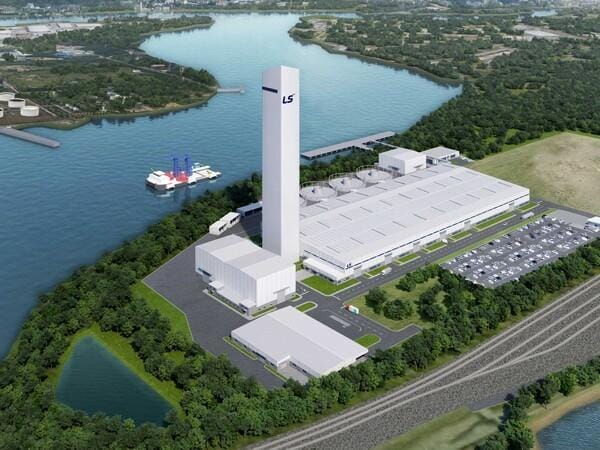
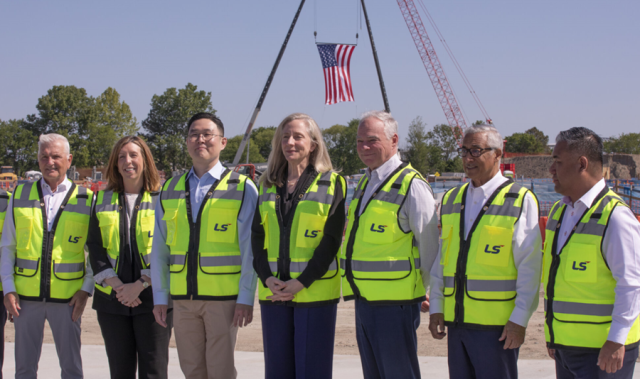
LS Cable is securing local production bases to expand its high-value power cable business cultivated domestically into overseas markets. In the United States, it is constructing the submarine cable factory LS Green Link in Chesapeake, Virginia with an investment of approximately 681 million dollars. The factory is targeted for completion in the second half of 2027 and commercial production in the first quarter of 2028. The strategy is to secure a production base within the United States to respond to local power grid and offshore wind project contracts and strengthen supply chain competitiveness in the North American market.
LS Cable is also pursuing expansion of Asian production bases. LS Cable and LS Eco Energy signed a joint development agreement with PetroVietnam, a state-owned Vietnamese energy company, in August 2025 to establish a submarine cable joint venture. Both sides are reviewing the construction of a submarine cable factory and dedicated dock at Phu My Port in southwestern Vietnam, and are discussing licence procedures, investment scale, and equity structure.
Expanding overseas production bases requires substantial capital. Since submarine cable and HVDC business involves many large-scale project contracts, production facilities and related infrastructure must be secured. As overseas investment such as US factory construction continues, LS Cable's investment burden is growing. LS Cable's consolidated total debt increased 85.5 percent from 3.691 trillion won in 2021 to 6.846 trillion won last year. The debt-to-equity ratio rose from 296.9 percent in 2024 to 317.5 percent in 2025, and reached 349.9 percent by the end of the first quarter of 2026. Total borrowings also increased from 2.966 trillion won at year-end 2025 to 3.643 trillion won at the end of March 2026.
The rise in debt ratio was influenced by increased borrowing from production facility investment, as well as increases in contract liabilities and derivative liabilities. As LS Cable won large power grid project contracts, advance payments received were reflected as contract liabilities, and derivative liabilities arising from the issuance of convertible bonds and derivative product liabilities from changes in copper prices and exchange rates also affected the debt scale. Managing financial stability remains a challenge as large-scale investment continues. An industry official said, "Since submarine cable and HVDC business involves orders centered on major projects, if production facility expansion continues, the burden of capital management could increase further," and noted that "attention will focus on whether LS Cable can improve profitability by raising the proportion of high-value products rather than simply expanding order scale."
Original Korean article: Aju Business Daily