

The power grid is emerging as the biggest variable in expanding the offshore wind industry. Even if generation facilities are developed, power generation itself can be constrained if submarine cables and shared grid connection facilities to transport the produced electricity to land are not built on time. If multiple developers proceed with projects by each securing their own power grid, there is concern that connection facilities could be installed individually, reducing the efficiency of power grid investment.
The Korea Environment Institute (KEI) recently proposed in its report "Shared Grid Connection Facilities and Substation Location Methods for Offshore Power Networks" that offshore wind generation facilities, submarine cables, shared grid connection facilities, and substations should be linked within a single power grid planning system.
In particular, the analysis suggests that transmission grid operators should be involved from the early stages of offshore wind site planning to align the timing and scale of generation and transmission grid construction.
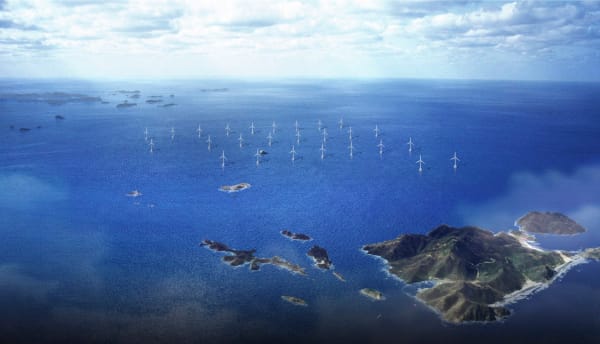
The reason the power grid is important in offshore wind expansion is that generation constraints can occur if the completion dates of generation and transmission facilities do not align.
Submarine cables are critical infrastructure that transmit electricity produced at offshore wind generation facilities to the onshore power system. However, if cable construction does not keep pace with generation timelines, developers may have equipment in place but be unable to transmit sufficient generated power.
Unlike typical generation facilities, submarine cables span long distances and pass through multiple sea areas and local jurisdictions. Because they affect fishing activities and the marine environment, the project process requires coordination with various stakeholders including fishermen, local residents, and environmental groups.
When power grid construction proceeds on an individual project basis, another problem arises. If private offshore wind developers each select locations for shared grid connection facilities and substations for grid connection, coordination between developers does not occur and facilities could be installed separately. This means that offshore wind expansion could actually make efficient power grid integration more difficult.
South Korea has established legal foundations for offshore wind and power grid expansion. In 2025, the Special Act on the Promotion of Offshore Wind Power Deployment and the Development of Related Industries and the Special Act on the Expansion of the National Power Grid were enacted, beginning related institutional improvements.
However, KEI diagnosed that current systems still focus relatively on offshore wind generation facilities themselves.
The offshore wind law stipulates procedures for establishing location information networks, designating preliminary zones, and basic design, but discussion of shared grid connection facilities and substations is insufficient, and specific grid planning at the preliminary zone stage is inadequate. The National Power Grid law also requires establishing a power grid expansion basic plan, but fails to sufficiently consider submarine cables, offshore wind, and shared grid connection facilities, limiting the ability to create a "grid-first, generation-second" system that builds power grids before generation facilities.
Major overseas countries do not view offshore wind generation facilities and power grids as separate infrastructure and operate systems that integrate them from the initial planning stage.
Germany links site development plans with power grid development plans to jointly plan the location and commissioning timing of generation facilities and submarine cables. The United Kingdom designs networks connecting offshore wind power plants and onshore power grids comprehensively through "Holistic Network Design." Japan has also recently adopted a centrally-led grid connection system, changing its approach to review grid connection feasibility from stages before preliminary zones.
In contrast, KEI points out that South Korea lacks sufficient legal basis for direct transmission grid operator participation in the early stages of offshore wind planning.
When KEI compared the systems of Germany, the United Kingdom, Japan, and South Korea, it found that South Korea does not sufficiently specify transmission grid operator direct participation in laws and regulations at the preliminary zone and implementation plan stages. Even at the basic design stage, the system for coordinating plans based on power grid connection methods proposed by transmission grid operators is inadequate.
Transmission Grid Operators Must Participate from Site Selection Stage
The solution KEI presented is clear: move away from the approach of attaching power grids after offshore wind generation projects are finalized, and instead plan generation and transmission simultaneously from the site selection stage.
First, at the location information network stage, transmission grid operators should provide power grid capacity and possible substation information. At the preliminary zone stage, substation locations as starting points for shared grid connection facilities should be jointly reviewed, and at the basic design stage, substation alternatives should be prepared.
At the development zone stage, transmission capacity and completion timing should be coordinated, and at the implementation plan stage, developers and transmission grid operators should align commissioning schedules.
This approach would reduce duplicate facility problems from developers individually seeking grid connection methods and increase spatial and temporal alignment between generation facilities and transmission grids, according to the research team.
Aligning Completion Dates of Generation and Transmission Facilities as a Cost Issue
Another issue with power grids is how to align the completion dates of generation and transmission facilities.
KEI cited Germany's example. Germany operates a penalty system for delays on the developer side and holds transmission grid operators responsible for compensation in cases of grid connection delays.
KEI proposes that South Korea also needs to institutionally coordinate the construction timing of generation facilities and transmission grids. It also noted the need to establish a funding system to ease the burden of advance investment for cases where transmission grid operators must invest in facilities before generation facilities are built.
This means that in the process of offshore wind expansion, power grids should be viewed not as mere ancillary facilities but as critical infrastructure directly linked to project viability.
Environmental and regional conflicts surrounding power grid locations are also issues that must be resolved in the offshore wind expansion process.
Submarine cables are long-distance facilities passing through multiple sea areas and local jurisdictions and can affect fishing activities and the marine environment. The research cited actual cases including construction conflicts over substations and transmission lines in the Boseong area, opposition to submarine high-voltage cable installation in Deukryang Bay, and boundary disputes between local governments over the Wando-Jeju submarine cable.
KEI accordingly proposed strengthening government-led environmental reviews before preliminary zone selection and disclosing the results. This involves comprehensively reviewing marine and coastal ecosystems, disclosing relevant information, and determining locations by reflecting resident opinions.
The participation methods of residents and fishermen also need improvement. Currently, the offshore wind law provides for fishing industry representatives and resident representatives to participate in the public-private consultative body, but there are concerns that representative status and selection procedures are not specific. KEI proposed a staged governance approach where government, local governments, and experts prepare alternatives, which residents and fishermen then review and supplement through a public deliberation process.
As the offshore wind industry expands, the importance of power grids is expected to grow. Expanding generation facility scale alone cannot ensure stable power supply.
KEI's proposal focuses on changing offshore wind projects from a sequential structure of generation facility development followed by power grid connection to a structure that bundles generation facilities, shared grid connection facilities, submarine cables, and substations as a single system.
Since pursuing generation and transmission separately can increase generation constraints and project delay risks, institutional improvements that treat power grids as core industrial infrastructure are required in offshore wind expansion policy.
Original Korean article: mediapen.com
English brief by Korea Wind Intelligence, koreawindintel.com



















