

Competition among regions is intensifying to secure the headquarters of the integrated Genco as the merger of five state-owned power generation companies approaches. Gyeongsangnam-do's Jinju, along with regions where existing power company headquarters are located, have entered the race citing industrial foundations and balanced regional development, while the government has presented key considerations for determining the headquarters location.
At a forum titled "Genco Integration Headquarters Controversy and Innovation City Activation Plans" held at the National Assembly Members' Hall in Yeouido, Seoul on October 1, 2026, discussions took place on the direction of the five-company merger, the location of the integrated headquarters, and ways to link with regional industries. At the forum, Jinju presented arguments that the headquarters of KOEN (Korea South-East Power), existing innovation city infrastructure, and Gyeongsangnam-do's manufacturing base should be leveraged.
Genco Merger Accelerates, Consolidating Capital and Workforce
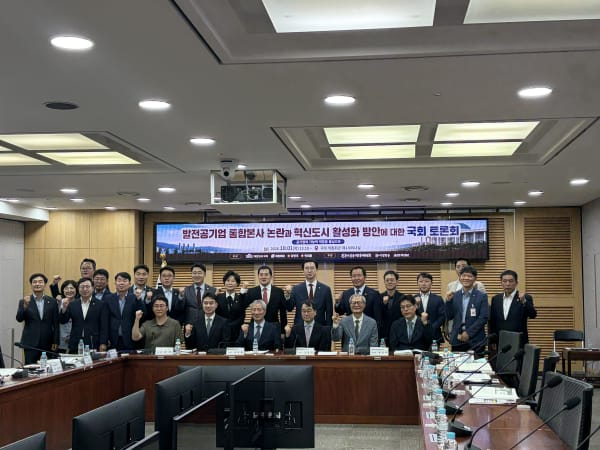
The government is pursuing the integration of five Gencos: KOEN, KOMIPO (Korea Midland Power), KOWEPO (Korea Western Power), KOSPO (Korea Southern Power), and EWP (Korea East-West Power). The core of the integration lies in consolidating capital, workforce, and business capabilities scattered across individual power companies. Currently, the five Gencos each handle fuel and equipment procurement, research and development, management support, information technology, and overseas operations separately. The plan is to integrate these functions to reduce duplication and strengthen purchasing negotiation power.
The integration also aims to enhance responsiveness to large-scale renewable energy projects. The plan is to concentrate capital and specialized personnel on large-scale projects such as offshore wind and solar power that have been difficult to pursue at the individual company level. Of approximately 2,400 headquarters personnel across the five Gencos, around 1,800 are planned to be deployed to the integrated headquarters, with the remaining 600 deployed to three or four regional renewable energy divisions.
Lee Sang-yoon, director of the Public Policy Division at the Ministry of Economy and Finance, stated: "There is a need to consolidate the capital, workforce, and business capabilities of the divided power generation subsidiaries into one entity to pursue large-scale projects such as solar and offshore wind at a faster pace. The goal is to integrate redundant functions such as fuel procurement, R&D, management support, IT, and overseas operations, strengthen purchasing negotiation power, and concentrate workforce and investment capabilities."
Jinju Steps Forward to Attract Integrated Headquarters, Leveraging Existing Infrastructure
At the forum, arguments were raised that Gyeongsangnam-do's Jinju, where KOEN headquarters is located, should be utilized as the location for the integrated headquarters. Kim Young-pyo, special professor at Changshin University, highlighted as strengths the fact that the Jinju region can utilize existing office buildings and infrastructure, and can be linked with Gyeongsangnam-do's manufacturing ecosystem in power generation, machinery, and shipbuilding.
Professor Kim proposed utilizing the existing innovation city office building instead of constructing a new integrated office building. The argument is that this would reduce the financial burden of constructing a new office and minimize regional hollowing that could occur as existing power company headquarters relocate. Professor Kim stated: "Completely withdrawing the plan for a new office building and repurposing the existing innovation city office aligns with fiscal soundness and the direction of public institution reform."
A plan was also presented to distribute the headquarters and major functions by region. This approach would place the integrated headquarters in Jinju while reassigning existing personnel to Chungcheongnam-do, where employment decline is expected due to coal power plant closures, and establishing functions to support transition to new jobs. Arguments were also made that Jinju should expand the energy industry foundation centered on the integrated headquarters by linking regional universities and power industry-related companies to cultivate specialized personnel and attract related businesses.
Government Considers Industry Linkage and Fiscal Efficiency, Expanding Regional Division Roles
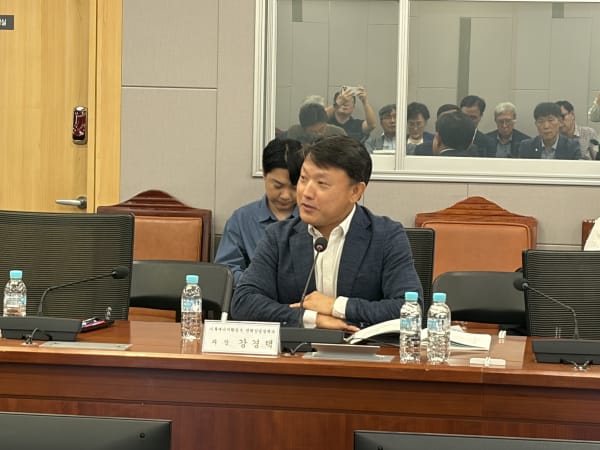
The government's policy is to comprehensively consider the industrial role of Gencos, balanced regional development, and national fiscal efficiency in the process of selecting the integrated headquarters location. Director Lee presented key factors for reviewing the headquarters location as follows: procedural transparency and objectivity, the industrial and functional role of public enterprises, balanced regional development, national fiscal efficiency, and linkage with existing innovation cities.
From an industrial perspective, the government examines accessibility to power generation sites, possibilities for cooperation with related industries and research institutions, and conditions for securing specialized personnel. Whether existing power company headquarters buildings can be utilized, new office construction costs, and relocation expenses are also under consideration. The government also reviews residential conditions for employees whose workplaces change due to the merger, including their settlement and children's education.
Kang Kyung-taek, director of the Power Industry Policy Division at the Ministry of Climate, Energy and Environment, stated: "The principles explained by the Ministry of Economy and Finance are being shared within the government and are being considered as principles for selecting the headquarters location of the integrated Genco in the future." The government plans to review the integrated headquarters location in connection with the Second Public Institution Relocation Plan.
Functional allocation by region following the merger is also a major task. The government plans to convert and deploy personnel generated from coal power plant closures to renewable energy projects and have regional renewable energy divisions absorb them. Director Kang stated: "As coal power plants are shut down, we plan to continuously absorb surplus personnel at regional renewable energy divisions. Currently, the regional division scale may appear small, but it can develop into a considerably larger scale in the future."
The impact on regions is not limited to attracting the integrated headquarters. A significant portion of Genco personnel work at regional power plants and business sites rather than at headquarters. Director Kang stated: "A considerable portion of employed personnel are at regional business sites rather than headquarters, and we understand that the impact on regional tax revenue is greater when business sites are located there than when headquarters are located there. It is necessary to note that there are opportunities beyond just the headquarters."
Original Korean article: paxetv.com
English brief by Korea Wind Intelligence, koreawindintel.com
KWI developer profile — KOEN
8 projects in Korea totalling 2,414 MW. Compiled from the KWI database. Not part of the source article.
Yeonggwang Wind Farm (offshore section) Offshore Wind
|  |
Tamra Offshore Wind
| |
Wando Geumil Offshore Wind
| |
Sinan 1 Offshore Wind
| |
Sinan 2 Offshore Wind
| |
Deokjuk Offshore Wind
| |
Yongyu Mui Jawol Offshore Wind
| |
Jeonnam POSCO-KOEN Offshore Wind
| |
Project data: KWI database — Electricity Business Licence records, EIA filings (ME2022C019, ME2024C012 + YS20220023), Electricity Regulatory Commission minutes, and pre-EBL permit filings.



















