Wind power has emerged as a core energy source leading the expansion of renewable energy in the 12th Basic Plan on Long-term Electricity Supply and Demand. The government presented a plan to expand onshore and offshore wind power facilities from 9GW in 2030 to 37GW in 2035 and 61GW in 2040. In particular, the plan to increase offshore wind power to 25GW in 2035 and 45GW in 2040 suggests that the domestic wind power industry will face a large-scale market.
However, according to the plan, the rate of offshore wind power deployment over the next decade or so must accelerate to a degree incomparable to the present. Since power generation project licensing and permits, public acceptance, grid connection, and infrastructure such as ports and installation vessels must all be secured simultaneously, there are observations that verification is needed regarding the feasibility of achieving the target.
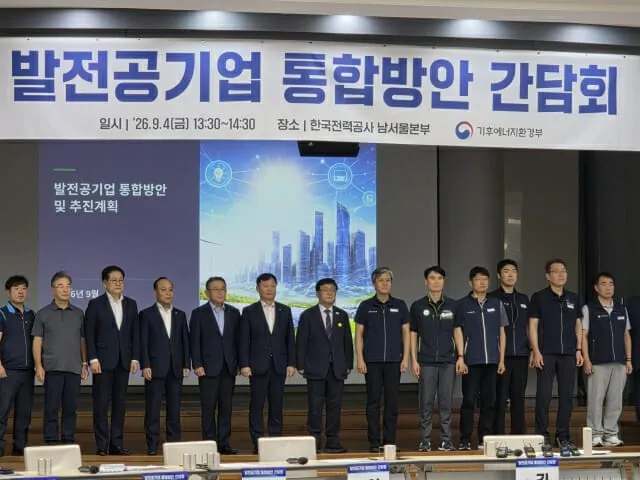
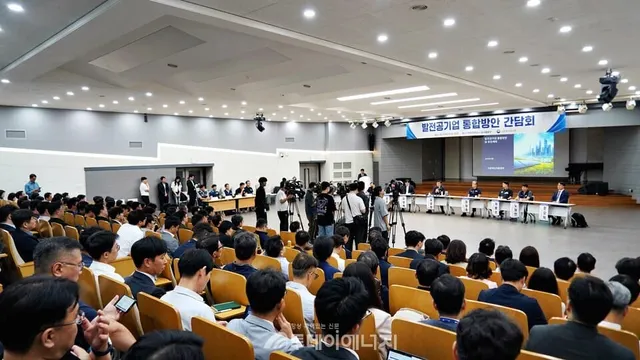
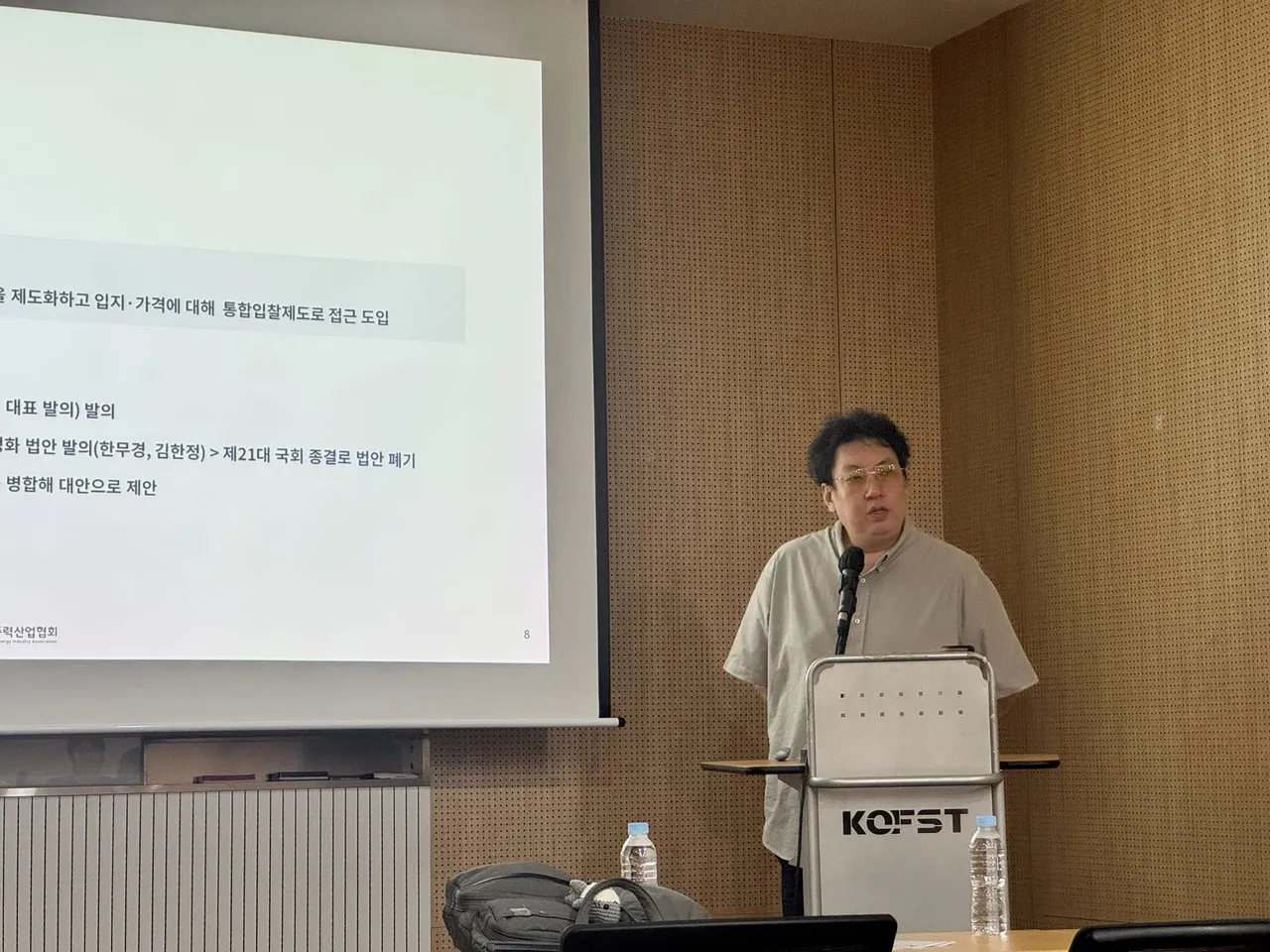
Professor Cho Sang-min of Korea Engineering University presented on "Renewable Energy Supply Outlook in the 12th Basic Plan on Long-term Electricity Supply and Demand" at the sixth public debate session held on August 26 at Korea Electric Power Corporation's Southwest Seoul Headquarters in Yeouido, Seoul, hosted by the Ministry of Climate, Energy and Environment. This outlook was prepared to establish renewable energy facility plans through 2040 to be reflected in the 12th Basic Plan, with supply volumes calculated by considering the characteristics of each energy source, centered on solar power and onshore and offshore wind power. The most notable aspect of this outlook is the upward revision of wind power supply targets.
Wind Power Capacity Expanded Significantly by 2040

According to the 12th Basic Plan's renewable energy outlook, commercial renewable energy will expand from 37GW in 2025 to 100GW in 2030, 163GW in 2035, and 220GW in 2040. Among these, onshore wind power will increase from 2GW in 2025 to 6GW in 2030, 12GW in 2035, and 16GW in 2040, while offshore wind power will expand from 0.4GW to 3GW, 25GW, and 45GW over the same period.
This represents a significant upward revision compared to the 11th Basic Plan on Long-term Electricity Supply and Demand. The 11th plan projected wind power facilities at 18.3GW in 2030, 35.5GW in 2036, and 40.7GW in 2038. In the 12th plan, the 2030 wind power projection is lower than the 11th plan, but the deployment rate is significantly increased after 2035, expanding to 61GW by 2040. Compared to the 11th plan's 2038 wind power projection of 40.7GW, approximately 20GW will be added by 2040.
The expansion of offshore wind power is particularly large. The 11th plan projected 77.2GW of solar power and 40.7GW of wind power out of 121.9GW of total renewable energy facilities in 2038, but did not separately specify the breakdown of onshore and offshore wind within wind power. By contrast, the 12th plan presents a specific target of expanding offshore wind power alone to 45GW by 2040.
The government's positioning of wind power as a core axis for mid- to long-term renewable energy expansion aligns with the direction of renewable energy policy. Through the first Basic Plan on Renewable Energy established in May of this year, the government set targets of 100GW of renewable energy facilities by 2030 and a generation share of 30 percent or more by 2035, and designated the rebuilding of the wind power industry ecosystem and securing future technologies such as mega-sized wind turbines as major tasks.
Offshore Wind Power to Expand One Hundredfold by 2040
The issue is the implementation foundation to achieve the target rather than the scale of the target itself. Looking at the 12th plan's offshore wind power outlook, facilities of only 0.4GW as of 2025 are to be expanded to 3.1GW in 2030, 25GW in 2035, and 45GW in 2040. From 2025 to 2030, only approximately 2.7GW will be added, but from 2030 to 2035, a full 21.9GW must be increased. This is effectively a level requiring the securing of new offshore wind power facilities exceeding an average of 4GW per year over five years.

To this end, the government calculated the projection by summing existing power generation project licensing volumes, competitive bidding award volumes, and planned site volumes to be pursued in the future. Of the 45GW of offshore wind power in 2040, the projection reflects current 0.4GW, existing licensed projects of 24.6GW, and new planned sites of 20GW.
In particular, the planned sites scenario calls for bidding to begin in 2029, achieving 25GW by 2035, and then completing planned site volumes of 4GW annually from 2036 onwards. The government's policy is to fully operationalize the Offshore Wind Power Act to pursue the designation of development zones and streamlined permitting procedures, and to secure support ports and dedicated installation vessels early to expand installation capacity.
However, such a plan appears likely to become a key variable in determining the realism of the 12th plan's wind power targets.
Domestic offshore wind power requires considerable time from project development through licensing and permits, securing public and fishing community acceptance, grid connection, financial procurement, equipment procurement, and construction to completion. Even if the volume with secured Electricity Business Licences (EBL) reaches 30GW, it is difficult for all projects to proceed as planned. In actual project processes, cases can occur where project schedules are delayed due to licensing delays, grid connection issues, regional community conflicts, or deteriorating project viability.
Careful examination is also needed regarding whether the existing licensed volume of 24.6GW, excluding obstacles, is equivalent to 24.6GW that can be immediately completed. How much of the actual project risk remaining until completion is reflected is expected to be an important verification target in future discussions on the Basic Plan.
In particular, given the uncertain business viability due to the abolition of REC weighting and continued downward pressure on bidding prices, there is a question as to how many project operators will continue to develop offshore wind power complexes. This is why the offshore wind power supply target presented in the 12th plan is being interpreted as a signal permitting Chinese supply chain entry into the Korean market.
Onshore Wind Power at 15.5GW: Swift Construction of Licensed Projects Is Key

Onshore wind power shows a relatively gradual increase. The projection is an expansion from 2.1GW in 2025 to 6.1GW in 2030, 12GW in 2035, and 15.5GW in 2040.
The government composed the 2040 onshore wind power target of 15.5GW of current facilities of 2.1GW, existing power generation project licensing volumes of 8.1GW, new anticipated licensing of 5GW, and repowering of 0.3GW. The new anticipated licensing of 5GW was calculated by determining eligible sites based on environmental site consulting results required before the power generation project licensing stage, and repowering was applied by reinstalling 0.3GW being demolished in 2036–2040 as 0.6GW.
Ultimately, onshore wind power also depends on how swiftly existing licensed projects are constructed and completed rather than on new development. The government plans to accelerate licensing through dedicated organization operations and transition to a public planned siting-based supply system while promoting repowering activation.
Solar Power Through 2030, Then Wind Power Takes Priority
In this outlook, the government also presented a timeline for renewable energy expansion. The strategy is to pursue rapid deployment centered on solar power in the short term while laying the groundwork for large-scale wind power deployment in the medium to long term.
Original Korean article: Electric Power