Offshore Wind Industry Emphasizes Predictability Over Low Prices
As artificial intelligence spreads and electricity demand grows, the importance of renewable energy such as solar and wind power is increasing. To sell electricity generated from renewable sources, power plants, power grids, and long-term revenue structures must all be in place. Offshore wind in particular requires large capital investment and long preparation periods, so financial institutions need to be able to predict how much revenue a project developer can earn over an extended period before providing financing.
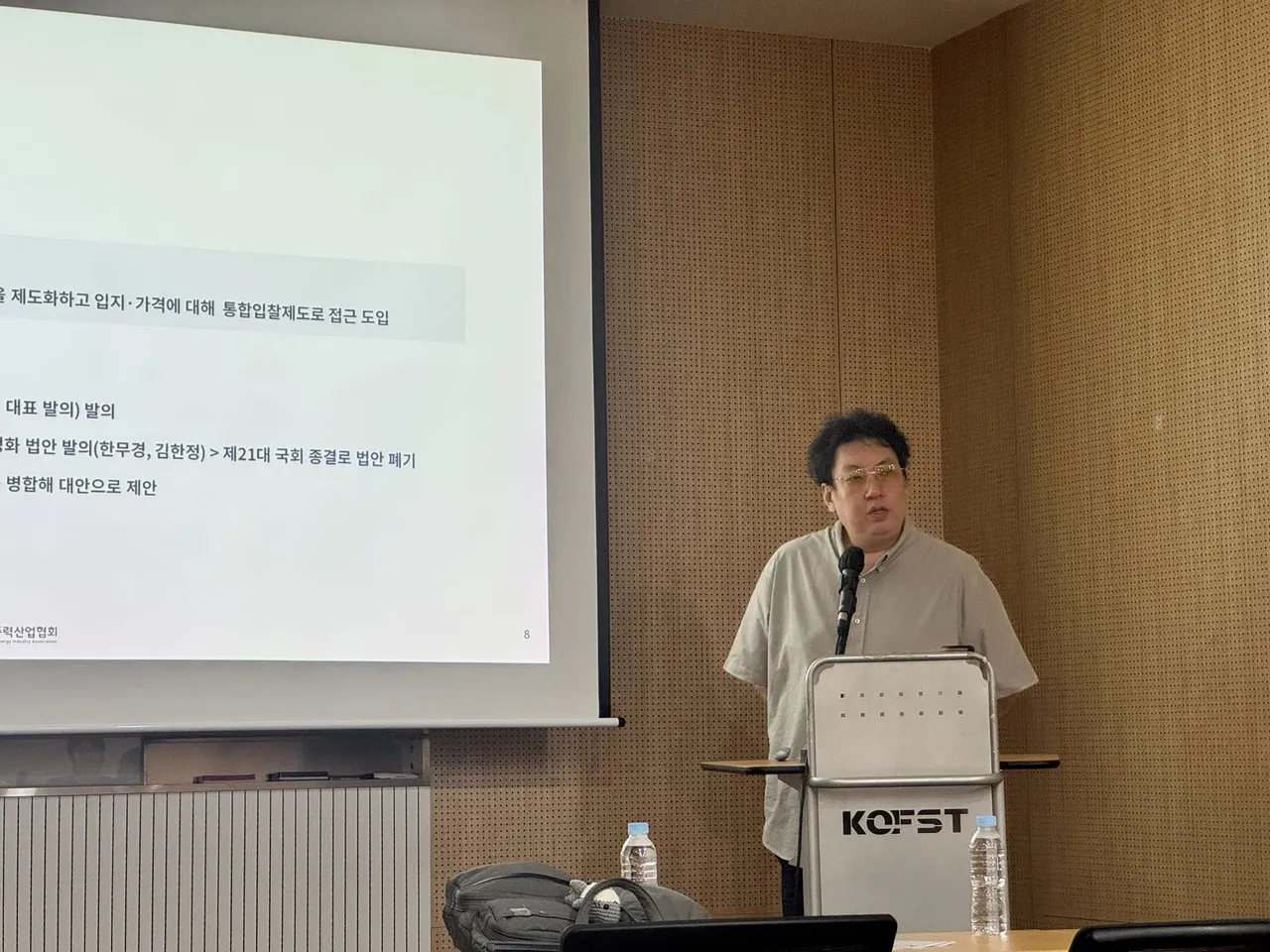
This is why the industry emphasizes "predictability" regarding contract methods for wind power generation after the expiration of the Renewable Portfolio Standard. The Korea Wind Energy Industry Association and the Global Wind Energy Council held a seminar on August 27 at the aT Center in Seocho-gu, Seoul titled "Direction and Challenges of Wind Power Bidding System After RPS Expiration." The seminar discussed how wind power developers will sell electricity and recover their investments after RPS ends, and what safeguards should be built into the new contract market.
The RPS is a system that requires large power generators to source a certain percentage of their total electricity generation from renewable energy. Power generators either built renewable energy power plants directly or purchased Renewable Energy Certificates issued to other renewable energy developers to meet this obligation. A REC is a certificate proving that electricity was generated from renewable sources.
Wind power developers have so far assessed project viability by combining revenue from electricity sales with REC income. This structure will change when RPS expires. From January 1 next year, RECs will not be issued for new projects, and projects selected through bidding will shift to a model where they sign long-term contracts with Korea Electric Power Corporation to sell electricity. Even when signing long-term contracts with KEPCO, actual power market prices will continue to fluctuate, so the government is reviewing the application of a two-way Contract for Difference mechanism to settle the gap between contract prices and market prices. For wind power developers going forward, "what price will be locked in through the long-term contract and what costs and risks are reflected in it" will matter more than "how many RECs can we receive." Depending on how the new contract system is designed, investment decisions, financing arrangements, and whether offshore wind projects actually begin construction can all be affected.
Industry Calls for Transition Safeguards
During the design of the new contract system, the industry emphasized the need to reduce the shock of the system transition. At the seminar, Choi Deok-hwan, executive director of the Korea Wind Energy Industry Association, demanded that the role previously played by existing REC multipliers be reflected in the new contract prices. Currently, costs are supplemented by issuing more RECs for projects such as those in deeper waters or with longer distances to grid connections. Once RECs disappear, such factors should be reflected in contract prices through additional compensation, or premium pricing. Choi said, "We are requesting that the government continue to protect the economic items included in existing multipliers such as water depth and connection distance." The association has proposed that premium pricing should be applied until 2033, taking into account the timeframe for developers who prepared projects based on the existing RPS to participate in bidding.
Calls also emerged for setting realistic price ceilings based on actual financing costs. Offshore wind begins with finding windy seas, but project implementation involves transmission networks, community and fishing community consent, ports and installation vessels, and supply chains for turbines, steel structures, and subsea cables. Interest rates, raw material prices, and exchange rate fluctuations also significantly affect project costs. The industry expressed concern that if price ceilings are set too low from the outset, even with extended contract periods or mechanisms reflecting inflation, projects could stall at the financing stage. Sang-geun Yu, executive director at offshore wind developer Ørsted, said, "If the price ceiling is set very low from the early stages of introduction, both developers and financial institutions could face extremely serious obstacles at the financing stage." Jo Eun-byeol, director of Ocean Energy Pathway, a policy organization for offshore wind, also said, "If the price ceiling is too low, there may be no bidders, and if it is too high, it could lead to long-term burden on the public. The appropriate level must be calculated based on actual costs."
There were also calls for the government to release detailed standards quickly. Large-scale offshore wind projects require the government standards to be finalized promptly, as delays push back internal investment approvals and financial negotiations. Jung Tae-gyun, CEO of The Green Partners, expressed concern that if detailed regulations are delayed during the system transition period, "investors will have no choice but to wait and see, and financing and follow-up measures could effectively come to a halt."
Government Plans September Announcement
The government plans to release detailed standards around mid-September. Woo Seok-joong, a section chief at the Ministry of Climate, Energy and Environment's Renewable Energy Policy Division, explained that the renewable energy law amendment containing RPS reforms has passed the National Assembly, and promulgation is expected around the second week of September. Woo said the government is analyzing the licensing stage and investment costs of each project to ensure that existing projects under development are not significantly affected by the system transition. He stated, "We will prepare and release a plan by mid-September at the latest, and if standards or principles are released before public hearings, we will meet again with the wind power industry and others to hear their views and reflect them as much as possible."
Original Korean article: Hankyoreh