The government has presented a plan in the 12th Basic Plan on Long-term Electricity Supply and Demand to expand commercial renewable energy capacity from 100GW in 2030 to 163GW in 2035 and 220GW in 2040. The approach concentrates on rapid expansion of solar power in the near term, then begins full-scale offshore wind deployment from 2030 onwards.
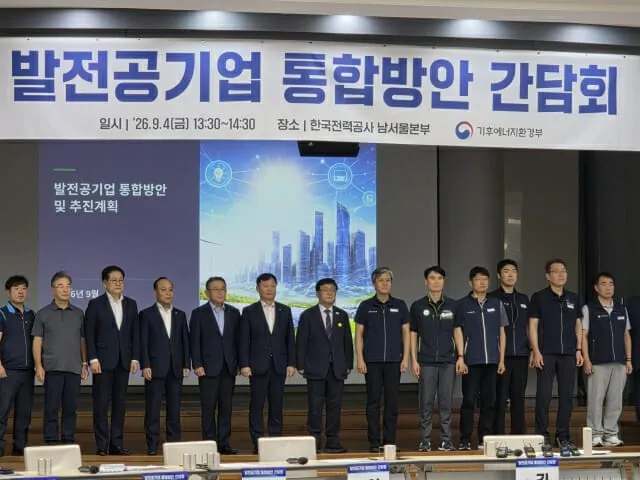
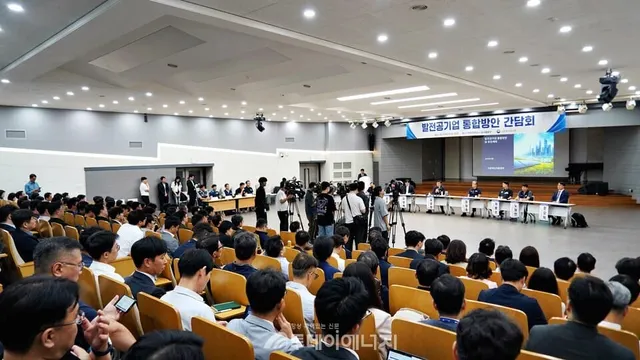
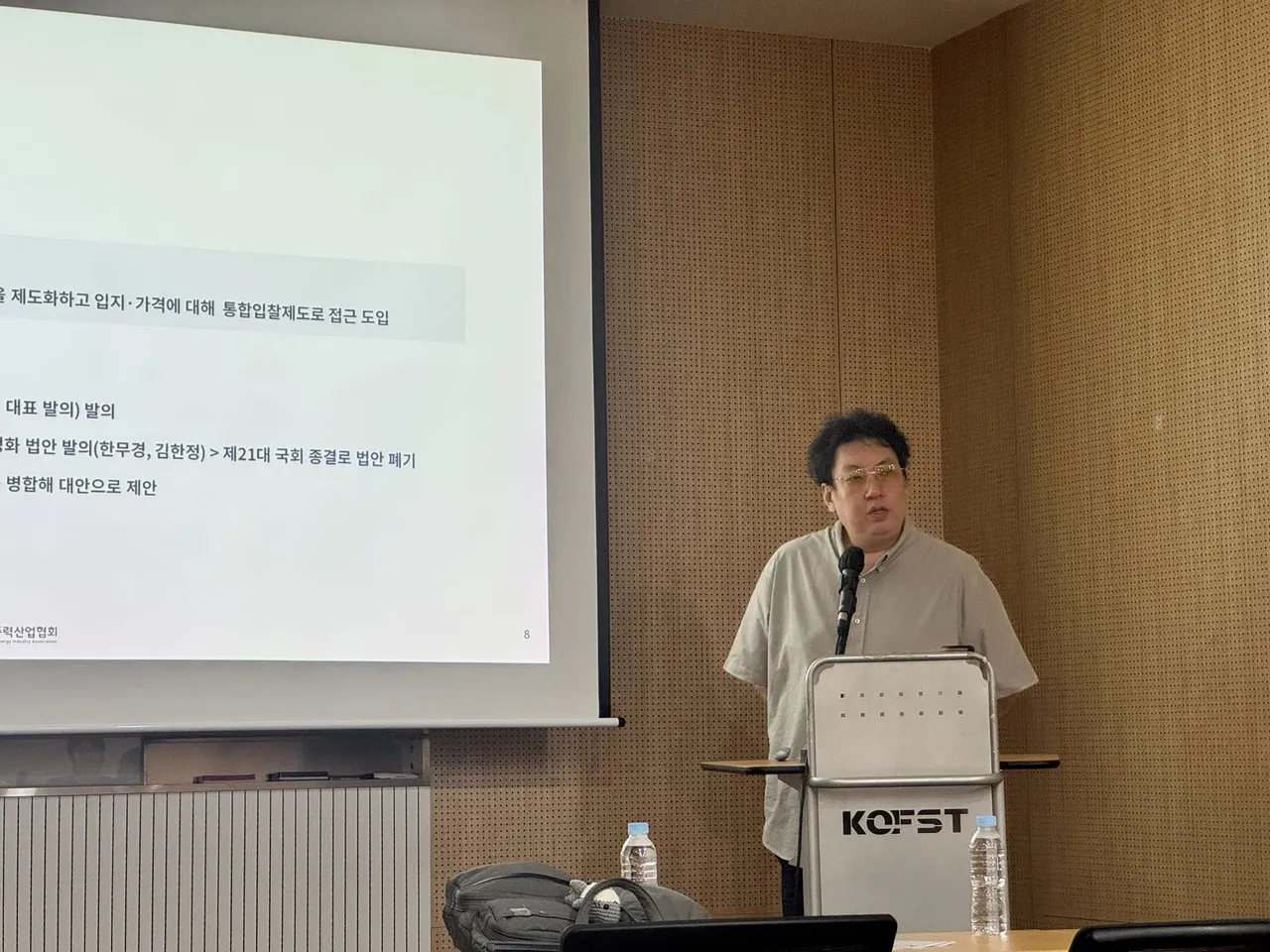
The Ministry of Climate, Energy and Environment and the 12th Basic Plan steering committee unveiled this renewable energy deployment forecast at the sixth public discussion forum on renewable energy supply prospects, held on August 26 at the Korea Electric Power Corporation (KEPCO) South Seoul headquarters in Yeongdeungpo-gu, Seoul.
Capacity targets through 2040
Commercial renewable energy capacity is projected to grow from 37GW in 2025 to 100GW in 2030, 163GW in 2035, and 220GW in 2040. This represents roughly a sixfold increase over 15 years from current levels.
By 2040, commercial solar power will account for the largest share at 155GW, followed by offshore wind at 45GW, onshore wind at 16GW, and other generation sources at 4GW. Separately tracked self-consumption solar capacity is forecast to grow from 4.6GW in 2024 to 8.1GW in 2030, 11.9GW in 2035, and 16.3GW in 2040. Self-consumption generation is subtracted from total electricity demand forecasts to calculate the actual grid demand that must be supplied through the power network.
Solar power expansion in the near term
Solar power will lead near-term capacity expansion. Commercial solar is projected to grow from the current 30.8GW to 86.7GW in 2030, 122.2GW in 2035, and 155.3GW in 2040.
The government calculated the 2040 solar market potential at 271GW using a geographic information system with 100-meter by 100-meter grid units, reflecting solar irradiance, geographic and technical conditions, regulations, and economic viability. Using this as a saturation point and applying a diffusion model based on past deployment performance, the 2040 supply volume was calculated at 132GW.
By incorporating policy effects such as relaxed minimum setback distance regulations and community participation projects, the government assumed deployment would accelerate by approximately 3.6 years, raising the final forecast to 155.3GW. The government plans to utilize idle spaces including factory roofs, agrivoltaic and floating solar installations, roads, railways, irrigation channels, schools, parking lots, and traditional markets as primary deployment sites.
To address large-scale new electricity demand from the three mega-projects—the semiconductor cluster, artificial intelligence data centers, and related infrastructure—the government will identify large-scale solar sites of 12GW capacity by region. The plan involves expanding distributed local production and consumption supply that connects power generation and consumption in the same area, along with concurrent expansion of energy storage systems.
Wind power acceleration from 2030
Wind power deployment accelerates from 2030 onwards. Onshore wind is projected to grow from 2.1GW in 2025 to 6.1GW in 2030, 12GW in 2035, and 15.5GW in 2040. This figure was calculated by adding existing capacity, 8.1GW of existing licensed projects, 5GW of anticipated new licences, and repowering volumes from replacing aging turbines.
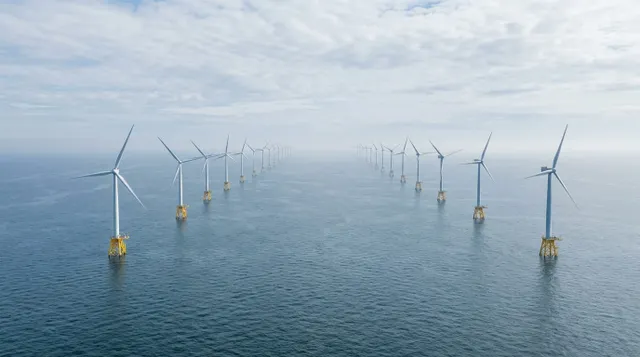
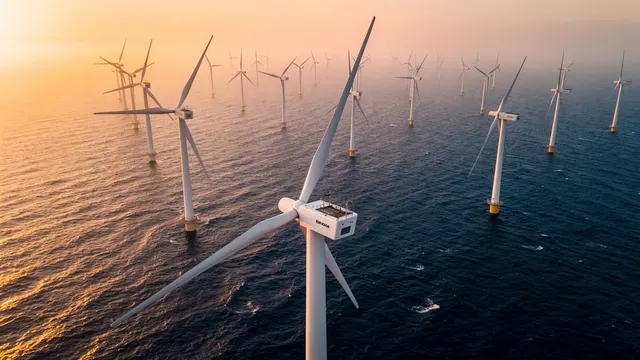
Offshore wind is forecast to remain at just 3.1GW in 2030 from the current 0.4GW, but then expand to 25GW in 2035 and 45GW in 2040. This reflects 24.6GW from existing licensed projects excluding problematic ones and 20GW from new planned sites. The government assumes planned site auctions will begin in 2029 and completion of approximately 4GW of planned site capacity annually from 2036 onwards. Infrastructure expansion including support ports and offshore wind installation vessels will proceed in parallel.
Through these measures, the government plans to achieve 100GW of renewable energy capacity in 2030 and raise the renewable energy generation share to at least 30 percent by 2035. In the near term, rapid solar expansion will address growing electricity demand, while medium to long-term development of large-scale wind supply capacity will support increasing power demand through 2040.
South Korea's renewable energy generation share was 9.7 percent in 2025, the lowest among 38 OECD member countries, while the OECD average was 35.3 percent. The government plans to expand renewable energy as a primary power source while also increasing flexible resources such as energy storage systems and pumped-storage hydroelectricity.
However, the effects of recently relaxed solar minimum setback distance standards for roads are not fully reflected in this forecast. The government has re-announced a plan to lower the road setback distance limit from the existing 100 meters to zero meters, but recalculating market potential and revising grid and equipment plans will require considerable time, so additional effects will be incorporated in the 13th Basic Plan.
The government explained that the current forecast model already incorporates locations where setback distances do not apply, such as buildings and farmland with community participation, advancing deployment timing by 3.6 years, so a substantial portion of the road setback distance relaxation effect is already included in the forecast. The Ministry of Climate, Energy and Environment and the steering committee will review discussion forum feedback to supplement the renewable energy capacity plan in the 12th Basic Plan.
Original Korean article: News1