The RPS system, which was introduced in 2012 and has supported the expansion of domestic renewable energy facilities, will be completely restructured into a "long-term fixed-price contract market system" based on a so-called bilateral CfD (contract for difference) method.
The main thrust of the renewable energy law amendment that recently passed the National Assembly is to unify the renewable energy supply structure through government-led competitive bidding in order to overcome the structural limitations of the RPS system, including surging settlement costs, avoidance of direct investment, and supply-demand imbalances. The plan is to lower the generation cost through this approach, ease consumers' electricity bill burden, and foster the domestic renewable energy industry.
Operators who have been pursuing offshore wind projects on the premise of the RPS system now face the situation of having to re-examine project viability in accordance with the newly prepared contract market system. In particular, attention is focused on how and to what extent the reduced revenue from the abolition of REC weighting will be compensated.

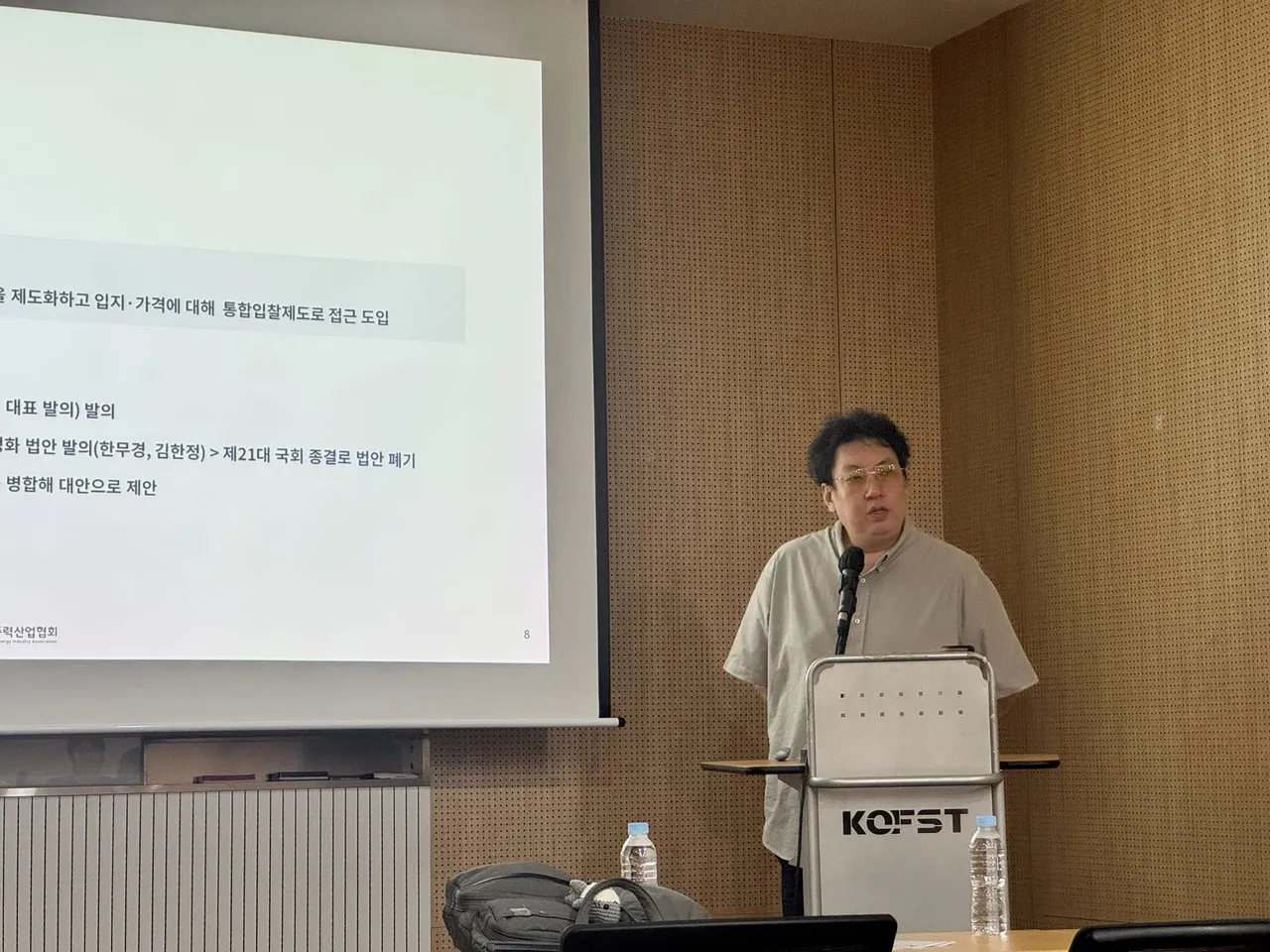
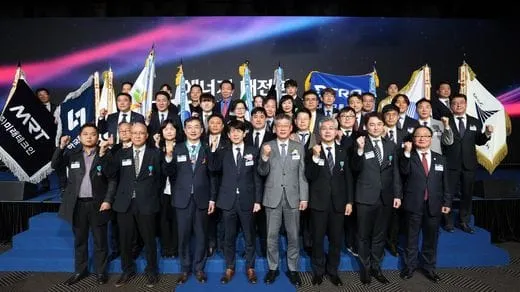
The Korea Wind Energy Industry Association and the Global Wind Energy Council (GWEC) held a seminar on August 27 at the aT Center in Seoul on the theme of "Direction and Tasks of Wind Power Bidding System After RPS Sunset."
At the event, discussions took place on major content to be included in the future bilateral CfD, including the level of preferential pricing, whether to recognize REC during trial operation, expansion of contract periods, and reflection of inflation adjustments.
Panel discussions included Woo Seok-joong, secretary at the Renewable Energy Policy Division of the Ministry of Climate Energy and Environment; Park Eo-jin, deputy representative of OWC; Yu Sang-geun, executive director of Ørsted; Jung Tae-gyun, CEO of The Green Partners; and Jo Eun-byul, director of Ocean Energy Pathway, who presented various opinions.
Bilateral CfD Review: Contract Extension and Inflation Indexing
The "long-term fixed-price contract market system" to be introduced from next year after the RPS system sunset is expected to be designed based on bilateral CfD, which is applied in several European countries. In particular, the plan is to benchmark the United Kingdom's bilateral CfD, which is leading the global offshore wind market, and establish a Korean-style CfD tailored to domestic conditions.
Bilateral CfD is a system that guarantees a fixed reference price regardless of fluctuations in SMP, the electricity market price. If the electricity trading price falls below the reference price set by the government, the difference is compensated; conversely, if the electricity trading price exceeds the reference price, excess profits are recovered.
The United Kingdom reflects the risk of inflation changes in CfD to institutionally supplement the decline in operator profitability due to inflation.
The Ministry of Climate Energy and Environment is reviewing measures to reflect not only inflation changes but also raw material price fluctuations. The contract period is also being extended from the existing 20 years to 25 years, and measures are being examined to convert the abolished REC weighting into preferential pricing to supplement project viability.
Secretary Woo Seok-joong of the Ministry of Climate Energy and Environment stated, "The renewable energy law amendment that recently passed the National Assembly is expected to be promulgated around the second week of September at the earliest," and added, "We plan to prepare a draft on the schedule and principles of the new contract market system and make it public around mid-September to gather industry opinions."
Phased Exclusion of Trial Operation REC: Examining Measures to Ease Operator Impact

The wind power industry is demanding that the new contract market system to be introduced after the RPS system sunset be designed in a way that increases business predictability and economic viability. One of the key issues is how to convert the REC weighting that will be abolished due to the RPS sunset into preferential pricing.
The preferential pricing being reviewed by the government is a method of preserving project viability by providing an additional fixed amount to the contract price. The wind power industry has raised opinions that factors affecting costs and development conditions for each project—such as water depth, interconnection distance, power grid contribution, and community participation—should be reflected in the calculation of preferential pricing.
In particular, it is noted that careful system design is necessary, as applying identical preferential pricing across offshore wind projects with different development conditions such as interconnection distance and water depth would inevitably place developers pursuing projects in distant waters at a relative disadvantage in bidding.
Given that the government plans to maintain existing competitive bidding until 2033 while gradually expanding competitive bidding for development zones under the offshore wind law from the second half of 2029, the wind power industry has also suggested the need to apply preferential pricing at least until 2033.
Secretary Woo stated, "Since the system is changing from next year, we are proceeding with system design within a range that does not cause major concerns for existing operators, taking business predictability into account," and added, "Given the high level of interest in how much project viability will be compensated for the abolition of REC weighting through preferential pricing, we are reviewing various measures."
How REC generated during the trial operation period will be handled in the new contract market system is also a major concern.
Secretary Woo explained, "REC generated during the trial operation period is a kind of bonus provided outside the 20-year contract period, and is in fact a part that the government does not need to pay," and added, "However, from the operator's perspective, trial operation REC is reflected as revenue and is also utilized in the PF process, so we are considering ways to mitigate the impact in stages."
Original Korean article: Electric Power