Busan National University Industrial Transition Joint Training Center Holds Seminar on Latest Technology and Commercialization Strategy
36GW in Project Permits but Only 0.35GW in Commercial Operation—Policy, Grid Connection, Social Acceptance, and Infrastructure Are Bottlenecks
Kim Ji-eon, Executive Director of TÜV SÜD Korea: "Bankable Projects with Reduced Uncertainty Are Needed"
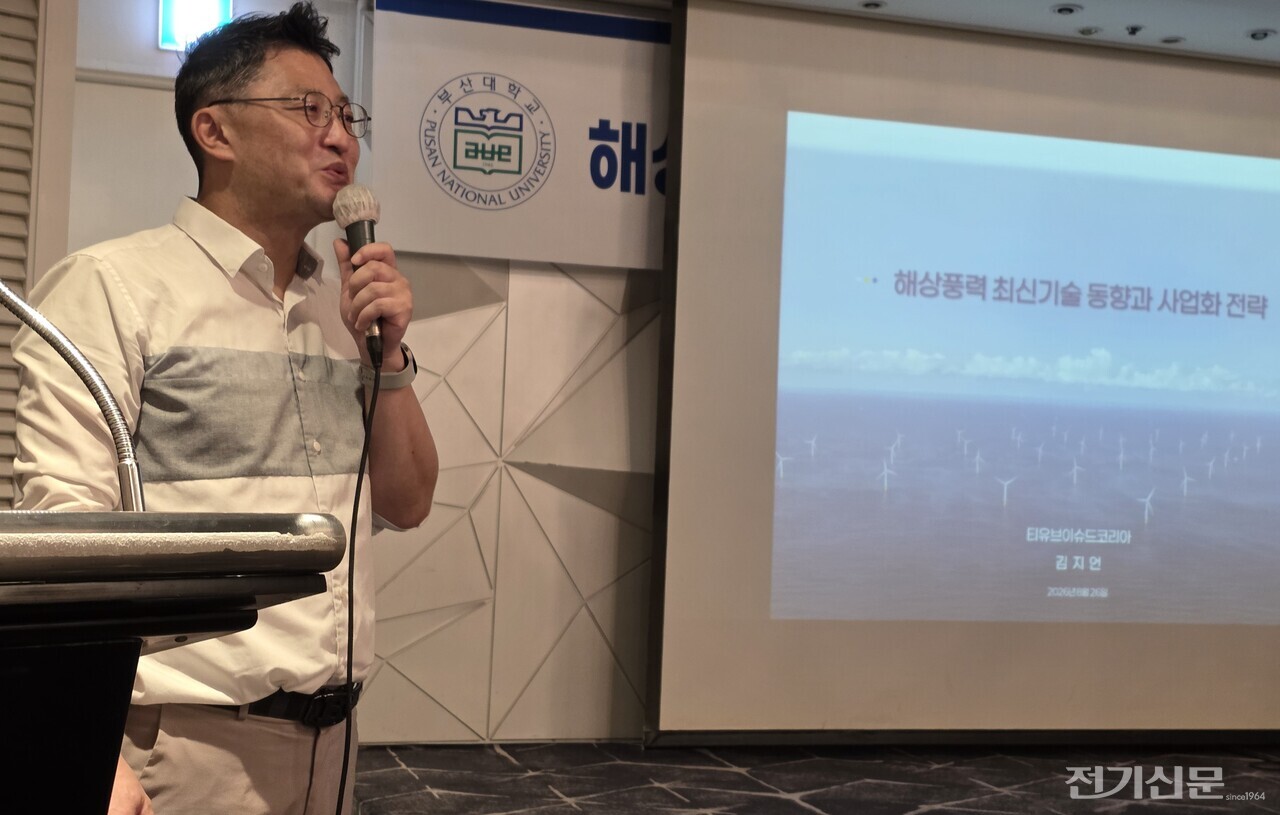
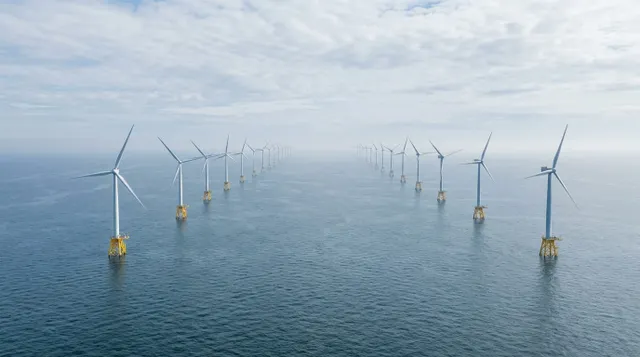
Domestic offshore wind project permits total 36GW in capacity, yet actual commercial operating equipment amounts to only 0.35GW. Connecting abundant wind resources and manufacturing foundations to commercialization through an execution system has emerged as an urgent task.
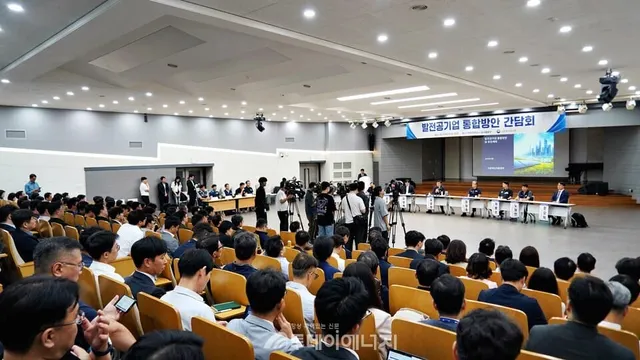
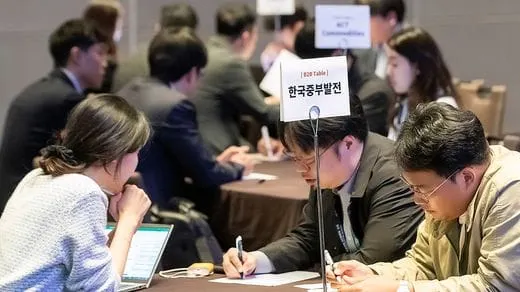
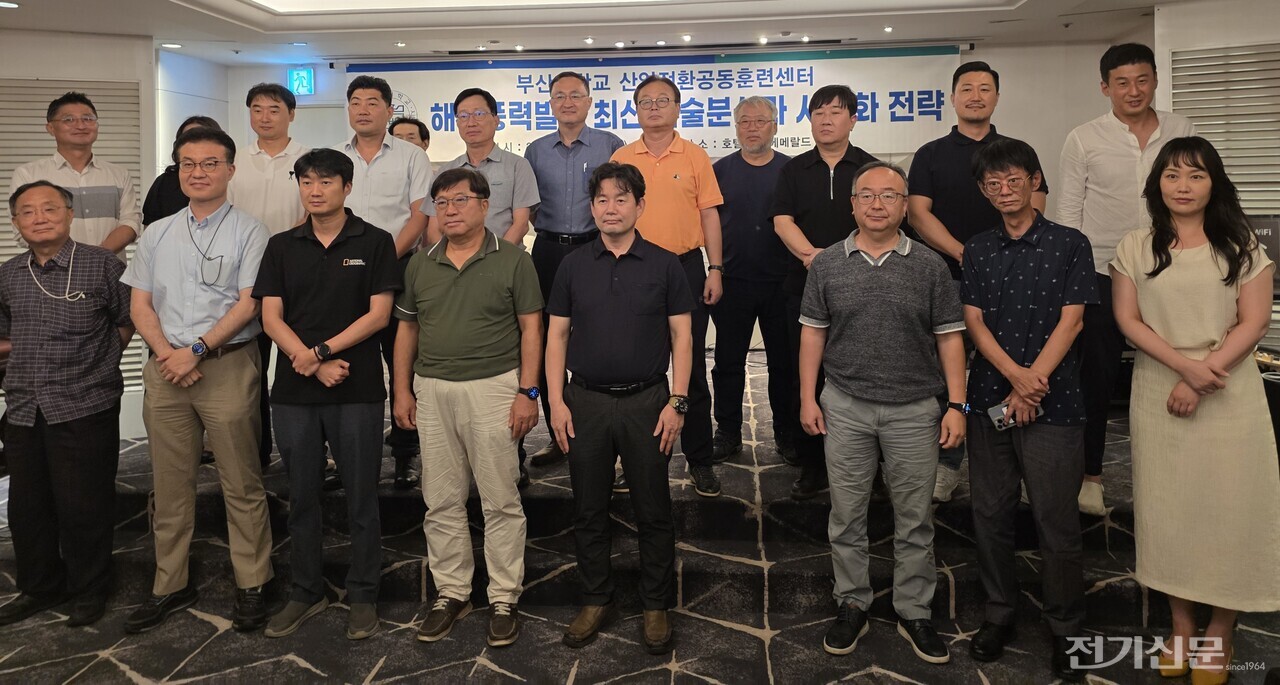
On the 26th, the Busan National University Industrial Transition Joint Training Center held a seminar titled "Latest Technology Analysis and Commercialization Strategy for Offshore Wind Power Generation" at Nongshim Hotel in Busan, exploring the causes and solutions for why permitted projects fail to proceed to construction and operation.
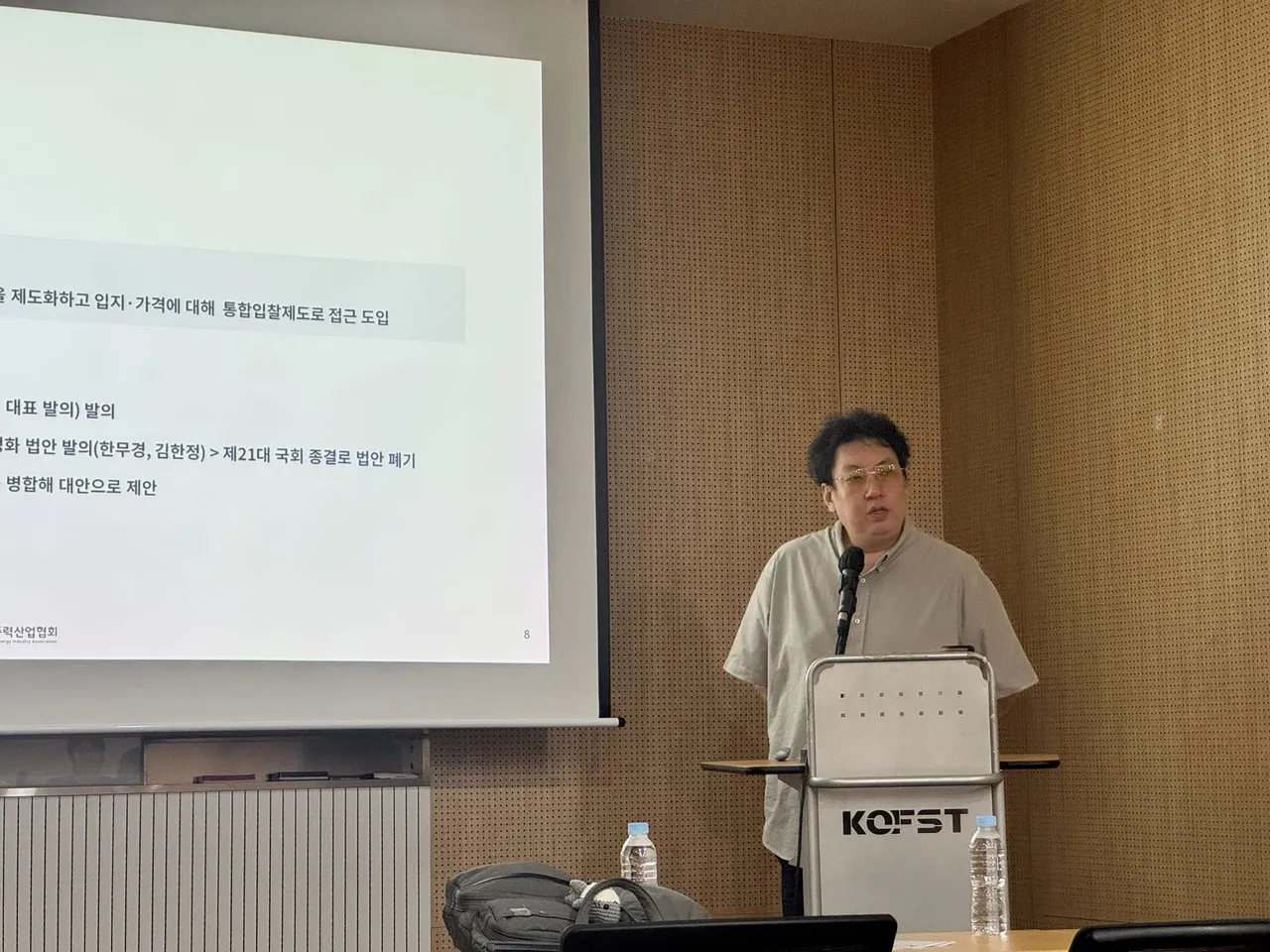
Kim Ji-eon, Executive Director of TÜV SÜD Korea, who spoke at the seminar, introduced the procedures and stage-by-stage review items for offshore wind projects based on overseas cases and presented methods to secure project credibility through type certification and site certification.
36GW in Permits, 0.35GW in Commercial Operation
Kim noted that while offshore wind projects with electricity business permits in Korea reach approximately 36GW, commercial operating equipment stands at approximately 0.35GW, meaning the operational conversion rate relative to permitted capacity remains at around 1 percent.
South Korea's offshore wind technical potential is assessed at approximately 624GW.
The West Sea is relatively advantageous for fixed-bottom offshore wind development, while the East Sea with deeper waters is favorable for floating offshore wind development. The country also possesses related manufacturing foundations in shipbuilding, marine plants, steel, and cables.
The problem emerges after project permitting. Kim identified four major bottlenecks blocking operational conversion: policy and permitting, grid connection, social consensus, and economic viability and infrastructure.
Offshore wind projects are entangled with 42 permits across 10 government ministries and 28 laws. Shared grid connection facilities and onshore grid capacity are insufficient, and connection timing is uncertain.
Conflicts over fishing rights, shipping routes, and environmental impacts, along with high financing costs and insufficient dedicated ports and large installation vessels, are factors delaying final investment decisions.
Kim stated, "The delay in domestic offshore wind is not due to insufficient wind resources but stems from a lack of an execution system to convert projects permitted by the state into actual operations."
Project Viability Cannot Be Judged by Wind Conditions Alone
Offshore wind is a long-term project spanning site investigation and design, permitting, procurement, manufacturing, installation, commissioning, and operation and maintenance.
Uncertainty at any single stage can lead to delays in the overall schedule and increases in project costs.
Therefore, from the early stages of a project, investigations must cover not only average wind speed but also typhoons, waves, ocean currents, seabed conditions, ecosystems, fishing activities, shipping routes, military operations, and grid conditions.
The collected data must be connected to annual power generation, design loads, foundation structures, cable routes, available installation days, and environmental mitigation measures to create a business model that investors and financial institutions can trust.
Seabed surveys should also focus on identifying uncertainty early rather than on cost reduction.
By confirming seabed obstacles, unexploded ordnance, geological layers, and soil conditions in advance, changes to foundation structures, cable route adjustments, and the possibility of work delays due to poor weather can be reflected before the basic design phase.
Kim stated, "The goal of seabed surveys is not to reduce survey costs but to price the project's uncertainty early," and explained, "By reflecting anticipated risks in costs and schedules in advance, the possibility of financing can be improved."
The Entire Project Beyond the Turbine Must Be Verified
Even if a wind turbine has received type certification, it must be separately verified for suitability to the typhoons, turbulence, waves, seabed conditions, earthquakes, and grid conditions of the actual project site.
This is why site certification, which comprehensively examines the turbine, foundation structures, subsea cables, offshore substations, installation, and commissioning processes, is necessary alongside type certification of the wind turbine itself.
Requirements from certification bodies, insurers, financial institutions, and permitting authorities must also be integrated into a single verification plan from the early stages of the project.
By reflecting this in design and contract schedules in advance, repeated reviews and approval delays can be reduced.
Technically, unconditional turbine upsizing must be balanced with proven performance and supply chain stability. While China leads in developing and demonstrating ultra-large turbines of 20MW and above, the current commercial market is dominated by models of 16MW and below.
As turbines grow larger, not only blades, towers, and nacelles but also ports, transportation, installation vessels, and cranes must be enlarged accordingly. Economic viability can only be secured when manufacturing, transportation, and installation infrastructure are all in place.
Entire Process as a Single Risk Management System
Kim presented the following as success conditions for offshore wind commercialization: suitable sites, financing-capable design, stakeholder consensus including residents and fishermen, an integrated execution system connecting supply chains, ports, and installation vessels, and sustainable economic viability.
Kim emphasized, "The core of offshore wind commercialization is not simply installing wind turbines at sea but reducing uncertainty across the entire process of investigation, design, permitting, supply chains, and financing," and stated, "It must be made into a 'Bankable Project' where investors provide capital, supply chains construct, and operators can deliver results over the long term."
Original Korean article: Electric Times