

The Korean-German Chamber of Commerce and Industry (KGCCI) has created an opportunity to explore the roles of government and industry in accelerating wind power development.
On September 14, the KGCCI held the Fifth Korea-Germany Renewable Energy Business Forum at the Four Seasons Hotel in Seoul to discuss sustainable cooperation between South Korea and Germany in the wind power sector.
Under the theme "Wind Energy: From Policy to Implementation," the event brought together approximately 200 wind power professionals from both countries to exchange diverse views on institutional frameworks and industry issues to support market activation.
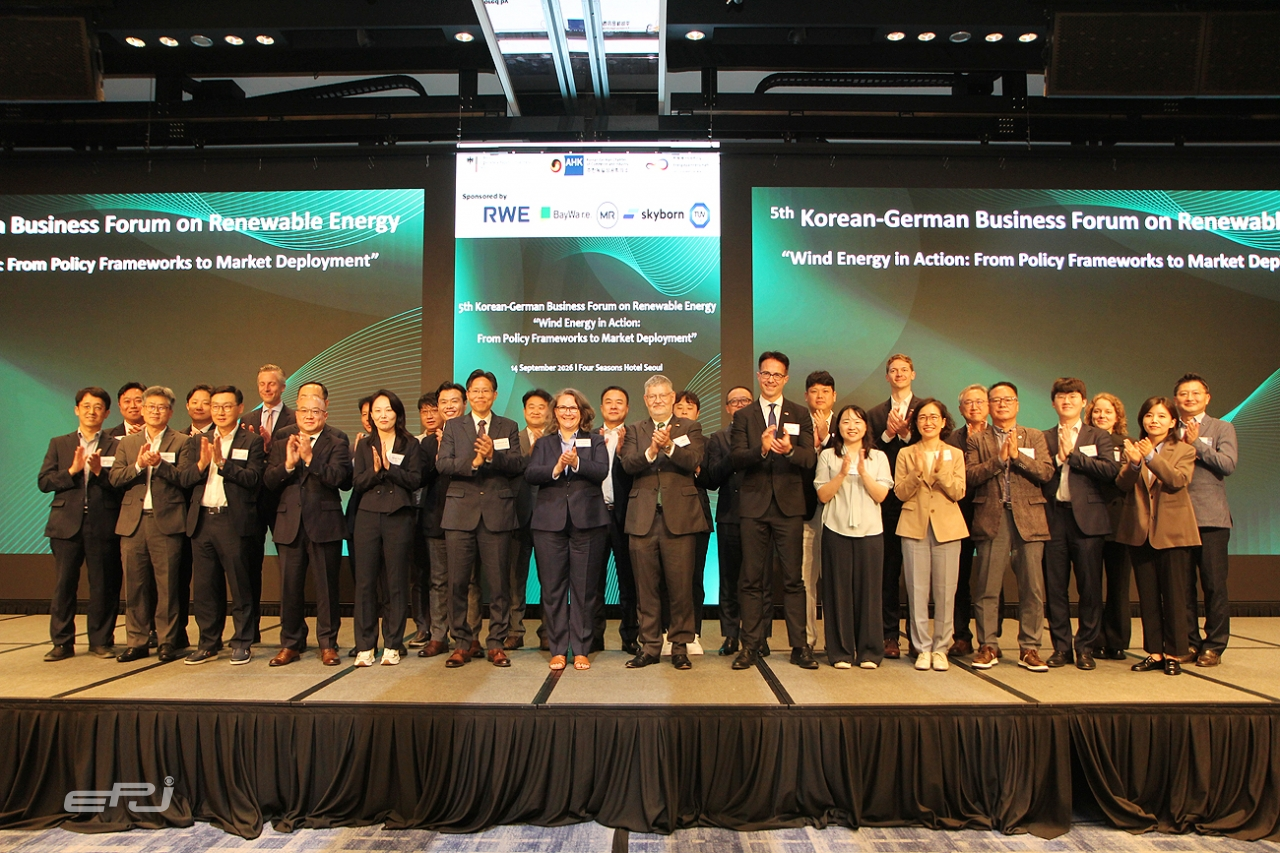
The event, organized to strengthen bilateral partnership through sharing current issues in the wind power sector, featured discussions across three sessions on accelerating government-led offshore wind deployment, creating regional clusters and fostering specialized workforce, and onshore wind repowering strategies.
In her opening remarks, Marie Antonia von Schönburg, representative of the KGCCI, said: "While we have previously focused on offshore wind in exploring cooperation between Korea and Germany, we have now expanded the topic to renewable energy, and this year we aim to discuss the challenges and opportunities of both countries centered on wind power. For Korea to stably expand its market under the new wind power mechanism, cooperation with companies that have accumulated technology and experience is essential," emphasizing partnership with Germany.
Jörn Weisert, Deputy Chief of Mission at the German Embassy in Korea, welcomed South Korea's government's ambitious offshore wind deployment targets to ensure stable power supply amid semiconductor and AI expansion, and said Germany will work to play a supporting role.
Ron Lipka, head of the Energy Partnership Division at Germany's Federal Ministry for Economic Affairs and Energy (BMWE), said: "Today's discussion well illustrates the common challenges that Korea and Germany face as they pursue onshore and offshore projects. When both countries continue to cooperate by sharing experiences and ideas, we will be able to find ways to support renewable energy deployment more quickly and effectively."
Risk of no bidders if prices are cut too low
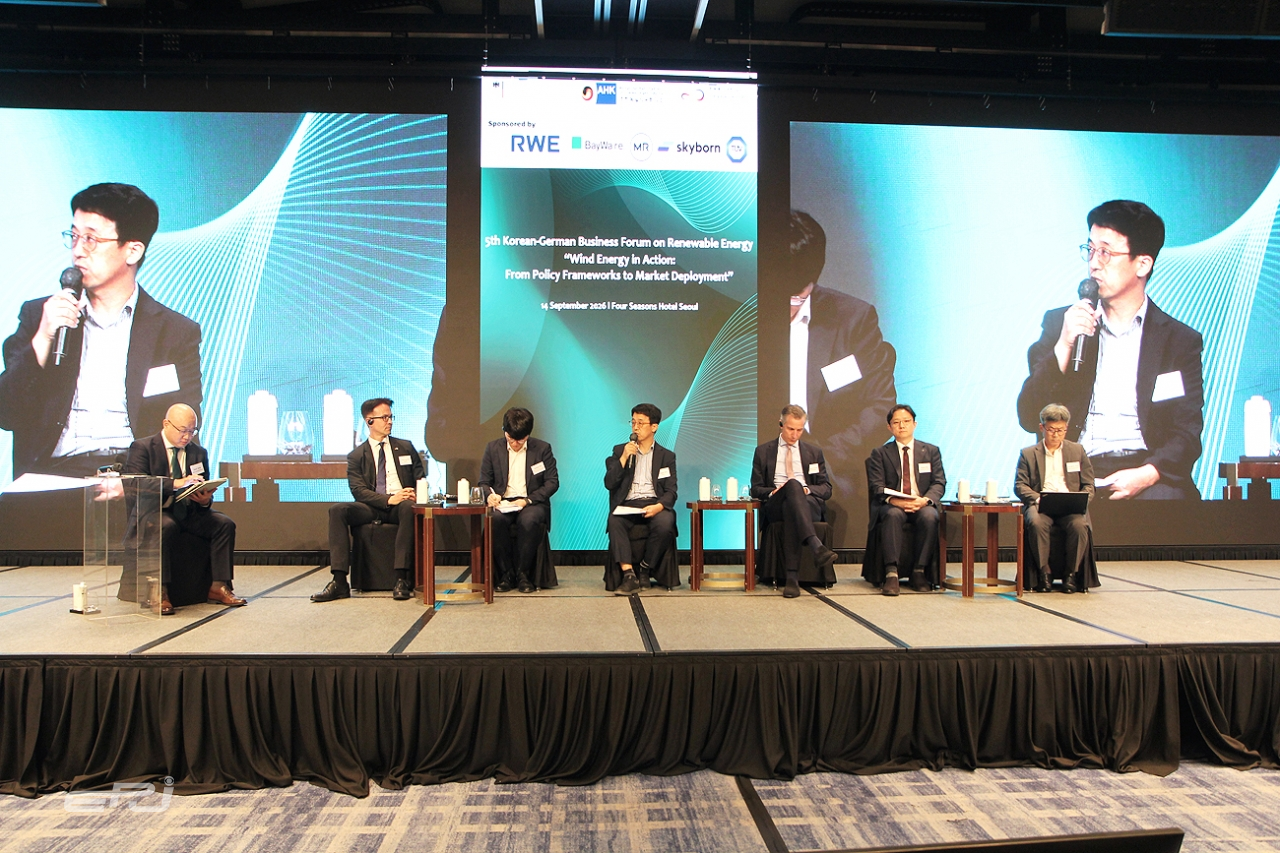
The first session addressed "Accelerating offshore wind deployment under government-led systems: securing stable auction volumes through planned siting designation and expanding deployment."
Marius Strotjohann, head of the Energy Partnership Division at Germany's Federal Ministry for Economic Affairs and Energy, who presented Germany's offshore wind status and policy, said: "Germany currently operates 10.8 gigawatts of offshore wind capacity centered on the North Sea, with plans to expand to 30 gigawatts by 2030, 40 gigawatts by 2035, and 70 gigawatts by 2045. Since the enactment of the Offshore Wind Energy Act in 2017, we have shifted to central government-led offshore wind development to expand deployment."
He continued: "While government-led offshore wind development has resolved grid connection and licensing delays, project economics problems have emerged from competitive price auctions. In the 2025 auction, not a single bidder came forward. Subsequently, considering market conditions, we have secured policy flexibility by first issuing auction notices at fixed prices, and if there are no bidders, applying CfD (Contract for Difference) mechanisms."
Na In-chan, official at the Ministry of Climate, Energy and Environment (MCEE)'s Offshore Wind Power Promotion Task Force, shared Korea's approach to introducing government-led planned siting designation.
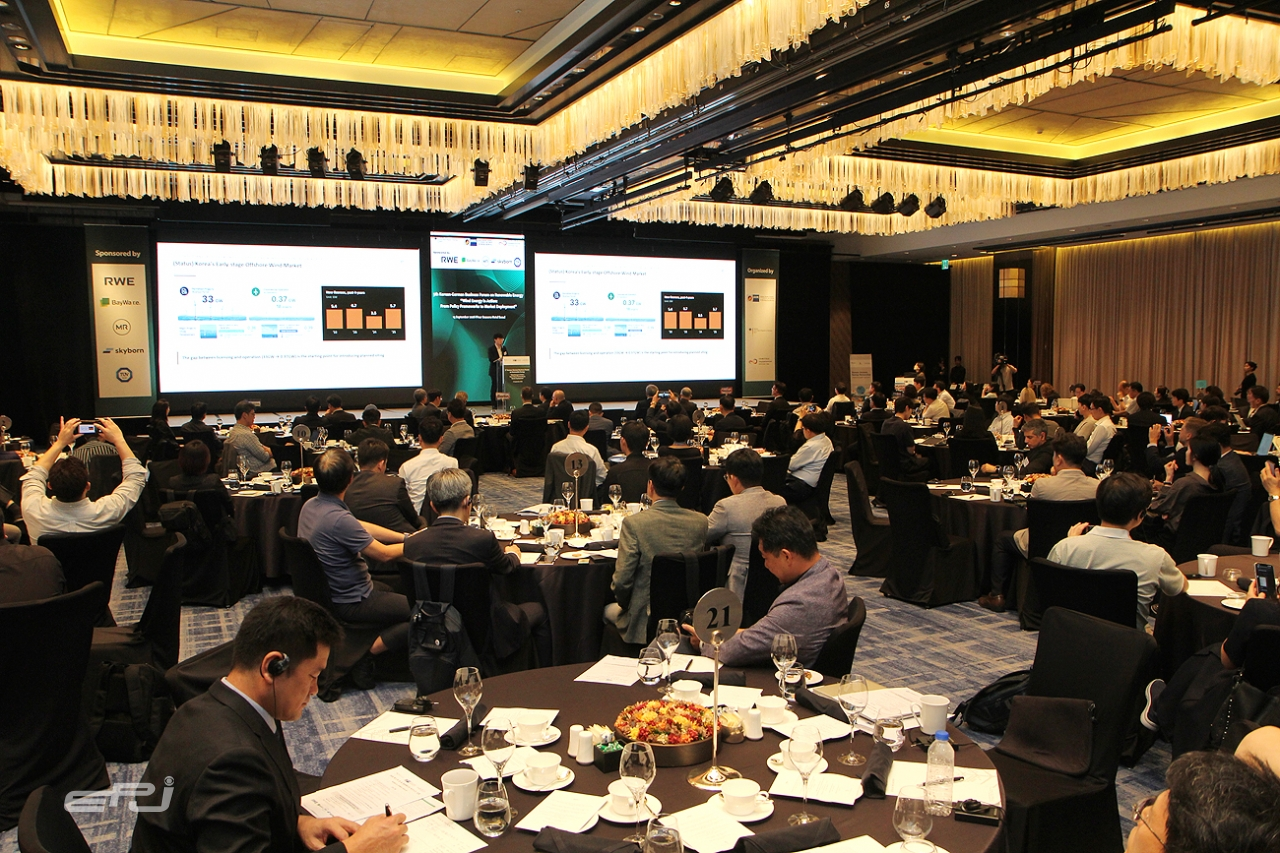
Na said: "Offshore wind planned siting development proceeds in the following order: preliminary zone designation, basic design, development zone designation, developer selection, implementation plan approval, construction start, and completion. The preliminary zone, which is the first step in planned siting designation, is planned to designate approximately 25 gigawatts by 2031."
He added: "The basic plan will focus on five items: power generation facility layout and capacity, business plan, grid connection, pre-licensing survey plan, and regional benefit-sharing measures. We plan to establish the basic design to resolve licensing uncertainty by ensuring that the content of basic design surveys does not change at the implementation plan stage."
The MCEE plans to begin competitive auctions for development zones from 2029, operating them in parallel with existing competitive auctions for a certain period, and then maintain only planned siting auctions from 2034 onwards.
Na noted that if an existing developer's project is incorporated into a development zone under the offshore wind law, they can participate in the current competitive auction method.
Original Korean article: Electric Power
English brief by Korea Wind Intelligence, koreawindintel.com



















