

Offshore wind projects in the Honam region have secured grid connection rights totaling 15.8 gigawatts through 2030, but actual volumes expected to enter the system during the same period are projected to reach only around 3 gigawatts. The government has decided to postpone the connection timing of approximately 10 gigawatts of delayed offshore wind projects to align with their actual entry dates, and to allocate the grid capacity freed up in this process to lower-priority renewable energy projects such as solar power.
Rather than waiting for new transmission lines to be completed, the aim is to increase the utilization rate of already-built power grids. Projects delayed over long periods will have their pre-secured connection rights adjusted to match actual project schedules, and the existing grid's capacity will be expanded through output control and energy storage systems (ESS).
According to MCEE (the Ministry of Climate, Energy and Environment) on September 29, the government reported a "Power Grid Innovation Plan" with these contents at a state council meeting that day. The government will redesign the power grid system to accommodate more than 100 gigawatts of renewable energy by 2030. For the Honam region, where new projects were previously only possible from 2034 onwards due to transmission and distribution grid bottlenecks, the designation of the system management substation will be lifted from October 1.
15.8 Gigawatts Secured but Only 3 Gigawatts Actually Entering System
The government is first addressing power grids that were pre-occupied without matching actual project pace. Renewable energy projects have been able to secure grid connection rights on a first-come, first-served basis from the initial stage. However, when licensing and other procedures were delayed and projects were postponed for extended periods, the grid was already allocated to those projects, creating a problem where lower-priority projects that could complete sooner were unable to connect.
Honam region offshore wind is a prime example. Connection rights secured through 2030 total 15.8 gigawatts, but the volume actually expected to enter the system during the same period is approximately 3 gigawatts. The government plans to adjust the connection timing of approximately 10 gigawatts of these projects based on project progress, and to allocate the secured surplus capacity to lower-priority solar projects.
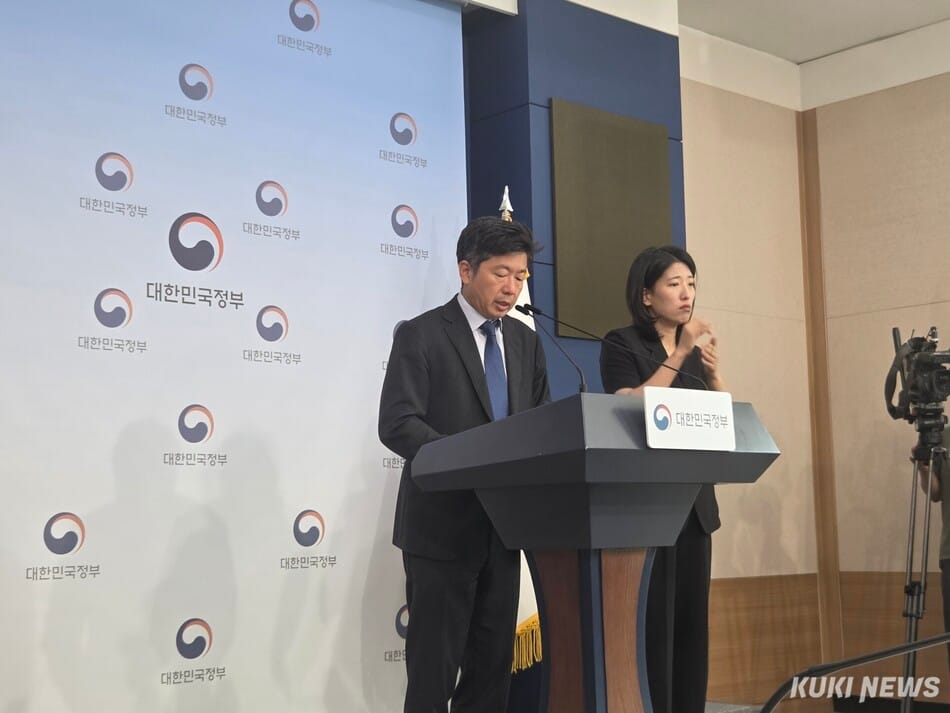
This is not simply a matter of revoking connection rights. Lee Jae-sik, the MCEE's power grid policy official, explained at a policy briefing held at the Government Seoul Building that day: "It is not complete recovery but rather an adjustment of timing," adding that the system usage timing will be adjusted to match when actual projects enter the power grid.
The government has also specified the criteria for adjusting connection timing. If an environmental impact assessment is not completed five years before the grid usage start date, the connection timing will be adjusted. Projects that fail to secure fixed-price contracts three years before that date will have their connection timing delayed or their connection rights revoked. The government plans to reorganize long-delayed projects and volumes with unsigned grid usage contracts in the fourth quarter of this year.
Public offshore wind projects are no exception. When asked whether public projects could be included in the adjustment, the official stated: "Public projects are included in the volumes pre-occupied through 2030," and "we will provide the grid at the time when actual entry occurs."
The government previously reviewed projects that were not actually being pursued and recovered approximately 9 gigawatts of connection rights. Going forward, the scope of management will expand to include long-delayed projects. For volumes entering from 2031 onwards, instead of the existing assumption that all projects proceed as scheduled, the government will reflect an actual renewable energy project implementation rate of 67.2 percent to allocate additional grid surplus. For the Honam region, this is expected to allow an additional 2.4 gigawatts of renewable energy to be accommodated at the generation licensing stage.
Not Waiting for New Grid: Using Output Control and ESS for Existing Grid
While readjusting pre-occupied connection rights, the government is also increasing the utilization of existing power grids. Moving away from the previous method of determining connection based on certain time periods when renewable energy reaches maximum output, the new approach increases connection volumes under conditions of output control when necessary.
Through this "flexible connection," the government will increase the maximum connection capacity for solar on distribution lines from 14 megawatts to 16 megawatts, and for substations from 50 megawatts to 60 megawatts. When the grid becomes saturated, output from flexible connection facilities will be controlled first, and output control conditions will be lifted once grid reinforcement is complete. The government estimates that this will allow an additional 2.6 gigawatts of solar capacity to be accommodated in the Honam region without separate grid construction.
ESS is also deployed as a "non-expansion alternative" to using existing grids rather than building new power grids. The approach stores power during the daytime when solar generation is concentrated and discharges it at night to reduce grid saturation. By 2030, distribution grid ESS will accommodate an additional 3 gigawatts of solar, and approximately 1.6 gigawatts of ESS will be installed centered on 41 saturated substations in the Honam region. For areas with insufficient transmission grid flexibility such as Sinokcheon and Cheongyang, transmission grid reinforcement ESS of approximately 2.6 gigawatts will be pursued.
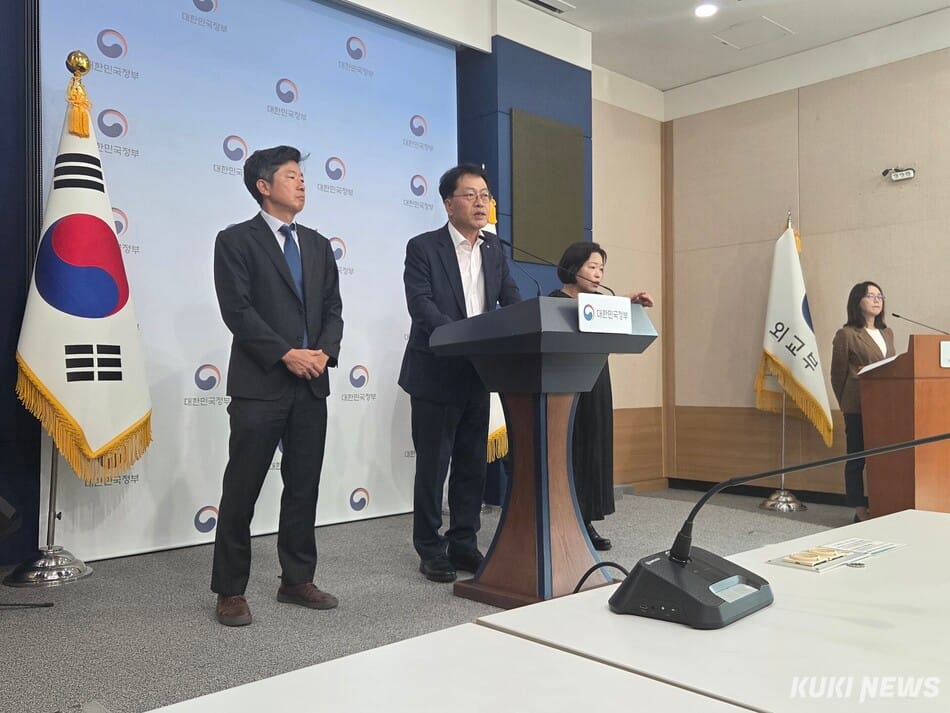
Additional explanation on ESS construction scale came from the field. The official stated: "More than 5 gigawatts by 2030," while adding "this does not encompass all ESS capacity." The volume was calculated prioritizing what is needed for renewable energy connection and non-expansion alternatives for the power grid, and the overall ESS scale needed for the entire system will be finalized in the 12th Basic Plan on Long-term Electricity Supply and Demand.
46 of 87 Honam Substations Have Capacity: Existing Waiting Projects to Connect in October
Secured power grid surplus will first go to developers who have been waiting for connection. The government will announce secured capacity in October and accept early connection applications from existing developers, proceeding with grid review through the end of the year. New project applications will begin from January 2027.
Of 87 substations in the Honam region, 46 have available capacity. When new project applications resume, most of these areas will be able to connect immediately. The remaining 41 saturated substations will connect in stages from 2028 to 2030 in line with ESS installation and new substation completion timelines. However, even saturated areas can achieve connection by utilizing distribution grid ESS and flexible connection.
The method of allocating connection rights is also changing. From January 2027, in connection with a revision to the renewable portfolio standard system, connection rights will be granted to projects selected through competitive auction rather than on a first-come, first-served basis. The aim is to reduce problems of prolonged project delays by evaluating economic viability, public interest, and grid conditions together and securing connection rights from the early project stage.
Through this plan, the government aims to increase renewable energy capacity by 2030 from 119 gigawatts to 171 gigawatts on a transmission basis, an increase of 52 gigawatts. On a distribution basis, capacity will expand from 84 gigawatts to 110 gigawatts. For the Honam region, transmission-level capacity will increase from 37 gigawatts to 64 gigawatts, and distribution-level capacity from 18 gigawatts to 30 gigawatts.
Kim Sung-hwan, Minister of Climate, Energy and Environment, stated: "This plan is not about waiting until new power grids are built, but about using the power grids we have now as efficiently as possible," and added: "We have lifted grid constraints and restarted new renewable energy connections in Honam."
Original Korean article: Kuki News
English brief by Korea Wind Intelligence, koreawindintel.com



















