What the first part established
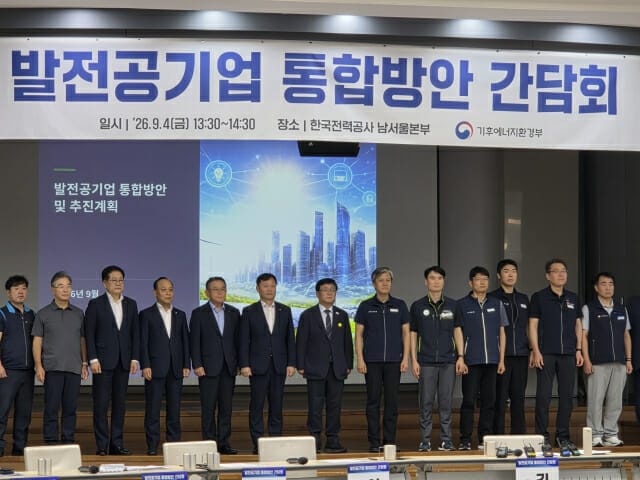
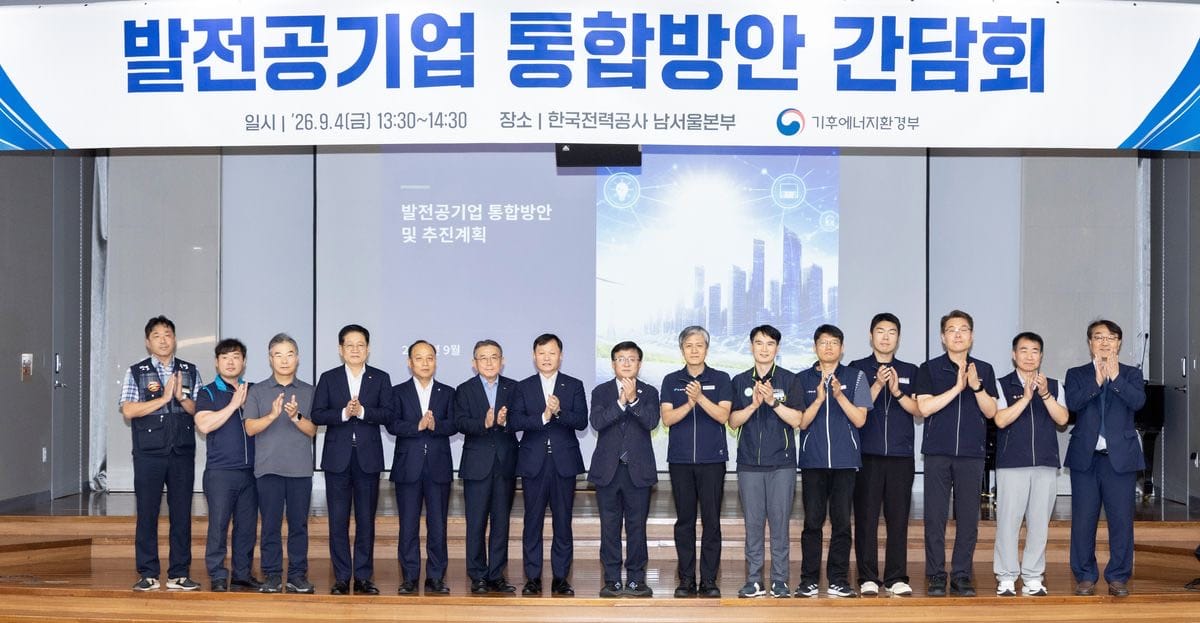
On 4 September 2026 the government settled the shape of the merger. The five generation subsidiaries become Korea Power on 1 October 2027, a wholly owned KEPCO subsidiary run from four head office divisions, with the twenty officer seats the five now hold cut to six.
The first part of this Deep Dive set out why that case is strong. The 2001 split was stage two of a four stage reform that was abandoned at stage two, so five sellers still face a single buyer. The five run the same class of assets at similar scale and carry a management layer to match, about 700 staff per standing director against 3,300 at KEPCO. And on KWI's own database they hold about a third of the national offshore wind pipeline while holding almost none of it alone.
| Company | Licensed | Pre-licence | Total |
|---|---|---|---|
| KOSPO | 8 · 2,231 MW | 1 · not recorded | 9 · 2,231 MW |
| KOMIPO | 9 · 2,025 MW | 2 · 400 MW | 11 · 2,425 MW |
| KOWEPO | 8 · 2,832 MW | 0 | 8 · 2,832 MW |
| KOEN | 8 · 2,415 MW | 2 · 835 MW | 10 · 3,250 MW |
| EWP | 2 · 310 MW | 1 · 2,010 MW | 3 · 2,320 MW |
| Korea Offshore Wind (joint vehicle) | 2 · 460 MW | 0 | 2 · 460 MW |
| Total | 37 · 10,273 MW | 6 · 3,245 MW | 43 · 13,518 MW |
Basis. KWI's database as of 10 September 2026, excluding returned licences and zone designations, including operating projects. Positions that rest on a memorandum rather than a joint development agreement are not counted as held. The largest pre-licence figure, East-West Power's 2,010 MW at Incheon Hanuibaram, is the capacity in the licence applications; local reporting in August and September 2026 put it at 2,000 MW, and the consultation filings on the applications are on the public information portal. On the same basis the national total is 44,278 MW. Of the 37 licensed projects, only four are held by a genco alone; 28 are held with private developers and five with other public bodies.
Two days before the merger was announced, the state also took origination. The first Offshore Wind Committee approved a planned-site framework under which the government screens the sea, designates districts, prepares the basic design including grid connection, and only then runs a competition.
Read part one Part 1: The Case for Merging Korea's Five Gencos, and the Questions It Has Not Answered
This part takes up what follows from those two decisions together. Where the 13.5 GW is placed, what the law leaves it by way of a route to build, what happens when the cure for dispersion produces concentration, and who carries the cost of the timing.
Offshore wind goes to one division, and what follows is blank
The 4 September announcement erased half of what this section was going to ask. The launch date, the name, the divisional structure and the number of officers are all settled. What remains is narrower and sharper.
Where offshore wind sits is already written down. The interministerial material of 3 September gives the head office renewable energy division a remit of large projects such as offshore wind, and gives the three or four new regional renewable energy divisions a remit of local projects such as solar and onshore wind. The 13.5 GW does not disperse to the regions. It gathers into one division at head office.
The same placement enlarges the problem section 4 takes up. A third of the national pipeline enters a single division of a single company.
The unions asked to push that direction further. At the 4 September briefing the Korean Federation of Power Industry Unions proposed that a set share of offshore wind auction volume be allocated to public-led development, with the merged company participating as a core public developer. That means reserving a public share inside the planned-site auction. It would extend to planned sites the public-led auction that already exists, and it is also the largest way to increase the concentration section 4 will identify.
Settled placement is not a finished design. The treatment of the 28 joint venture positions, the operating model for maintenance and the staffing of that division have still not been set out in any public document. The federation asked for a special headcount allowance for the energy transition and an exception on total payroll, so that the people needed for merger preparation, new renewable projects and retraining are counted separately. It is the labour-side version of the capability question section 5 takes up.
Staff redeployment is no longer abstract either. A quarter of head office staff will move. The unions have asked for total employment to be maintained, for no reduction in conditions, for pay and benefits that differ across the five to be levelled up, and for fair criteria on promotion and transfer. The government replied that it is premature to promise levelling up, and that some terms will be raised and others adjusted. A merger argued on just transition will face its first test with its own employees.
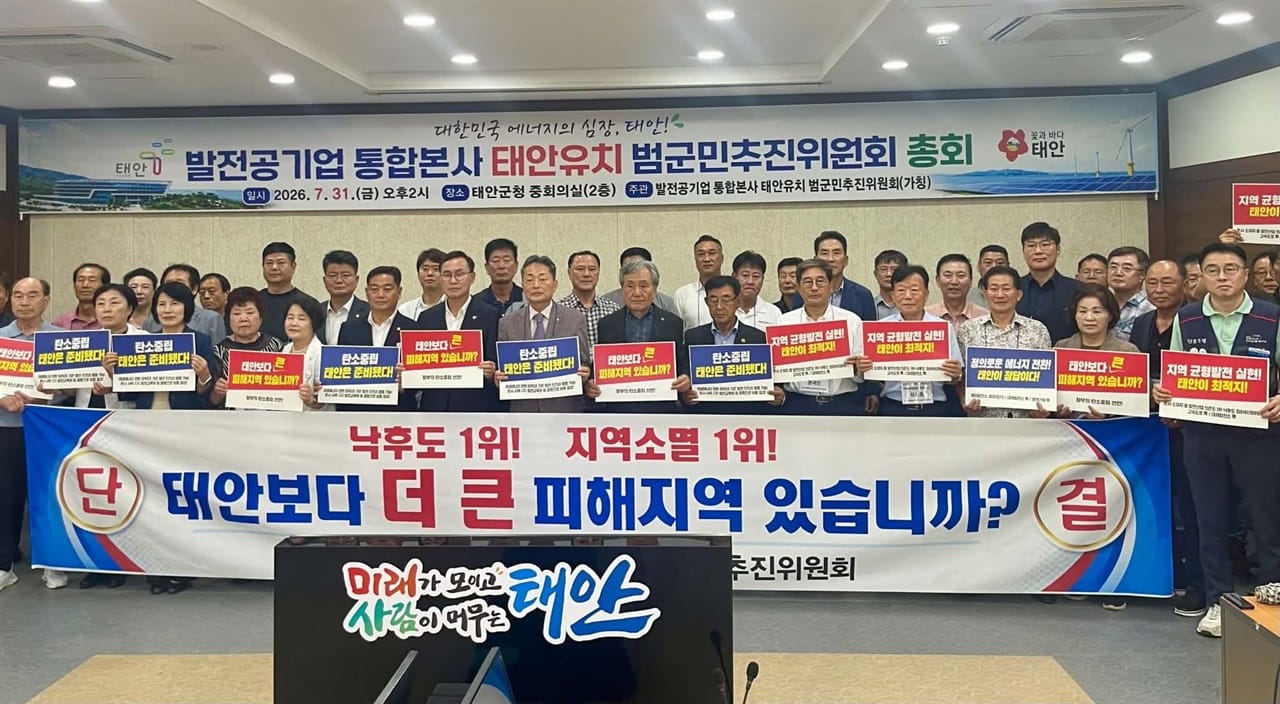
The address is not settled either. The government has not chosen a location for the merged head office, said it will not run a competition among local authorities, and deferred the decision until after October. Naju, Taean and Dangjin in South Chungcheong, Jinju and Ulsan's Jung-gu have all been reported as competing to host it. Boryeong's mayor called for a provincial campaign in late July. Taean county launched a promotion committee. Meanwhile the bills have run ahead of the answer. Rep. Ahn Ho-young's bill puts the head office and the renewable transition division in Jeonbuk, and Rep. Kang Min-kuk's, reported on 27 August, puts the head office in Jinju. A fourth bill, from Rep. Park Hae-cheol, names no location. The Assembly is claiming in statute the decision the government deferred past October.