

Offshore wind community revenue is divided into dividends from investment in power generation projects and revenue distribution from the additional weighting of renewable energy certificates (RECs) in community participation renewable energy projects. The government is also promoting an offshore wind community participation model that links cooperative investment with reinvestment within the region. However, standard bylaws and detailed guidelines are still being prepared, so investment and distribution methods differ by project.
The Ministry of Climate, Energy and Environment's "First Renewable Energy Basic Plan," announced on May 19, presented a method for local residents to invest in wind power projects by external project developers through cooperatives and share additional power generation revenue. The plan centers fishing communities affected by offshore wind projects in the scope of participation, provides policy financing for resident investments, and establishes standard bylaws and guidelines to ensure revenue is reinvested in the region. This was presented as a direction for promotion and does not confirm dividend rates or investment conditions applicable to all projects.
The current "Renewable Energy Development, Use and Promotion Act" stipulates methods for residents to directly invest in power generation projects or invest as cooperative members in cooperatives for power generation purposes. Project developers must provide revenue generated from the additional REC weighting resulting from community participation to local residents. Current management and operation guidelines include fishing communities subject to damage compensation from offshore wind facilities as participation targets and provide preferential treatment for them in revenue distribution.
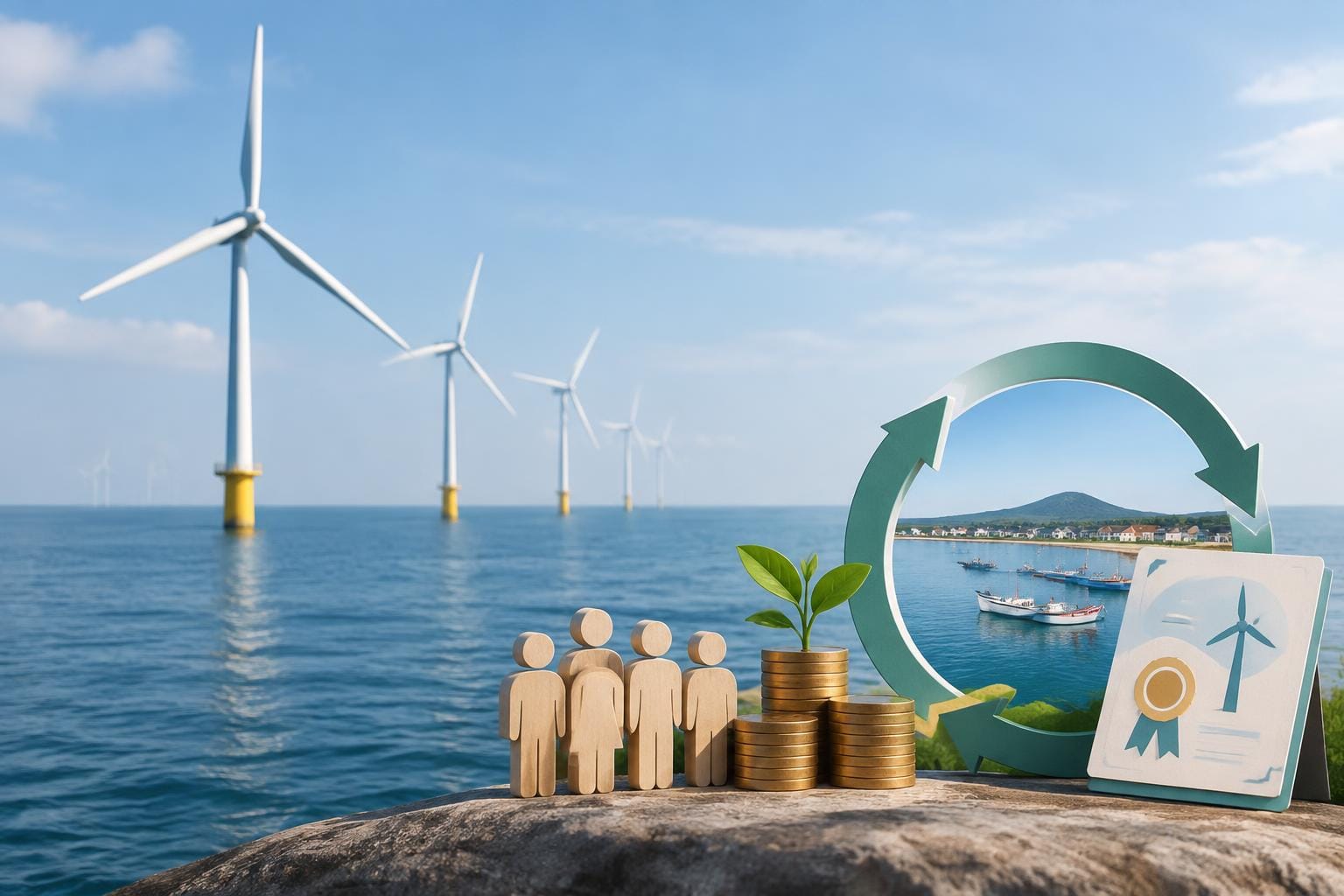
Hanlim is an example of community cooperative investment. According to the Ministry of Climate, Energy and Environment, three nearby villages formed a cooperative and invested a total of 30 billion won in this 100 megawatt project. This represents 4.7 percent of total project costs and is structured to return dividends generated from the project to local residents.
Revenue and risk vary depending on the investment method. The Bank of Korea's 2025 BOK Issue Note divided renewable energy community participation cases into equity type and bond type. Equity type dividends may vary depending on project revenue, while bond type is premised on agreed interest and principal repayment at maturity. The specific investment and distribution standards for offshore wind wind income villages must be confirmed after the government prepares standard bylaws and guidelines, along with conditions for each project.
Original Korean article: VeganNews
English brief by Korea Wind Intelligence, koreawindintel.com
KWI developer profile — KEPCO
4 projects in Korea totalling 1,310 MW. Compiled from the KWI database. Not part of the source article.
Hanlim Offshore Wind — this article
|  |
Southwest Offshore Wind Phase 2
| |
Sinan 1 Offshore Wind
| |
Sinan 2 Offshore Wind
| |
Related coverage
Project data: KWI database — Electricity Business Licence records, EIA filings (ME2021C006), Electricity Regulatory Commission minutes, and pre-EBL permit filings.



















