

2.37 gigawatts: this is the generating capacity of the offshore wind farm that Jeju Province plans to build in waters around Chuja-do, a subsidiary island. Equivalent to two large nuclear power plants combined, it is planned as the nation's largest offshore wind farm by capacity, and would produce enough electricity to supply the entire population of Jeju Province for a year with power to spare.
Given the record scale, the project cost alone approaches 20 trillion won, nearly three times Jeju's annual budget. No project pursued within Jeju Province has ever required such a large investment. It is fair to say this is the largest project in Jeju's history.
Because of this scale, the Chuja offshore wind project has inevitably drawn widespread attention.
Progress on the Chuja offshore wind project so far
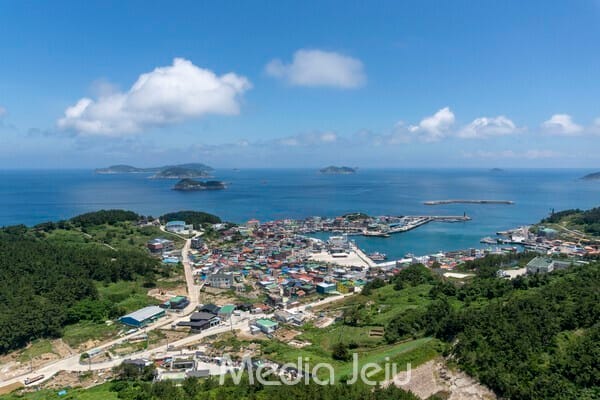
The first company to show interest in the Chuja offshore wind project was Equinor, a Norwegian state-owned enterprise. From 2022 onward, it began examining wind resources around Chuja-do by installing wind measurement devices in the waters there.
However, the project gained real momentum only from 2024 onward. That year, Jeju Province identified waters around Chuja-do as a site for wind power development, and the project began to be pursued at the public level. At that time, the scale of 2.37 gigawatts and project cost of 20 trillion won were outlined.
Under Jeju's "public-led 2.0 wind development project," the Jeju Energy Corporation was required to form a consortium with a private developer and proceed with the wind power project.
Accordingly, the Jeju Energy Corporation launched a public call for private developers to participate in forming a consortium related to the Chuja offshore wind project.
But from this point on, the project faced difficulties. In the end, not a single company came forward to participate in the project. Two main reasons were identified for this. One was that electricity generated at the Chuja offshore wind farm would have to be connected only to Jeju, and the other was that developers would have to contribute an annual minimum of 130 billion won in resident benefit-sharing payments.
If electricity from this wind farm is connected only to Jeju, power generation capacity within the province would inevitably increase significantly. This would intensify the problem of oversupply in renewable energy generation within the province, and output curtailment would inevitably increase, centered on individual solar power developers. As a result, complaints from individual solar power developers would emerge. The developer would have to bear this burden. From the developer's perspective, it is a burden.
The annual 130 billion won in resident benefit-sharing payments was also a burden too large for private developers to bear, given the scale of the amount.
Because of this, not a single private company stepped forward to participate in the Chuja offshore wind project.
The Wee Sung-gon administration, which took office in July, wanted to resolve this. The core pledge of the Wee administration was: "Build a 10-gigawatt offshore wind farm within the province, supply the electricity produced to semiconductor manufacturing facilities on the mainland, and return the profits gained to residents as basic income." The administration wanted to start with the Chuja offshore wind project, which had stalled from the outset of implementation.
The Wee administration therefore proposed allowing electricity produced from Chuja offshore wind to be connected to Jeonnam, and reducing the scale of the annual 130 billion won in resident benefit-sharing payments to lower the burden on private developers. However, from this point on, the administration faced criticism.
Why the solution put forward by the Wee administration faced criticism
The Wee administration's proposed solution was not to require private developers to pay a fixed amount of resident benefit-sharing payments, but rather to allow residents to invest in the project and have private developers distribute profits to investing residents, thereby returning those profits to residents.
To formally pursue this, the administration amended the "Ordinance of Jeju Special Self-Governing Province on Wind Power Project Licensing and District Designation." Article 35 of the amended ordinance required private developers to "submit a development profit-sharing plan that includes a resident participation plan in accordance with the ordinance," so that developers would return development profits to Jeju Province.
By submitting a profit-sharing plan that includes distributing profits to investing residents, the administration included an item that could substitute for returning profits to residents.
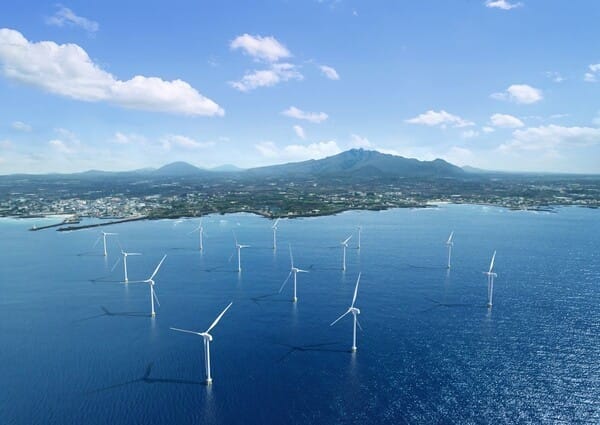
However, when this content became known, opposition arose within the province. If profits are generated by using "wind," a public resource, those profits should also return to all residents. But the plan put forward by the Jeju administration ensures that profits go not to all residents but only to some residents who invested in the project.
Because of this, criticism followed, including the observation that this creates "a structure where only some residents with money can gain profits" and the charge that it is "a plan that breaks the concept of wind as a public good."
Resident participation in projects and profit-sharing are separate issues
The Jeju Provincial Council's Future Economy and Industry Committee, the standing committee with jurisdiction over the ordinance, poured considerable criticism on the province's plan.
Media Jeju met with Councilor Han to examine the problems with the ordinance.
"The resident benefit-sharing payments that developers were originally required to pay are used for energy support programs for vulnerable groups and reinvestment in aging facilities. In other words, they are used in places where all residents can benefit. But according to the ordinance submitted by Jeju Province, only economically comfortable investors would gain profits." Councilor Han offered this criticism of the ordinance originally submitted by Jeju Province.
Councilor Han emphasized that "the resident benefit-sharing payments, through which development profits return to residents, should remain as they are. With those payments in place, resident participation through investment should proceed separately. Resident participation and resident benefit-sharing should not be bundled together."
Councilor Han also stressed that the uses of resident benefit-sharing payments made by developers should be expanded beyond current scope. Currently, under relevant ordinances, they can be used for vulnerable groups and facility reinvestment, but this should be expanded to allow use in various welfare programs and scholarship programs. This way, substantially more residents could benefit from resident benefit-sharing payments.
Councilor Han also said: "I believe the proportion of resident benefit-sharing payments that private developers must pay can be adjusted. But if resident benefit-sharing payments are replaced by resident participation in the form of resident investment, we create a bad precedent, and we will never be able to revive resident benefit-sharing payments again. This would be harmful to Jeju as a whole in the long term."
Due to opposition from Councilor Han and multiple other council members, the ordinance submitted by Jeju Province was amended by the provincial council. The resident benefit-sharing payments required from private developers and resident participation were completely separated. Through this, the concerns raised by the council members were to some extent resolved.
However, Councilor Han also expressed concern about the intentions of the Jeju administration in submitting such an ordinance.
Councilor Han said: "The Chuja offshore wind project is a means toward the larger goal of carbon neutrality by 2035 that Jeju is pursuing. But at some point, it seems the focus became solely on pushing forward the Chuja offshore wind project itself, making the project itself the goal. That is why ordinance amendments tailored to this project are being pursued." He criticized the province, urging it not to focus on short-term project amendments but to consider longer-term measures that would allow profits to return to all residents.
Original Korean article: Media Jeju
English brief by Korea Wind Intelligence, koreawindintel.com



















