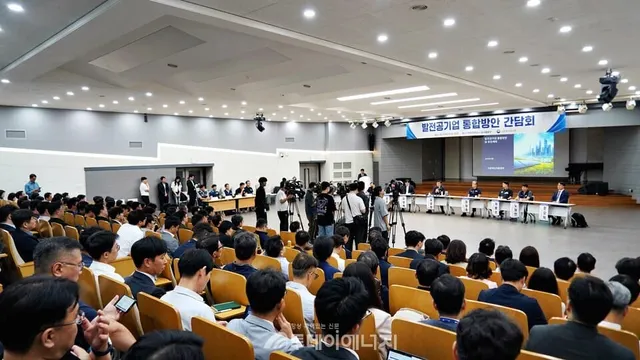
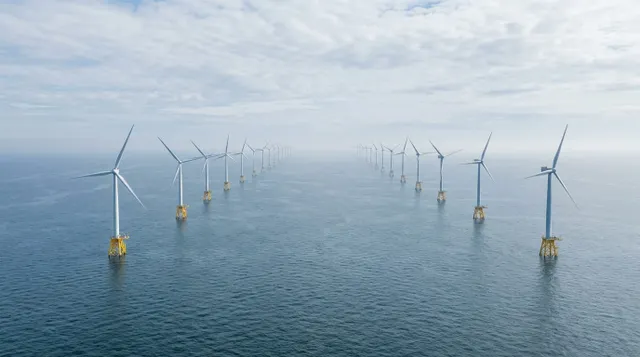
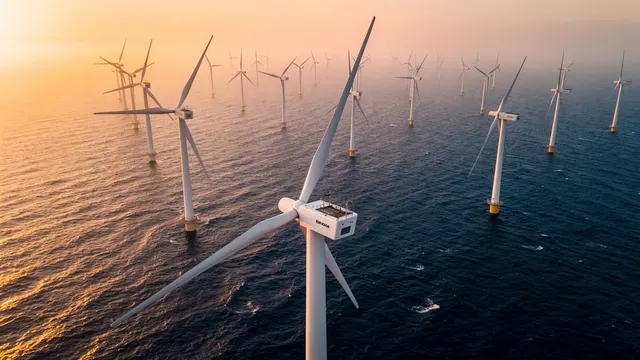
The waters off Incheon, identified as a key hub for carbon neutrality and the transition to renewable energy, have become a major testing ground. Large-scale offshore wind power projects with total installed capacity exceeding 7 gigawatts are being pursued. However, conflicts and limitations emerging in the implementation process have exceeded dangerous levels. Incheon Today examines the core issues in Incheon's offshore wind initiative and seeks alternatives for coexistence between renewable energy transition and local communities.
Passenger ferries as the only lifeline: fifty years of struggle for mobility rights
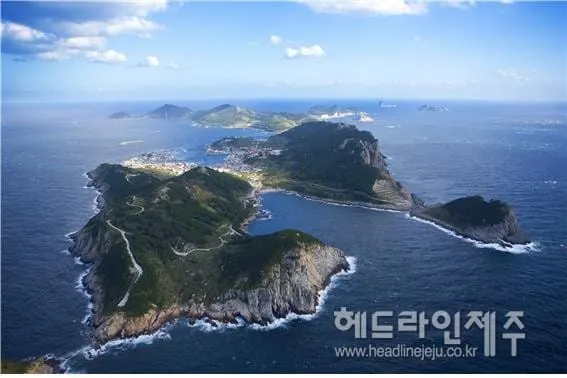
The Five West Sea Islands, connected to the Northern Limit Line in the West Sea bordering North Korea, consist of Baengnyeong Island, Daeching Island, Socheon Island, Yeonpyeong Island, and Soyeonpyeong Island. For residents here, passenger ferries are the only way to reach the mainland. The concern that the shipping route they have fought to preserve for over fifty years could be blocked by offshore wind farms has created anxiety among island residents.
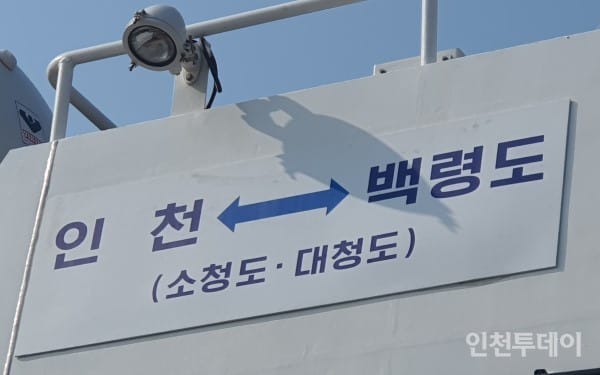
For Five West Sea Islands residents, passenger ferries have been inseparable from national security since immediately after liberation. From August 15, 1945, through the Korean War period, a 12-ton motorboat named Daecheonghwan served as the liaison vessel. Until 1956, a 70-ton vessel named Igeunh (later renamed Baengnyeonghoh before retirement) took its place.
From 1957, a private operator obtained the route rights and operated the Hanryeohoh, but after three years Ongjin County established Ongjin Transportation and subsidized fuel costs. This marked the government's first support for the Five West Sea Islands route. From 1967, a 227-ton vessel named Hwangjinhoh was constructed with full government funding and entered service.
From October to mid-December 1973, North Korea violated the Northern Limit Line 43 times, threatening the Five West Sea Islands shipping route in what became known as the West Sea Incident. The government deployed the navy to begin escorting vessels. In 1976, under presidential directive, a new 453-ton vessel named Unginjinhoh, capable of carrying 465 passengers and 199 tons of cargo, entered service. This was an era when the government directly managed passenger ferry construction and operations, citing the lifeline status of residents on the security frontline.
Passenger ferries protected by security concerns, residents resist sudden private monopoly
However, on December 30, 1992, the Incheon Regional Maritime and Port Authority reversed this approach on its own. Regardless of Baengnyeong Island residents' wishes, it revoked operating licences for the cargo-passenger vessels Unginjinhoh (453 tons) and Saegyeonggiho (540 tons) that had served the Incheon-Baengnyeong route, and deployed only one high-speed ferry named Democracyhoh (air-cushion vessel, 330-passenger capacity) operated by Semo Corporation under monopoly. The passenger ferry that the state had managed for security reasons had shifted to private monopoly control.
The problems were fares and service. The high-speed Democracyhoh could not carry cargo, had frequent cancellations, and fares jumped to 29,990 won, 3.5 times the previous 8,300 won. The promised travel time of three and a half hours actually took five to six hours. Only after residents filed petitions with the Blue House and the Board of Audit and Inspection did the maritime authority promise in May 1993 to redeploy the Saegyeonggiho, and it kept that promise.
However, the high-speed ferry monopoly structure remained. In June 1995, the maritime authority denied approval for an inland passenger transport business licence application by Jindo Transportation for the Baengnyeong-Incheon route. Democracyhoh fares rose to 50,990 won.
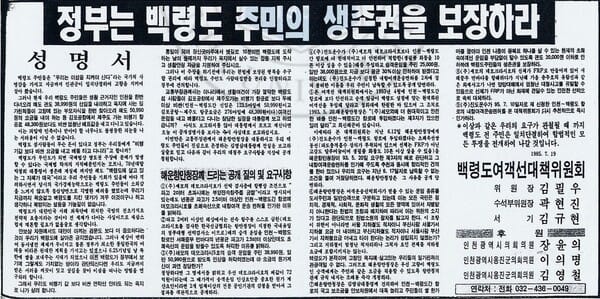
In response, the Baengnyeong Island Passenger Ferry Task Force Committee, chaired by Kim Pilwoo, held a rally with some 1,000 residents at Yonggipo Wharf on Baengnyeong Island in August 1995, demanding that the government guarantee residents' right to survival, and marched 12 kilometers to the headquarters of the Marine Corps 6th Division. Following a signature campaign, the maritime authority finally approved a competing ferry operator's licence in January 1996.
Five West Sea Islands mobility rights struggle leads to current i-Bada Pass policy
This struggle bore fruit with the enactment of the Ordinance on Passenger Ferry Fare Support for Residents of the Five West Sea Islands and Others by the Incheon Metropolitan Council in October 2003. The ordinance was proposed by Kim Pilwoo, the former chair of the Baengnyeong Island Passenger Ferry Task Force Committee, after entering the metropolitan council. It was the nation's first system in which the city subsidized fares exceeding ten times the cost of land bus transportation.
From March 2006, a maximum fare of 5,000 won for island residents was introduced. This model led to the enactment of an ordinance in Ulleung County, Gyeongsangbuk Province, and amendments to the Shipping Act and the Rural Living Quality Improvement Act, becoming a model for passenger ferry policy in island regions nationwide. Currently, it has evolved into the i-Bada Pass system, which allows any Incheon citizen to travel to islands for 1,500 won.
This history is documented in the master's thesis on social welfare by Kim Pilwoo, titled "Regional Characteristics and Mobility Rights Guarantee in the Five West Sea Islands," submitted to Inha University. Kim Pilwoo, who fought against ferry monopoly thirty years ago, now stands as representative of the Five West Sea Islands Residents Alliance, confronting offshore wind power.
Five West Sea Islands passenger ferry capacity at 16.7 percent, half of Ulleung Island level
Despite over fifty years of struggle to secure these protections, conditions remain harsh. The Incheon-Yeonpyeong route has only one passenger ferry, the Koreakingho, and the entire Five West Sea Islands have only three ferries. According to a 2023 survey on mobility rights in Incheon island regions released by the Incheon-Gyeonggi Sigrant Center at Inha University, the passenger ferry capacity ratio relative to the island resident population in the Five West Sea Islands is 16.7 percent, less than half of Ulleung Island's 36.1 percent.
Additionally, there are no large ferries of 3,000 tons or larger, so vessels frequently cannot depart when weather deteriorates. Island residents' concern is that if offshore wind farms are established near safe shipping routes under these vulnerable conditions, mobility rights will face further threats.
The routes used by Five West Sea Islands residents consist of a three-tier structure. High-speed passenger ferries connecting Baengnyeong Island, Daeching Island, and Socheon Island to the mainland follow the northernmost "basic route." Below that is a route used by barges, cargo ships, and fishing vessels traveling at 15 knots or less. Below that is the "safe route" used by the navy to escort residents during emergencies such as North Korean provocations. The problem is that most major offshore wind projects being pursued off Incheon overlap with this safe route.
Ørsted, Korea East-West Power, Korea Midland Power, and Gulup Wind Development: safety route overlap concerns widespread
The Incheon Offshore Wind 1 and 2 projects pursued by Danish state-owned company Ørsted were held in abeyance three times during the Ministry of Trade, Industry and Energy's Electricity Regulatory Commission review in 2023 due to overlap with the Incheon-Baengnyeong passenger ferry route. Only in November that year, after reducing the project area by approximately 30 percent and revising the project zone to maintain at least 1 nautical mile separation from the passenger ferry safe route, did the project receive approval.
Nevertheless, the Ministry of National Defense demanded on September 25, 2024, that Ørsted's survey area maintain additional separation of at least 1 nautical mile north and south based on the Northwest Islands vessel navigation regulations route coordinates. The project had been reduced once but faced restrictions again.
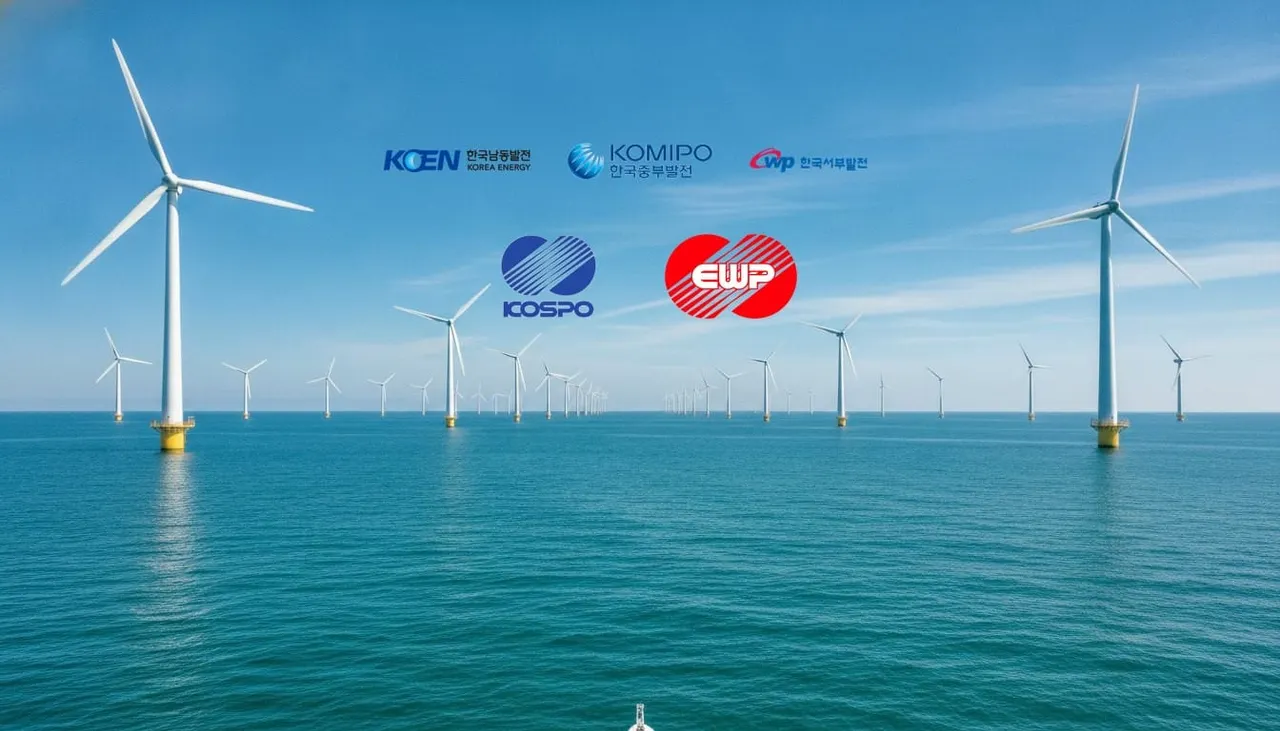
The Haneulbaram 1, 2, and 3 projects pursued by Korea East-West Power, which took over business rights from RWE, face the same situation. The Ministry of National Defense stated that the project location is a "core area for Northwest Islands and capital region defense," and demanded repositioning of the northern turbines citing radar signal obstruction and naval vessel route overlap. The Ministry of Oceans and Fisheries also suggested project area reduction or modification during the maritime traffic safety assessment stage, noting that "vessel traffic flows of ships 100 meters or longer exist south of the planned project site."
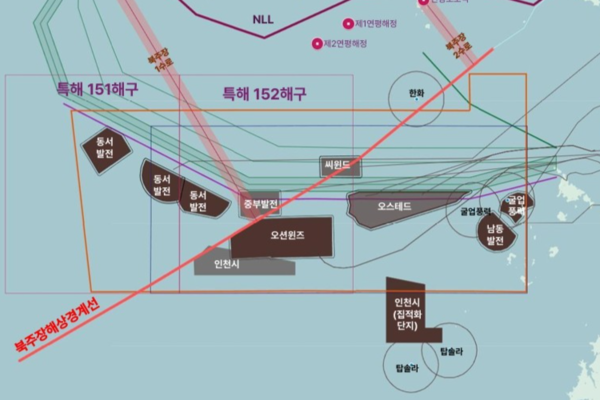
The publicly-led Incheon 2 project pursued by Korea Midland Power received a negative opinion from the Incheon Regional Office of Oceans and Fisheries in April, which stated to the Ministry of Climate, Energy and Environment that the project site "directly overlaps with specific passenger ferry routes serving the Northwest Islands (West Sea Three Islands)."
Gulup Wind Development, in which the CJ Group family holds major stakes, is no exception. The Five West Sea Islands Residents Alliance sent an official letter to Ongjin County in July urging it to deny renewal of Gulup Wind Development's public water surface use and occupation permit for wind measurement devices. The reason was that if turbines are positioned within the device's maximum effective radius of 7 kilometers covering 154 square kilometers, up to 80 square kilometers could overlap with the Five West Sea Islands safe route.
From Ørsted and Haneulbaram to Korea Midland Power and Gulup Wind Development, every Incheon offshore wind project, regardless of whether operated by foreign companies, public enterprises, or conglomerate subsidiaries, encounters the Five West Sea Islands route issue.
Ørsted fails to secure separation despite accident, repeats pattern: MOF launches safety standards development
Ørsted's case is particularly painful. In April 2022, a rotor (blade and hub) and nacelle completely separated and fell into the sea at the Anholt offshore wind farm (400 megawatts, using Siemens Gamesa 3.6 to 4.0 megawatt turbines) that the company operates in Denmark.
Siemens' investigation concluded that welding failure at the tower-nacelle joint was the cause, and neighboring countries including Germany and the United Kingdom with wind farms using identical turbine models even declared navigation prohibition zones around them to prevent secondary accidents. Korea Electric Power Corporation's offshore wind business division cited as a lesson from this case the need for "supplementation of setback distances to prevent vessel collisions in case of offshore falls and standards for shipping routes."
At the Ormonde wind farm in the United Kingdom (150 megawatts, operated by Vattenfall), a rotor fastening component broke during maintenance work, and falling debris collided with a nearby vessel. The possibility of secondary major accidents including vessel damage, component loss, worker casualties, and vessel sinking was raised.
The Ministry of Oceans and Fisheries notice on Maritime Traffic Safety Assessment Implementation Guidelines stipulates that the line connecting the outermost turbines of an offshore wind farm must be at least 0.5 nautical miles (926 meters) from vessel traffic routes. The European Union guideline is stricter, setting the minimum safety distance between the wind farm's outer boundary and shipping routes at 2 nautical miles.
Accordingly, the Ministry of Oceans and Fisheries has been conducting a "Research Project on Offshore Wind Disaster Response System Development" since February. The project is being pursued to identify potential risk factors including maritime traffic and structural safety as applications for offshore wind farm permits reach some 100 locations nationwide, and to prepare and prevent such risks. Standards reflecting even large naval vessel routes for Five West Sea Islands contingencies are expected to emerge.
KWI developer profile — Ørsted
2 projects in Korea totalling 1,470 MW. Compiled from the KWI database. Not part of the source article.
Incheon 1 Offshore Wind — this article
|  |
Incheon 2 Offshore Wind — this article
| |
Project data: KWI database — Electricity Business Licence records, EIA filings (ME2025C009, ME2025C010), Electricity Regulatory Commission minutes, and pre-EBL permit filings.
Original Korean article: Incheon Today