

The waters off Incheon, identified as a key hub for carbon neutrality and the transition to renewable energy, have become a major testing ground. Large-scale offshore wind power projects with a total capacity exceeding 7 gigawatts are underway. However, conflicts and limitations emerging in the implementation process have exceeded dangerous levels, despite the enthusiasm on the ground. Incheon Today examines the core issues in Incheon's offshore wind power initiative and seeks alternatives for coexistence between the renewable energy transition and local communities.
Since 2021, Sinan County in Jeollanam-do has been distributing a "sunshine pension" to residents based on solar power generation revenue, paying up to 680,000 won per quarter. From 2032, it is also preparing a "wind pension" that will provide 6 million won annually to all county residents.
By contrast, Ongjin County in Incheon, also on the west coast, cannot legally receive a single won. The system, designed only on the basis of territorial waters close to land, fails to reflect the geographic peculiarity of Incheon's offshore wind power, which operates in distant waters.
Same west coast, but Sinan gets pensions while Ongjin gets zero won
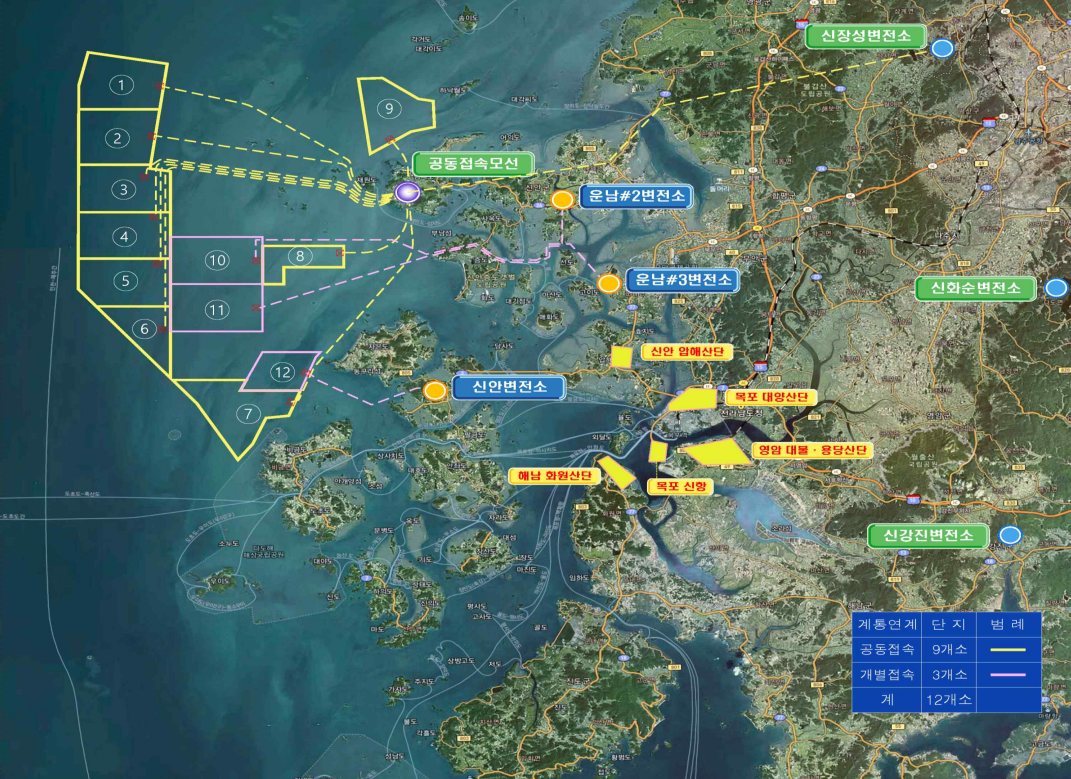
Sinan County enacted the country's first "Ordinance on Sharing Development Benefits from Renewable Energy" in 2018 and has implemented the "sunshine pension" since 2021. The method allows residents to participate as shareholders in solar and wind power plants through cooperatives and receive dividend payments. Currently, 18,997 residents, representing 49 percent of the county population across six islands in Sinan, receive sunshine pensions and wind pensions, with cumulative payouts reaching around 30 billion won.
Sinan County is taking a step further by preparing a "wind pension" as well. The plan is to establish a residents' fund for offshore wind power and distribute 6 million won annually (500,000 won per month) to all county residents starting in 2032. This is premised on the operation of the 390-megawatt Sinan Ui offshore wind power plant, scheduled for completion in 2028. Through this policy, Sinan County has seen net population inflows of 179 people in 2023, 136 people in 2024, and 710 people as of September 2025.
Incheon faces the opposite situation. The project cost for Ørsted's Incheon 1 and Incheon 2 offshore wind power projects is estimated at 7.52 trillion won. Even calculating only the special support fund, set at no more than 1.5 percent of power plant construction costs, the figure exceeds 100 billion won. However, under current law, Ongjin County cannot receive any of this amount.
Turbine radius of 10 kilometers based on land, yet nearby islands are excluded
First, there is a gap in the criteria for resident participation and profit-sharing systems. The offshore wind resident participation system allows residents to invest through equity stakes or funds and share profits. However, the current "Guidelines for Management and Operation of the Renewable Energy Portfolio Standard and Fuel Blending Obligation System" under the Ministry of Trade, Industry and Energy specifies only land residents within a 10-kilometer radius of turbines and residents at transmission line endpoints as eligible participants.
As a result, island residents in Ongjin County, who are actually closest to the offshore wind power complex, are excluded from participation. Conversely, a paradox arises where residents of Yeonsu-gu's Songdo International Business District, a simple land power grid point with no power plant, become eligible for profit-sharing.
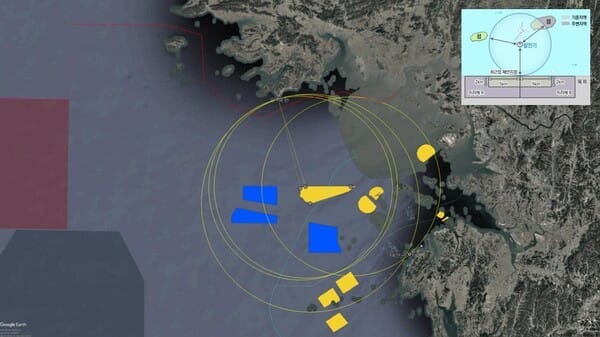
The structure also prevents receiving support funds for areas surrounding power plants. The current "Act on Support for Areas Surrounding Power Plants" determines support targets based on the nearest "land coastline" to the power plant. Islands are excluded from the criteria from the outset. Although Incheon's offshore wind power complex is only 30 to 40 kilometers away from Ongjin County islands, the legally nearest land baseline is paradoxically set as North Korea's Ongjin Peninsula or South Chungcheong's Taean, creating a contradiction.
In fact, for Ørsted's Incheon offshore wind power complex, the nearest land coastlines for turbines at the north, west, and south sections are calculated as North Korea's Ongjin Peninsula, while the east section turbine is calculated as Taean County in South Chungcheong. Accordingly, Ongjin County residents are urging revision of the enforcement decree, stating that "if there is no land within a 40-kilometer radius of turbines, the islands in the relevant waters should be recognized as surrounding areas."
Revenue collection through public water surface usage fees is also difficult. In territorial waters, the relevant local government collects usage fees, but in the exclusive economic zone (EEZ), the Ministry of Oceans and Fisheries (MOF) takes the entire amount. The problem is that many of Incheon's offshore wind power complexes are located in the EEZ.
Sinan County can secure usage fee revenue because offshore wind projects are mainly conducted within territorial waters. However, Ongjin County's project area falls within the EEZ, so island residents directly experience the impacts while revenue collection remains disconnected from their interests.
Will we give support funds to North Korean land? Revision proposals submitted but stalled
Ongjin County residents did not passively observe this problem. On May 22 of last year, the Deokjeok Jawol Fishing Village Cooperative Association presented three resolution tasks and a clause-level revision proposal at a Democratic Party Incheon City Committee meeting titled "Agenda Items Related to Marine and Fisheries in Deokjeok Jawol."
The proposed amendments included: revision of the enforcement decree of the Act on Support for Areas Surrounding Power Plants to recognize islands within a 40-kilometer radius centered on turbines as surrounding areas when no land exists within a 40-kilometer radius of turbines; clarification of resident participation profit-sharing guidelines to target residents of jurisdictions overseeing power plants and submarine transmission lines; and application of the Public Water Surface Act by analogy to offshore wind, similar to cases where aggregate extraction in the EEZ is transferred to local governments.
If this revision were applied, the payment rate for Ørsted's projects would increase from the current 0 percent to 24 percent for Incheon 1 and from 4 percent to 44 percent for Incheon 2, according to reviews. However, this revision request has not yet been realized.
Gaps unfilled even by offshore wind law, but projects are already underway
The Special Act on the Promotion of Offshore Wind Power Deployment and the Development of Related Industries, implemented by the government on March 26, does not directly address this problem. The subordinate regulations of this act clarify the composition of public-private consultative bodies centered on local residents (at least 50 percent private members and at least 20 percent public interest members), but the Act on Support for Areas Surrounding Power Plants, REC multiplier guidelines, and the Public Water Surface Act fall outside the jurisdiction of the offshore wind law and require separate amendments to their respective statutes.
Meanwhile, offshore wind projects off Incheon are already accelerating. Adding public-led projects by Incheon City and private developers including Ørsted, Hanuibaram (EWP), Gulup Wind Development, KOEN, and Ocean Winds, nine developers are pursuing 18 complexes with a total capacity of 9,155 megawatts of offshore wind power off Incheon.
Most of these developers have stated that they have formed regional committees or shipowner committees to discuss coexistence measures with fishermen and residents. Incheon City has also said it will include provisions requiring developers in its public-led project recruitment to establish profit-sharing arrangements with fishermen and island residents.
However, with the structural gaps in statutory systems remaining unfilled, the coexistence and profit-sharing commitments made by developers are not matters guaranteed by law but merely plans voluntarily presented by the developers. How much, to whom, and in what manner benefits will be distributed depends entirely on the developers' goodwill and the results of consultations. What will actually accrue to island residents in Ongjin County remains uncertain.
Original Korean article: Incheon Today
English brief by Korea Wind Intelligence, koreawindintel.com



















