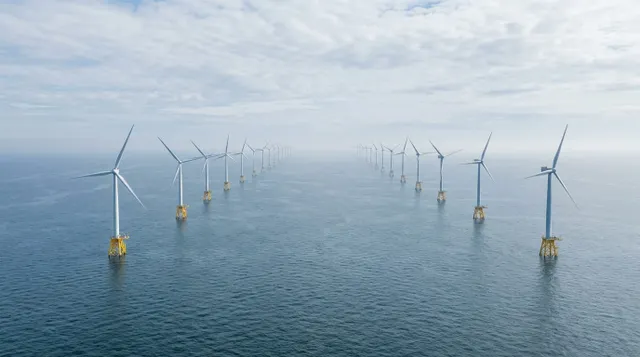
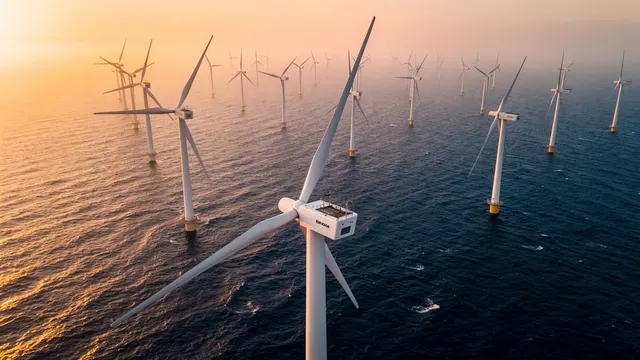
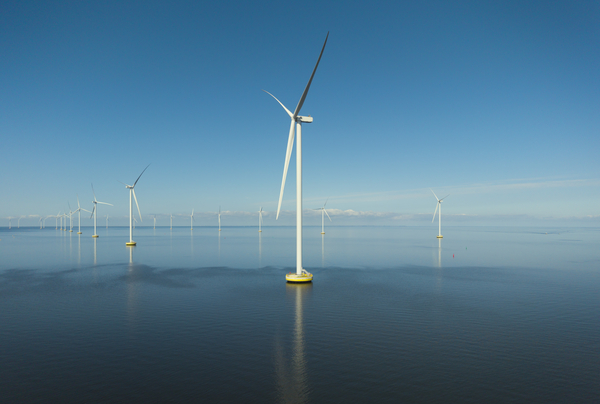
Offshore wind power projects are being pursued simultaneously in waters off Incheon. Starting with Incheon City, which launched the project under public leadership, there are nine developers including foreign energy companies, domestic state-owned power generators, and large corporations. The power generation facilities they plan to develop number 13 in total. The combined generation capacity is 9.155 GW, equivalent to approximately 7.6 nuclear reactors. This is enough to supply electricity to approximately 3.6 million households simultaneously.
The planned area for power generation facilities in Incheon waters totals 1,300 square kilometers, far exceeding the entire area of Incheon City (1,069.5 square kilometers). However, because the electrical grid that can connect to Incheon land is limited, it is projected that only a small number of developers will be able to obtain government permits and licences and proceed with actual construction of power generation facilities.
The fact that most planned power generation sites overlap with fishing grounds is also cited as a problem. Waters off Incheon are a major production area for blue crabs in South Korea. Friction between fishermen and developers has already occurred for several years at various planned offshore wind power sites. The interests of fishermen seeking to preserve their livelihoods and developers seeking to develop the sea and produce electricity are in conflict.
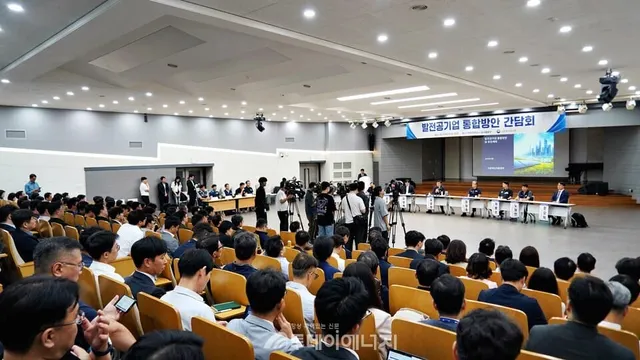
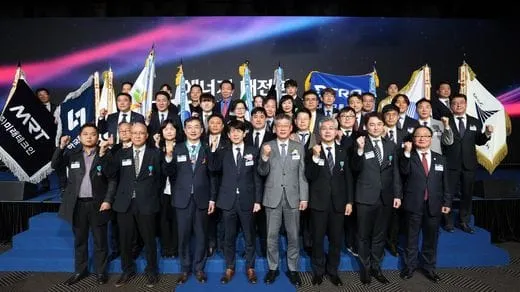
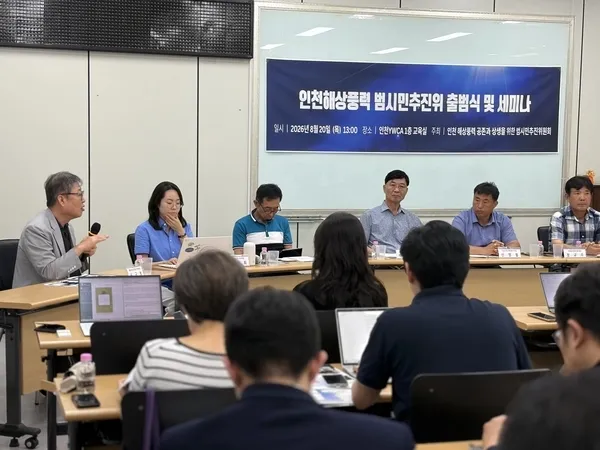
In response, the "Incheon Offshore Wind Civic Promotion Committee" was launched on the 20th, with fishermen, island residents, and civic groups in Incheon as the main constituents, for the purpose of finding a path to coexist with offshore wind power.
Marine surveys and environmental impact assessments limited to one year
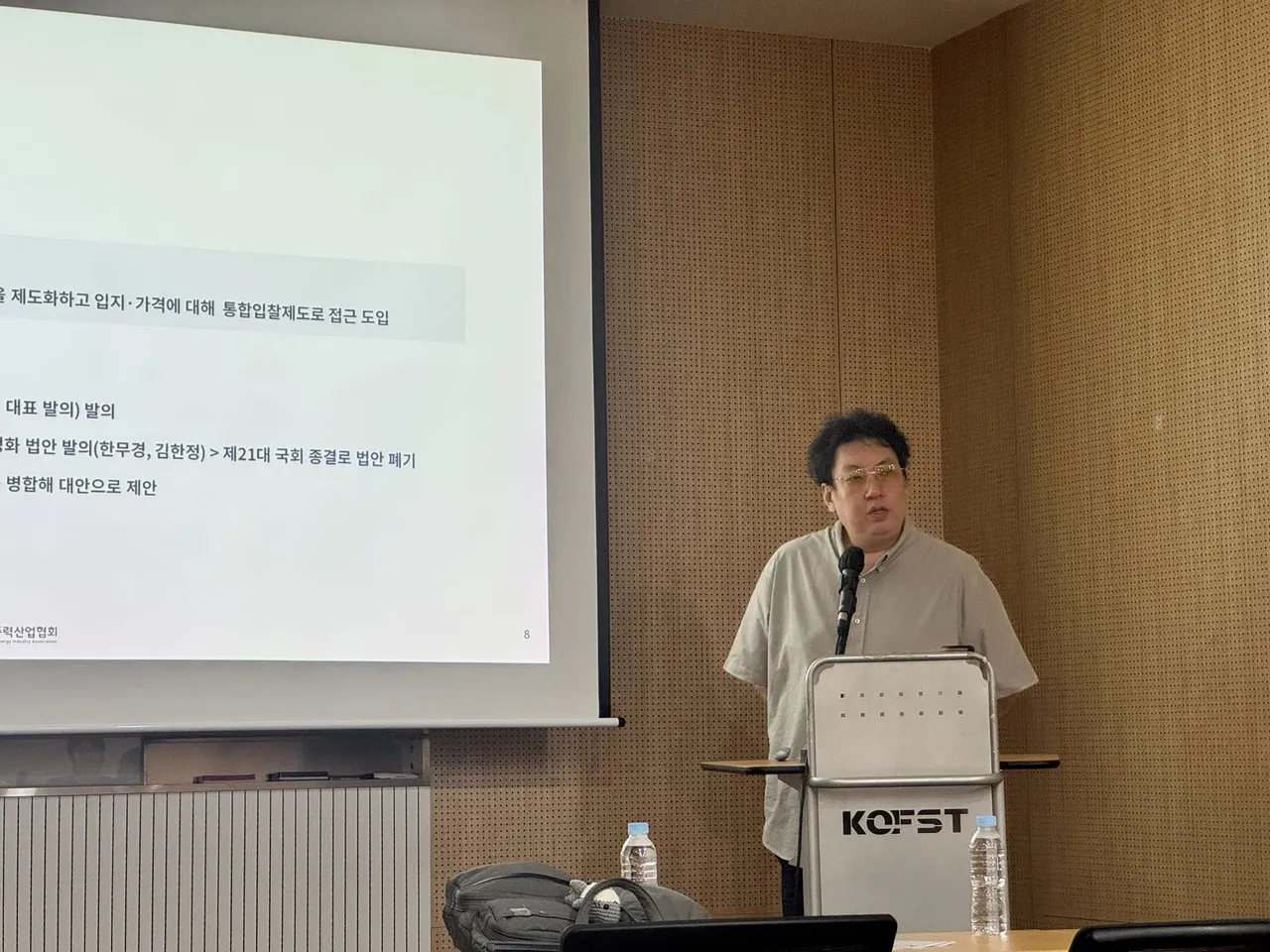
At the civic promotion committee's launch event, Professor Woo Seung-beom of the Department of Marine Science at Inha University (director of Inha University's Gyeonggi-Incheon Sea Grant Center) gave a presentation on the topic of "Characteristics of Incheon Waters and Marine and Fisheries Monitoring Methods."
The West Sea contains cold water masses in deep waters. This is called the "Yellow Sea bottom cold water mass" and is influenced by the Yellow Sea warm current flowing northward from the Kuroshio Current. The distribution of the cold water mass differs by season, and how the cold water forms affects blue crab catch volumes. In the West Sea, the cold water mass is observed to shift its distribution location on a 4-5 year cycle.
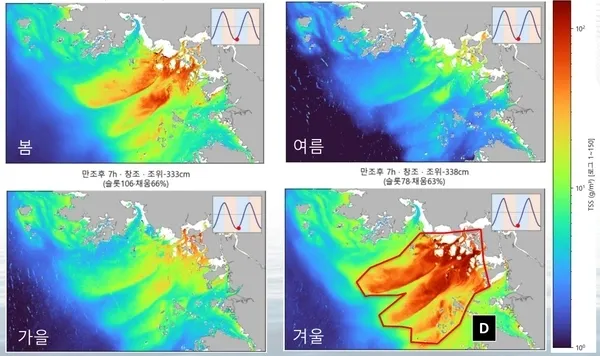
The West Sea, where river water flows out, is also affected by freshwater. Freshwater diffusion is estimated to affect areas ranging from the vicinity of Ganghwa Island to Baengnyeong Island at the northernmost tip of the West Sea, according to Professor Woo. Professor Woo stated, "When freshwater spreads widely, the Yellow Sea bottom cold water moves further into coastal areas. Freshwater affects even bottom layer temperatures. Additionally, suspended sediment in the West Sea is abundant in spring and winter, and when suspended sediment is abundant, photosynthesis becomes difficult, which can also affect the aquatic environment."
Professor Woo emphasized that continuous observation and simulation must be conducted given that diverse environmental factors have complex effects in the shallow West Sea. In particular, he stated that medium and long-term research must be conducted on the impact that offshore wind projects currently being pursued in the West Sea have on the marine environment. Professor Woo noted, "Environmental impact assessments conducted in offshore wind power projects typically cover about one year including all four seasons. Offshore wind turbines in shallow waters like the West Sea are like planting a Namsan Tower in the middle of the sea. Vortices form along the turbine columns, and the seabed topography can be altered."
In fact, when satellite imagery was used to confirm the "Southwest Sea Korea Offshore Wind Demonstration Complex" being pursued by Inha University off the coast of Gochang County and Buan County in North Jeolla Province, suspended sediment presumed to be suspended matter was observed spreading up to 4.3 kilometers along the wind turbines. Given the West Sea's characteristic of large tidal ranges, suspended sediment diffusion around wind turbines could expand further depending on tidal currents and wind. Professor Woo stated, "In the West Sea, various changes occur together—distribution of cold water masses, freshwater diffusion, and suspended sediment generation. Currently, marine monitoring conducted by the government extends only to coastal areas and Solyeong Island to the south, the last territorial waters baseline of South Korea's West Sea. The sea areas where offshore wind power facilities are currently being established are in a state of monitoring gaps."
Concerns over fishing grounds and migratory bird routes
In the discussion session held after the civic promotion committee's launch event, fishermen, island residents, and environmental groups voiced concerns about indiscriminate offshore wind power projects. There is no disagreement on eliminating fossil fuels and introducing renewable energy, but the consensus is that a "just energy transition" that allows all parties to coexist must be achieved.
Park Ju-hee, executive director of the Incheon Green Federation, characterized Incheon's offshore wind projects as a situation with "more question marks than exclamation points." She stated, "Offshore wind project is not sufficiently considering the marine ecosystem. There are GPS-confirmed cases of migratory birds experiencing difficulty in movement because they perceive offshore wind turbines on the Chinese coast as barriers." She added, "Incheon is a major migration route for globally endangered bird species. It must be investigated whether current offshore wind projects in Incheon waters are being pursued with consideration of bird migration routes."
Kang Cha-byeong, chairman of the Deokjeok Jayeol Fishing Village Cooperative Association, acknowledged the intent of introducing renewable energy while emphasizing the need for coexistence between developers and fishermen. Chairman Kang stated, "Operators do not discuss concrete plans for coexistence. In areas designated as fishing grounds, fishing should naturally take priority, but that is not the reality. Once the marine ecosystem is damaged, it takes a long time to restore. There may come a day when a single blue crab costs 100,000 won."
There are also opinions that fishing grounds should be preserved alongside the development of offshore wind power facilities.
Park Deok-shin, chairman of the Incheon Gill Net Association, said, "Government permits and licences for offshore wind projects have already been issued in some areas within the West Sea specific maritime zone, and developers such as Ørsted are proceeding with follow-up procedures. We are requesting the Ministry of Oceans and Fisheries to prevent offshore wind project in other fishing grounds, but developers are ignoring this and continuing to push ahead with projects. Developers are meeting with fishermen individually to discuss compensation, which has created conflict among fisheries."
Shin Young-chul, head of the Sorae Fishing Village Cooperative, expressed concern, stating, "Offshore wind project involves the installation of transmission lines along with power generation facilities. In sections where transmission lines extend to land, fishing activities are inevitably restricted."
Jeong Gyu-su, representative of the West Sea Ongjin Young Fish Cooperative, said, "I am continuing my livelihood fishing for Incheon blue crabs in the third generation. Fishing grounds are said to be shrinking—which fisherman would be happy about that?"
On this day, residents of Baengnyeong Island also voiced the need to preserve shipping routes. Kim Pil-woo, representative of the Five Islands Residents Alliance, stated, "After the armistice agreement, as the Ongjin Peninsula became North Korean territory, the Five West Sea Islands became islands where residents must take a ferry to Incheon to reach the mainland. Developers are planning to install offshore wind projects near passenger ferry routes and emergency safety routes, but this must not affect resident safety."
KWI developer profile — Ørsted
2 projects in Korea totalling 1,470 MW. Compiled from the KWI database. Not part of the source article.
Incheon 1 Offshore Wind — this article
|  |
Incheon 2 Offshore Wind — this article
| |
Project data: KWI database — Electricity Business Licence records, EIA filings (ME2025C009, ME2025C010), Electricity Regulatory Commission minutes, and pre-EBL permit filings.
Original Korean article: Kyeongin Ilbo