

Incheon, which has borne a major share of power supply to the Seoul metropolitan area, has shifted policy to keep the benefits of electricity production within the region. The strategy is to lower the electricity cost burden on businesses and connect the West Sea's winds to industry and citizen income. On the 100th day of Mayor Park Chan-dae's administration in the ninth popular election term, this article examines energy policy, which is both the growth foundation of 'ABC+EF' and the basis of 'energy sovereignty'.
The energy policy of Mayor Park Chan-dae's Incheon administration in the ninth popular election term can be compressed into two axes: returning the benefits of power production to the region to lower electricity cost burdens on businesses, and connecting renewable energy to be produced in the West Sea to industrial competitiveness and citizen income.
The 'ABC+EF' that Mayor Park presented in the June 3 local elections combines artificial intelligence, biotechnology, culture and energy with finance as a growth strategy. Among these, energy is both an independent industry and a driving force to root future industries in Incheon through renewable energy supply.
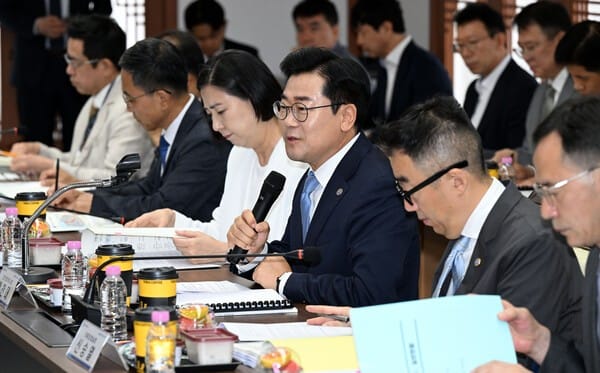
Mayor Park's campaign pledge to make Incheon 'the capital of South Korea's energy transition' is a compressed expression of this industrial vision. During the first 100 days since taking office, Incheon has laid the groundwork for implementation linking production, supply and industry by responding to the tiered electricity rate system, applying for an Electricity Business Licence for a publicly led offshore wind power project, and promoting the development of a support pier at Incheon New Port.
Electricity produced in Incheon, benefits for Incheon: the first step toward energy sovereignty
As of last year, Incheon's power self-sufficiency rate was 173 percent, producing more electricity than the region consumes and supplying the surplus to the Seoul metropolitan area including Seoul and Gyeonggi. While power plants drive the metropolitan economy, the burdens of air pollution, greenhouse gas emissions and transmission facility installation remain in the production region. What the city is requesting in the tiered electricity rate system is that this contribution and burden be properly reflected in pricing.
During a steel industry policy meeting on April 27 as a candidate, Mayor Park said: "It is no different from double marginalization for Incheon to bear expensive electricity rates despite producing power at facilities such as the Yeongheung thermal power plant simply because it is part of the Seoul metropolitan area." The demand to reflect the production region's contribution in rates connects to the issue of energy sovereignty.
The government's regional industrial electricity rate system divides the nation into 11 regions considering power grid balance and balanced growth. According to city data, the expected rate reduction is approximately 10 won per kilowatt-hour maximum in the northern Seoul metropolitan area including Incheon, and approximately 15 won maximum in the central region including Gangwon and Chungcheong. The city has requested that the reduction range be increased and the gap between regions be narrowed by reflecting production and supply contribution and the burden of hosting power generation facilities.
Incheon's manufacturing sector uses 10,595 gigawatt-hours of electricity annually, and the city's estimated cost savings and economic effect are approximately 23 billion to 106 billion won per year. While the actual effect will depend on the final rate structure, this represents an intention to connect the value of production to cost savings for businesses.
A distributed energy specialized zone where electricity produced locally is consumed nearby operates on the same principle. The city is reviewing living area models that can utilize regulatory exceptions including direct power transactions and various rate systems. This is a plan to add direct connection of power production and consumption within the region to Incheon's role as a power supply base.
Incheon's 'energy highway' beginning to blow from the West Sea
Incheon's ninth-term renewable energy strategy emphasizes securing clean electricity sufficient for future industry needs on top of adequate generation capacity. As abnormal climate makes climate crisis response increasingly important and corporate demand for renewable energy grows, the need to transform the power production structure centered on thermal power has increased. In particular, to support the implementation of 'RE100', where businesses source 100 percent of their electricity from renewable energy, the renewable energy supply base must be expanded separately from overall generation capacity.
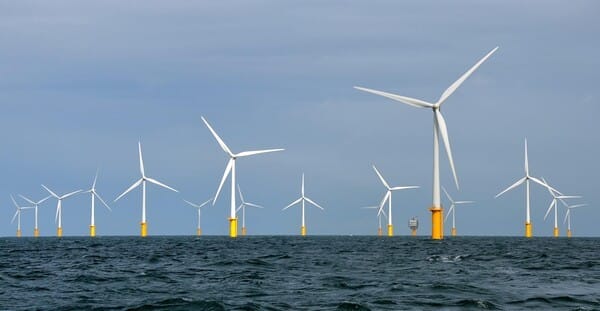
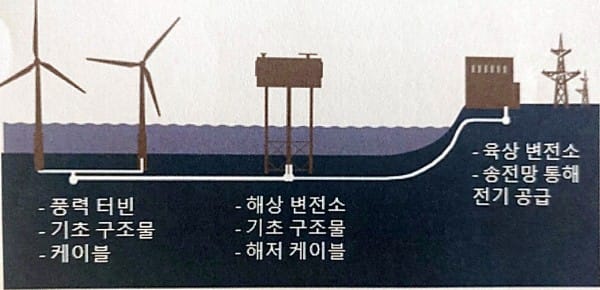
The plan to connect the West Sea's winds from power generation sites to businesses and link generation profits to residents marks the starting point of Incheon's 'energy highway'. The publicly led offshore wind project is the path linking production, supply and profit sharing. On July 30, Incheon Urban Corporation applied to MCEE (Ministry of Climate, Energy and Environment) for an Electricity Business Licence for the 680-megawatt offshore wind integrated zone 'IC1' power generation project.
The project, to be pursued in waters approximately 22 kilometers southwest of Baekado in Ongjin County, will be conducted from next year through 2035 with total project investment of approximately 6.46 trillion won, with commercial operation beginning in January 2036. The expected annual generation is 1,668 gigawatt-hours, sufficient for approximately 400,000 households. Of the initially reviewed 1,000 megawatts, 680 megawatts was prioritized for application, with the remaining 320 megawatts to be reviewed for implementation methods according to regulations and business conditions.
Another meaning embedded in the publicly led project is keeping the revenue generated by wind as a regional asset. The city plans to establish an 'Incheon-style energy profit-sharing model' combining statutory surrounding area support with offshore wind integrated zone incentives and resident-participation revenue distribution. The aim is to position residents as both stakeholders affected by power generation facilities and participants sharing in the project's benefits.
Participation targets, distribution criteria and implementation timing will be determined through consultation after the project developer is selected. Tasks the city must address include gathering opinions from fishing communities and residents, environmental and marine assessments, and military operational review.
Completing the energy capital at Incheon New Port: developing it as an offshore wind hub
The competitiveness of an energy capital depends not only on generation capacity but also on how much the technology, businesses and workforce operating power generation facilities are established in the region. Offshore wind requires ongoing inspection, component replacement, repair and material transport after operation begins. The Incheon New Port support pier is an industrial hub connecting this continuous demand to regional business activity and jobs.
The revised fourth national port master plan, announced in July, reflects the development of an offshore wind support pier on the eastern site of Incheon New Port's phase 1-2. The target area covers 314,000 square meters, with approximately 350 billion won to be financed through private investment. The plan will introduce an integrated control center, safety training center, material warehouse and component replacement and maintenance facilities, while also linking research and demonstration functions for drone and robot inspection and artificial intelligence-based predictive diagnosis.
The city plans to conduct market demand surveys and studies to establish a business plan by year-end and pursue establishment of a special purpose vehicle. Following consultation with relevant agencies and obtaining permits, the city plans to begin construction within the ninth-term administration and complete development by 2032. This leverages Incheon's strengths in port and airport facilities, manufacturing and logistics infrastructure, positioned to connect the planned West Sea offshore wind site and the Seoul metropolitan area.
The energy policy in the first 100 days has set a direction connecting the value of electricity to business competitiveness, the value of wind to citizen income and the value of ports to jobs. The next step in turning the 'energy capital' vision into reality is adding maintenance, logistics and workforce development to production and supply to build an industrial foundation in the region.
Mayor Park said: "I will create an industrial ecosystem centered on the hinterland port that spans from installation of power generation equipment through maintenance and repair. I will open an Incheon energy era where clean energy made by Incheon's winds becomes Incheon's jobs and citizen welfare."
Original Korean article: kihoilbo.co.kr
English brief by Korea Wind Intelligence, koreawindintel.com



















