

Companies pursuing floating offshore wind power projects off the coast of Ulsan have been withdrawing from their ventures one after another due to high investment costs, uncertain business viability, and institutional challenges. The domestic market has also stagnated, with no developer selected in last year's competitive auction for floating offshore wind power. Against this backdrop, Haewoori Offshore Wind Power, which is being pursued in Ulsan, is taking an exceptional path. After being selected in this year's first-half competitive auction, Haewoori has completed major licensing procedures including the Electricity Business Licence (EBL) and environmental impact assessment (EIA), and is proceeding with the project targeting completion in 2033. However, issues remain to be resolved, including the calculation standards for public water surface lease and use fees, coexistence with residents and fishermen, and the composition of a public-private consultative body. At a recent meeting at the CIP Ulsan office, Pierre Bagaria, Chief Executive Officer of Haewoori Offshore Wind Power, assessed the project's feasibility highly while emphasizing the need to reduce institutional uncertainty in the offshore wind industry and build trust with the local community.
Ulsan's sole competitive auction winner: Haewoori Offshore Wind Power
Haewoori Offshore Wind Power is a project to develop a total of 1.5 gigawatts (GW) of floating offshore wind turbines across three sites off the Ulsan coast. Floating offshore wind allows turbines to be deployed in deep waters exceeding 50 meters in depth, but domestic project implementation has faced difficulties due to high technical complexity and project cost burdens. Among these, the 500-megawatt Haewoori Phase 2 site was the sole developer selected in the fixed-price contract competitive auction for floating offshore wind power conducted by KEA (Korea Energy Agency) in the first half of this year. The developer has secured the qualification to sell electricity over a long term at a fixed price, passing a critical gateway for project advancement. CEO Bagaria identified project readiness and execution capability as the greatest competitive strengths in the competitive auction selection. He stated, "Haewoori Offshore Wind Power has already completed major licensing procedures including the Electricity Business Licence and environmental impact assessment, and by pursuing the project in Ulsan over several years, we have consistently enhanced the project's feasibility." He also cited cooperation with domestic supply chain companies as a strength. He said, "We have built close cooperative relationships with Korean supply chain companies over several years and have a thorough understanding of each company's capabilities and areas of execution. I believe that not only the project's readiness but also the high expertise and execution capabilities accumulated by supply chain companies were evaluated together."
Beyond one-time investment: sustained regional economic effects
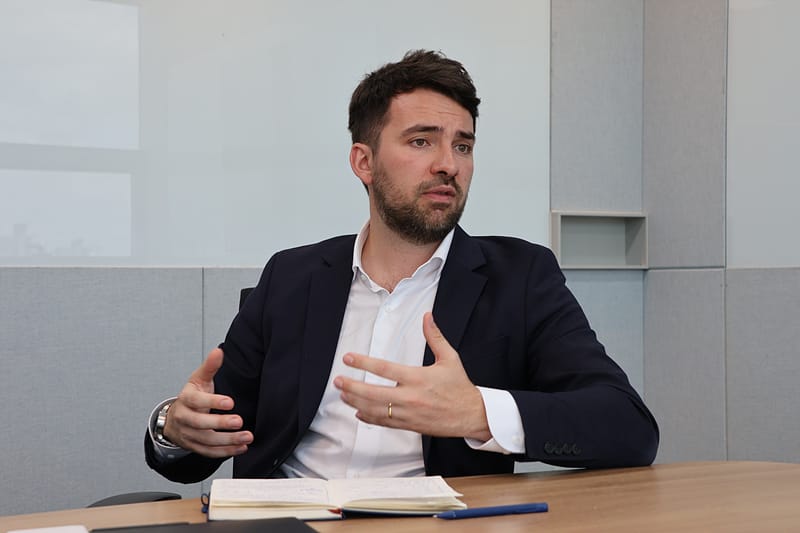
CEO Bagaria also emphasized that offshore wind projects can be linked with regional manufacturing over the long term. Since offshore wind is an industry requiring operation and maintenance for 20 to 30 years after development site construction, regional companies can participate in diverse fields including vessel operation, port logistics, marine services, equipment inspection and maintenance, safety management, and environmental monitoring. He explained that Ulsan, with its strong shipbuilding and marine plant industry base, has significant potential for linkage with offshore wind. CEO Bagaria said, "Given that Ulsan has an excellent shipbuilding and marine plant industry foundation, related companies are expected to play long-term roles during the operation and maintenance phase. Offshore wind is not a one-time investment project but an industry that can sustain regional company participation and employment over the long term." The company is also focusing on workforce development. He said, "We have pursued several plans through universities and educational programs located in Ulsan, and we will continue to make sustained efforts to discover and nurture skilled personnel in the offshore wind field."
Public water surface lease and use fees: an obstacle to smooth progress
However, there are considerable challenges to overcome before completion in 2033. Haewoori Offshore Wind Power is developing a generation site in remote offshore waters far from land. However, the current public water surface lease and use fee calculation is based on the official land price of the nearest adjacent land, meaning that Ulsan's high official land prices are reflected in remote offshore wind projects as well. For this reason, Haewoori estimates that the lease and use fees for the Ulsan project could be up to 200 times higher compared with offshore wind projects in other regions. Industry observers have pointed out the need to improve the calculation standards by setting caps on lease and use fees based on revenue or power generation, taking into account the characteristics of remote floating offshore wind. Haewoori proposed setting a cap at around 1 percent of revenue and allowing a choice between the existing calculation method and the cap-based method. CEO Bagaria said, "Although floating offshore wind is pursued in seas tens of kilometers or more from the coast, the application of Ulsan's high official land prices is creating a gap between actual project conditions and cost levels. It is important to establish a realistic and rational calculation system that can reflect actual project characteristics." However, he made clear that he does not reject the system itself, stating, "Public water surface lease and use fees are costs that generally occur in offshore wind projects worldwide, so they are naturally costs that must be borne."
Coexistence with residents and fishermen: special act inclusion and public-private body formation as key
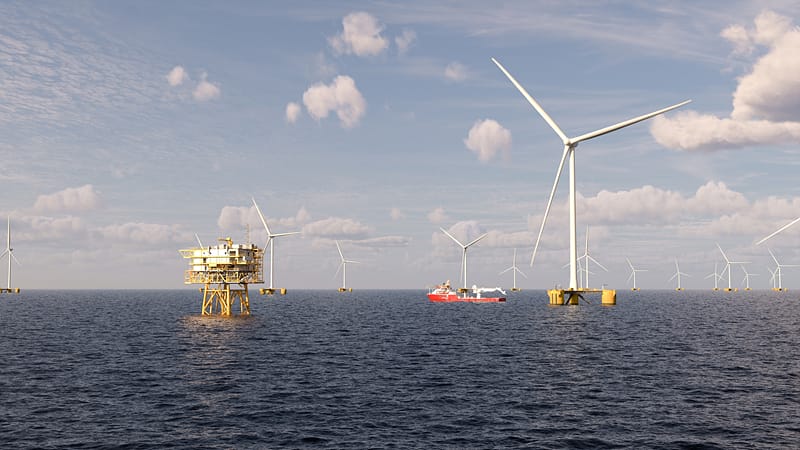
Coexistence with residents and fishermen is also an issue to be resolved during project implementation. CEO Bagaria explained that residents may have concerns about traffic congestion and noise that could occur during construction, as well as impacts on residential environments and real estate values. However, since the development site is located in remote offshore waters more than 85 kilometers from the coast, visual impacts are expected to be limited. Regarding fishery damage, he takes the position that objective investigation is necessary rather than unilateral judgment by the developer. A fishery impact assessment (FIA) is currently underway, and the company plans to continue consultations with stakeholders based on the survey results. CEO Bagaria said, "Stakeholders may have different perceptions, with some saying the damage is very significant while others do not see it that way. Ultimately, an objective evaluation process in the field is needed to determine the actual extent of impact."
In addition, Haewoori Offshore Wind Power is pursuing inclusion in the Special Act on the Promotion of Offshore Wind Power Deployment and the Development of Related Industries to reduce the burden of high public water surface lease and use fees. If the special act applies, separate lease and use fee calculation standards can be applied in accordance with MOF (Ministry of Oceans and Fisheries) notices. Inclusion in the special act requires following related procedures including the composition of a public-private consultative body. The public-private consultative body will include representatives from fishing industry groups, residents, and transmission line corridor residents, and will discuss development zone designation, resident participation, and measures to revitalize fisheries and the regional economy. Composition methods are currently being discussed centered on Ulsan City, and Haewoori hopes for prompt establishment of the consultative body. CEO Bagaria said, "The public-private consultative body is an important consultation structure where diverse stakeholders can share views and communicate. If possible, I hope the public-private consultative body can be formed and discussions can begin as early as next year." He continued, "Realistic public water surface lease and use fee calculation standards, clear institutional procedures, and stable operation of the public-private consultative body are necessary. If the government, local governments, industry, and local communities cooperate closely, Ulsan can grow into a center of the floating offshore wind industry."
Original Korean article: ujeil.com
English brief by Korea Wind Intelligence, koreawindintel.com



















