

As plans advance to consolidate five state-owned power generation companies into a single entity, European offshore wind developers have called on the government to clarify what support measures will apply to the merged Genco. The request reflects concern that the consolidated company may receive separate incentives as it expands offshore wind as an alternative business following coal plant closures, and developers want support criteria spelled out in advance to ensure fair competition with private operators.
The European Chamber of Commerce and Industry in Korea (ECCK) held a press briefing on September 30 at the Press Center in Gwanghwamun, Seoul, to release the '2026 ECCK White Paper' and present policy recommendations in the energy and environment sector.
The ECCK highlighted the ongoing consolidation of power generation companies and the direction of future renewable energy policy. The government is currently preparing to merge five Gencos into a single entity, with a target launch date of October 2027. The five are KOEN (Korea South-East Power), KOSPO (Korea Southern Power), EWP (Korea East-West Power), KOWEPO (Korea Western Power) and KOMIPO (Korea Midland Power).
Incentives and fair competition
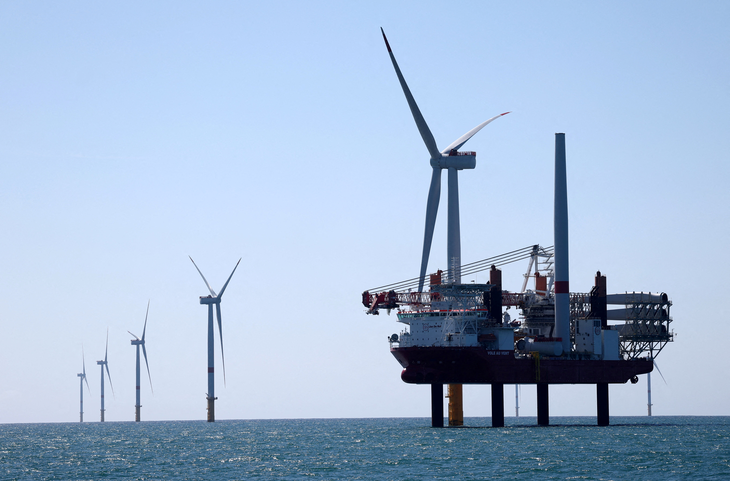
Since coal generation accounts for a large share of the five Gencos' current operations, new generation projects will need to be secured to replace coal plants as they are phased out through 2040. Offshore wind is emerging as a leading alternative, given the experience with large-scale generation projects and the potential for gigawatt-scale development.
The ECCK expressed uncertainty about what incentives will be granted to the merged Genco in this process. If the state-owned company expands offshore wind operations to support coal phase-out and employment transition, and the government provides policy backing, this could affect the competitive environment with existing domestic and foreign private developers.
The ECCK proposed that the government present a concrete framework for incentives to be applied to the merged Genco at an early stage, allowing private operators to formulate long-term business plans. It stressed the need to disclose in advance the content and evaluation criteria of any incentives that will apply to the consolidated Genco in planned siting offshore wind competitive auction processes. This would allow private operators to consider establishing special purpose vehicles with the Genco to jointly enter the market.
Renewable energy policy transition
The ECCK also requested supplementary measures regarding the abolition of the renewable energy portfolio standard (RPS) starting in 2027 and the shift to a government-led competitive auction-based contract market. MCEE (the Ministry of Climate, Energy and Environment) plans to select new renewable energy project developers through competitive auction from January 2027, with winning bidders entering into long-term fixed-price contracts with KEPCO (Korea Electric Power Corporation).
The ECCK expressed concern that existing project developers have reviewed project viability and made investment decisions based on the current RPS and renewable energy certificate (REC) multiplier system, and that abrupt policy changes could affect project economics and financing. It emphasized that offshore wind requires a long lead time from licensing through grid connection, financing, and supply chain contracts, making transitional safeguards necessary. The ECCK proposed allowing existing operators to participate in auctions under the current REC multiplier system for at least one year after RPS abolition, and suggested consolidating REC fixed-price contract purchasers to KEPCO alone during the initial phase of the policy transition.
Grid connection clarity
Regarding power grid connection, the ECCK called for clearer definition of the grid access timing for offshore wind developers. It noted that the criteria for identifying delayed projects, the explanation procedure, and the reallocation order in the grid access management process lack clarity, creating business uncertainty. The ECCK proposed clarifying access timing and establishing a system that guarantees compensation for delays and contract duration, since delayed grid connection affects both financing and construction start schedules.
Lee Hyun-seung, chair of the ECCK Energy and Environment Committee, said: "Offshore wind is a large-scale infrastructure project that unfolds over long periods involving licensing, grid connection, financing, and supply chain contracts. A stable business environment that maintains investment confidence and predictability is needed even as policy systems transition."
Original Korean article: ekn.kr
English brief by Korea Wind Intelligence, koreawindintel.com



















