The global high-voltage direct current (HVDC) market is rapidly being reorganized around voltage source converter (VSC) technology optimized for renewable energy and offshore wind integration, moving beyond the era of line commutated converter (LCC) technology centered on ultra-long-distance power transmission. While past HVDC competitiveness focused on expanding transmission voltage and capacity, recently voltage source converter technology that can enhance power grid stability and renewable energy accommodation, along with the ability to build multiterminal power networks, have emerged as core competitive strengths.
South Korea: ±525kV submarine and underground cables commercialized, securing world-class competitiveness
Currently in the global market, China is demonstrating the pinnacle of line commutated converter technology by commercializing ±1,100kV, 12GW ultra-high-voltage direct current (UHVDC). However, as variable renewable energy such as offshore wind and solar expands, demand for voltage source converter technology capable of bidirectional power control and reactive power supply is surging rapidly. Centered on European North Sea offshore wind projects, ±525kV, 2GW voltage source HVDC has become established as the global standard specification.
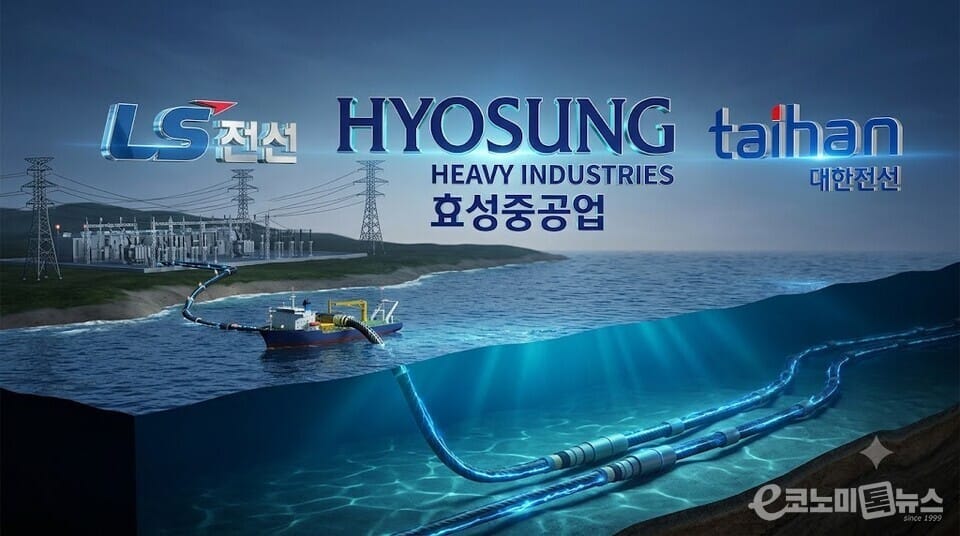
Within this shift, South Korea is demonstrating world-class competitiveness in the high-voltage submarine and underground cable sector. Domestic leading companies have already completed commercial mass production of ±525kV-class cables and are actively exporting them to major projects in Europe and North America, while later entrants are accelerating onshore certification acquisition and dedicated factory expansion. Submarine cables are considered a field in which the domestic industry has effectively secured market leadership in the global market.
By contrast, HVDC conversion equipment comprising power conversion valves, control systems, and conversion transformers remains a challenge, as the global big three of Hitachi Energy, Siemens Energy, and GE Vernova dominate the market. South Korea has laid the foundation for catching up through independent commercialization of 200MW-class voltage source conversion equipment, but achieving self-sufficiency in large-capacity voltage source equipment to be deployed in national backbone networks represents the final gateway to technological independence.
Conversion equipment scaling to 2GW: the West Sea energy superhighway as the decisive battleground
South Korea's high-voltage direct current (HVDC) technological competitiveness is currently summarized as the stage of "completing line commutated converter design and transformer localization, advancing large-scale voltage source conversion equipment." Particularly in the submarine and underground cable sector, domestic companies have already secured world-class technological capabilities, while large-capacity voltage source (VSC) conversion equipment, identified as the core of the renewable energy era, is entering the full-scale localization completion phase.
The greatest strength of the domestic HVDC industry is cable technology. Domestic companies have completed independent development and commercialization not only of line commutated converter 500kV-class HVDC cables but also ±525kV-class voltage source submarine and underground cables, which have become the current global offshore wind market standard. Particularly in the ultra-high-voltage submarine cable sector, domestic companies are assessed as having secured world-class competitiveness, with exports to major projects in Europe and North America.
Localization in the conversion equipment sector is also advancing rapidly. For line commutated converter (LCC) HVDC, 500kV-class design and conversion transformer localization have been completed through cooperation between KEPCO and GE Vernova's joint venture KAPES and domestic heavy electrical equipment manufacturers. This technology is in commercial operation in the Bukdangjin-Goduk 3GW transmission network, and core equipment is being deployed in the currently under-construction East Coast-Seoul metropolitan area 8GW transmission project.
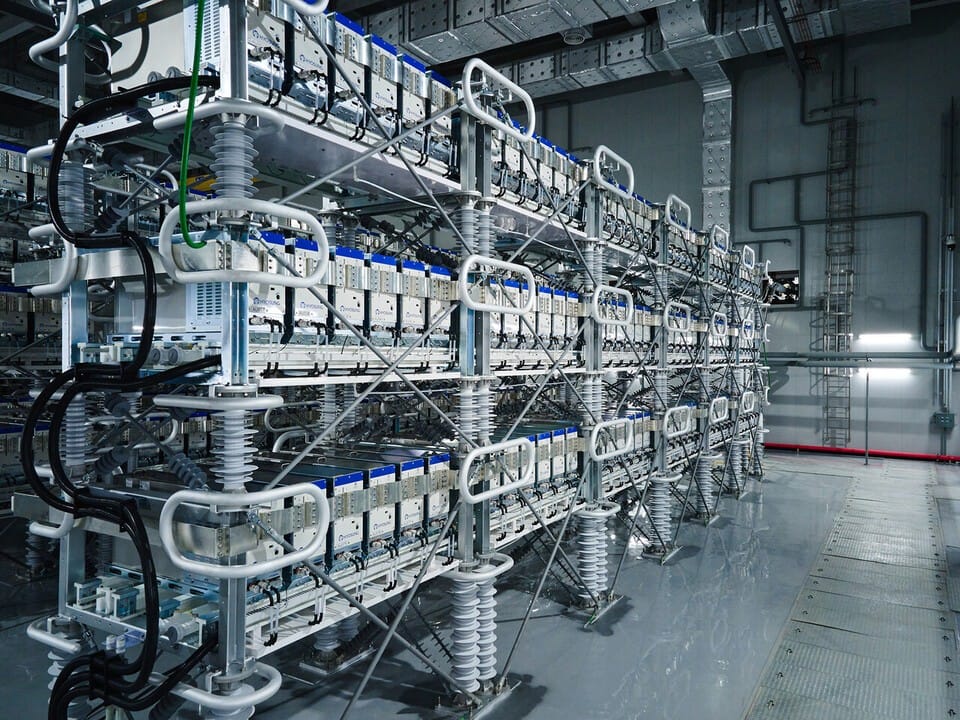
The current focus of greatest interest is large-scale voltage source (VSC) HVDC. Hyosung Heavy Industries succeeded in independent commercialization by constructing South Korea's first 200MW-class voltage source HVDC conversion equipment at the Yangju substation in Gyeonggi Province in 2024. Now work is underway to expand this to a 2GW-class national backbone network level, ten times the scale. Voltage source HVDC is essential equipment for bidirectional power control and renewable energy integration, and in the global market a small number of companies including Hitachi Energy, Siemens Energy, and GE Vernova lead the market. The domestic industry is aiming to lower foreign dependence through localization in this sector and to secure an early position in the future power grid market.
HD Hyundai Electric is a key participant in national research project for 500kV-class voltage source HVDC conversion transformer. Domestic first independent development of 420kV-class eco-friendly high-voltage circuit breaker (GIS) for AC grid and offshore wind integration (August 2026).
West Sea energy superhighway project with 2030 target
The West Sea energy superhighway, which the government is pursuing as a state policy initiative, is a mega-scale project to construct four 2GW-class voltage source HVDC lines (totaling 8GW capacity) centered on submarine and underground routes to transport large-scale offshore wind and renewable energy produced in the Honam and southwestern waters regions to the Seoul metropolitan industrial complex.
In particular, the first-phase project section from Saemangeum to Seohwaseong (approximately 220 kilometers, 2GW) is being pursued with an early completion target of 2030 and will serve as the first demonstration site for domestically developed large-capacity voltage source HVDC technology.
Hyosung Heavy Industries, the project lead, has already completed development of core algorithms for 2GW-class system design and submodules for converter valves, and is currently developing 525kV-class converter valves. The plan is to complete all core technology development and system design by 2027, undergo special purpose vehicle (SPV) cooperation and performance verification with KEPCO and participating companies, and complete actual equipment installation, commissioning, and demonstration at the West Sea site by 2030.
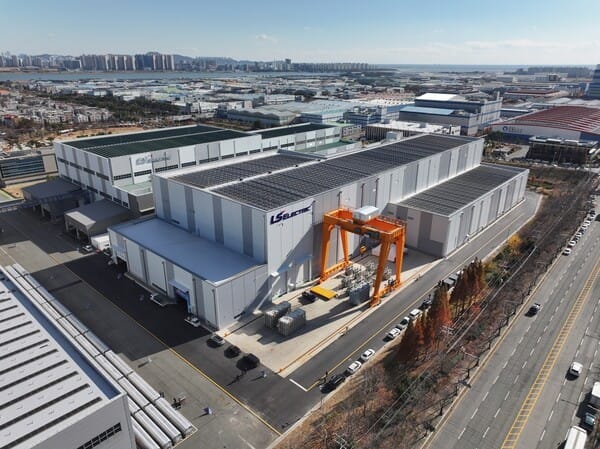
Meanwhile, a national research project for 500kV-class voltage source conversion transformers in which four domestic heavy electrical equipment companies, Hyosung Heavy Industries, LS Electric, HD Hyundai Electric, and Iljin Electric, are jointly participating is also on track to complete development by the end of 2027. The successful establishment of the West Sea energy superhighway is expected to become a watershed moment for K-power equipment's leap into the global HVDC converter station market.
Original Korean article: Economy Talk News
English brief by Korea Wind Intelligence, koreawindintel.com