Original Korean article: Electric Times
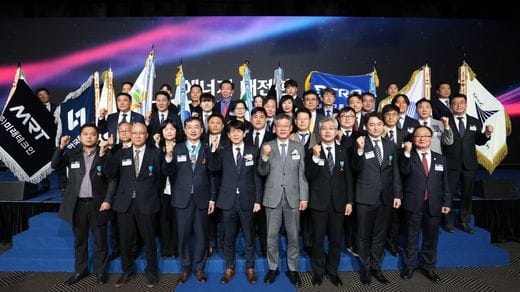
The Korea Wind Energy Industry Association, chaired by Kim Gang-hak, has welcomed the government's launch of the first Offshore Wind Power Generation Committee and emphasized that the committee must serve as a substantive policy control tower to lead the expansion of offshore wind power distribution and strengthen industry competitiveness.
On the 2nd, the wind energy association expressed its welcome for the government's establishment of the first Offshore Wind Power Generation Committee in accordance with the Special Act on the Promotion of Offshore Wind Power Development and Distribution.
The association expects that with the committee's launch, domestic offshore wind policy will shift away from an approach centered on individual projects and licensing toward a comprehensive and systematic policy implementation framework at the government level.
The association noted that because the committee brings together experts from diverse fields including wind power industry, electrical and wind power engineering, marine and fisheries, environment, law, and economics, it will play a role in coordinating the complex interests surrounding offshore wind power and concretizing rational policy directions.
Resolving permitting and grid connection challenges
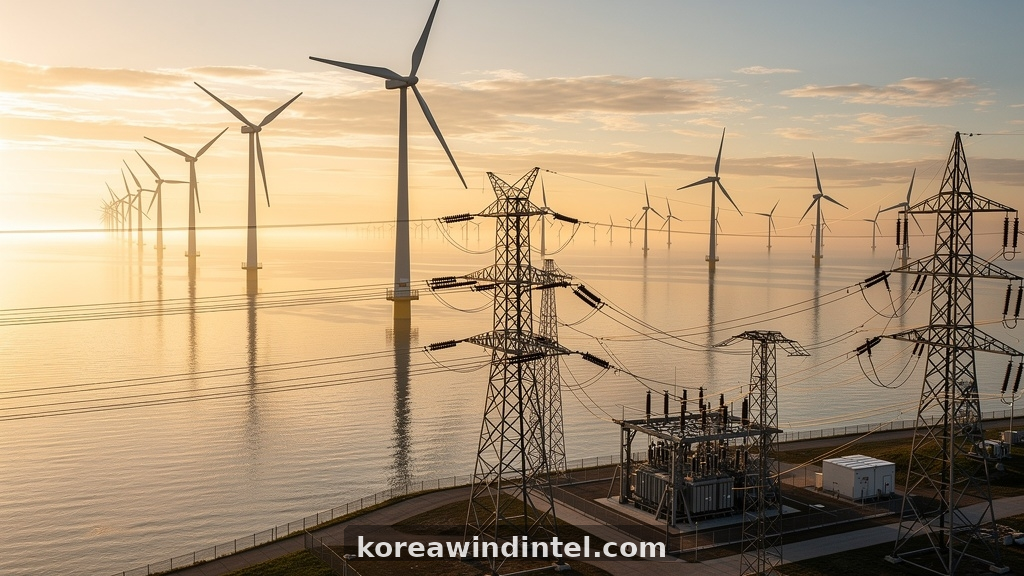
Domestic offshore wind projects have required considerable time and cost because they must go through multiple agencies and procedures, from site identification through securing community and fishery worker acceptance, environmental review, military operations consultation, grid connection, and various licences.
The association stressed that because the offshore wind special law was established to address these problems, the committee's role is critical to implementing the law's intent in actual project sites. The committee must function as a substantive control tower that not only reviews individual agenda items but also swiftly coordinates disagreements between relevant ministries and agencies and resolves major issues arising during project implementation.
The association called for establishing clear standards and predictable procedures promptly, noting that there are numerous tasks to be concretized ahead, including designation of preliminary districts and power generation zones, incorporation of existing developers' planned-sites, licensing and grid connection, and securing community and fishery worker acceptance.
Planned-site system and industrial strategy
The success of the government's planned-site system depends on the committee's coordination function. The planned-site approach must not merely be a method for the government to determine project locations. Rather, it should operate as a system that proactively reviews and coordinates major issues such as environment, fisheries, national defense, and grid from the project's early stages, enabling developers to proceed with projects stably thereafter.
To achieve this, the association emphasized the need to complete inter-agency consultation and interest coordination as much as possible during the designation of preliminary districts and power generation zones, and to establish a substantive one-stop decision-making system to prevent identical issues from recurring.
The association also stated that industrial perspectives must be considered together so that the expansion of offshore wind distribution leads to strengthened domestic industry competitiveness. As countries worldwide use offshore wind as a strategic industry beyond a renewable energy distribution means, to foster manufacturing and supply chains, domestic market expansion must connect to investment, production, and job creation in domestic supply chains for turbines, towers, substructures, cables, and vessels.
The association emphasized that for policies and systems to function in actual project sites, developer experience and industry opinions must be sufficiently reflected in the committee's discussions. It takes the position that balanced policy judgment is necessary, one that secures business viability and economic feasibility while considering environmental and marine use concerns and coexistence with local communities.
The wind energy association stated, "We hope this launch of the Offshore Wind Power Generation Committee becomes a turning point in resolving the uncertainty that has long delayed domestic offshore wind projects and in stably establishing the planned-site and licensing system. On behalf of the industry, we will convey field experience and opinions to the government and committee, and we will cooperate so that the expansion of offshore wind distribution and strengthening of domestic industry and supply chain competitiveness are achieved together."