

Tilon plans to expand artificial intelligence (AI) services for consumers and its data center business through Tilonsoft, a subsidiary established in Jeju in 2021. Its strategy is to secure new revenue streams by extending the technology developed through supplying virtualization software to businesses and public institutions into consumer services, while also pursuing a data center business using Jeju's power infrastructure.
Tilon CEO Choi Baek-jun outlined this business direction in a group interview with reporters at The Other Day 2026, held at the Maison Glad Jeju hotel on November 5. For more than 25 years, Tilon has built working environments for businesses and public institutions, primarily using virtual desktop infrastructure (VDI). More recently, it has been expanding subscription cloud and AI services based on its accumulated technology.
Seoul focuses on B2B and Jeju on B2C as AI services diversify
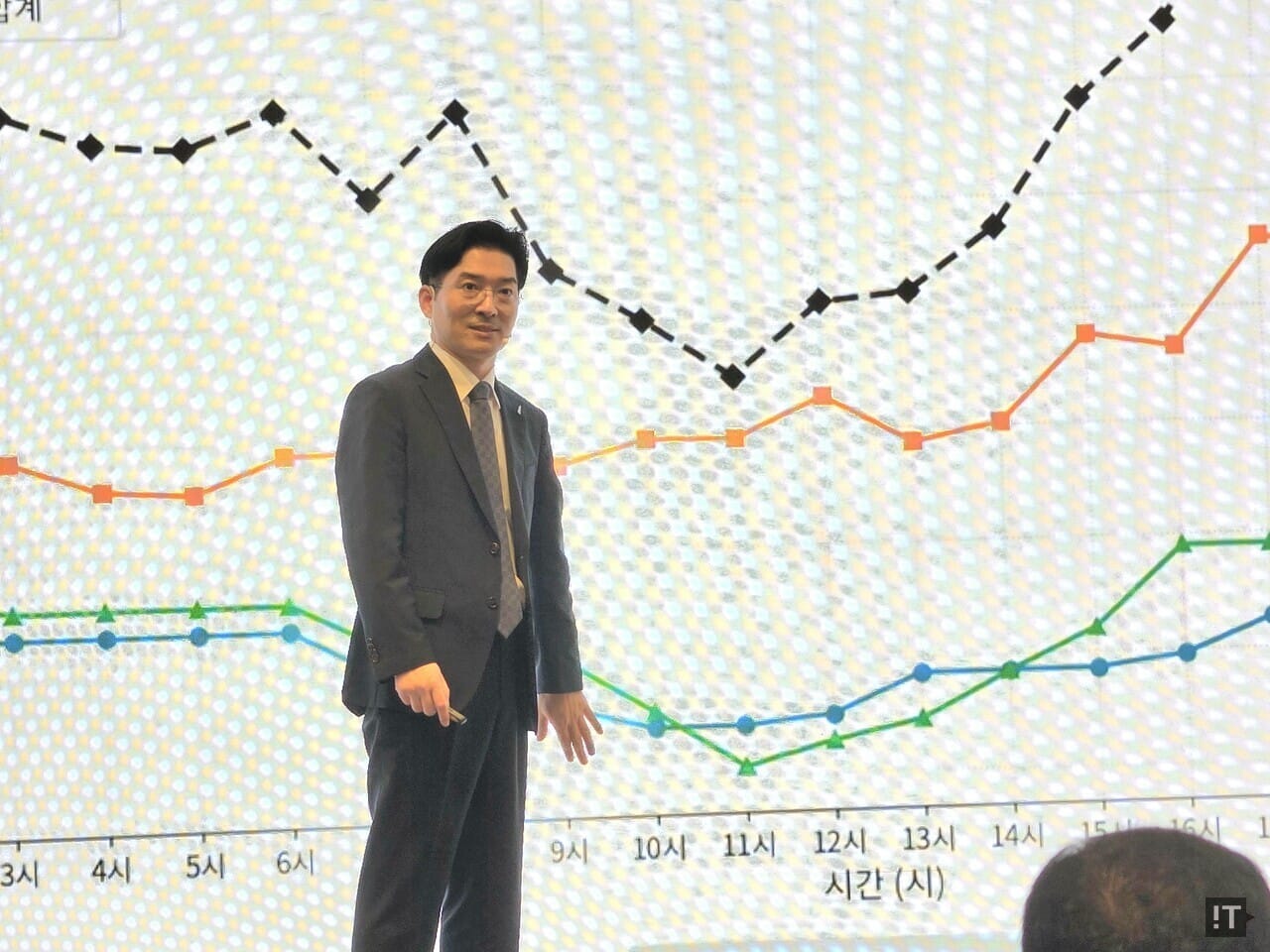
Choi emphasized that business-to-business (B2B) and business-to-consumer (B2C) operations require different approaches to organizational management because their business models differ. Tilon therefore plans to continue its existing B2B operations primarily through its Seoul headquarters, while placing greater emphasis on expanding B2C services at Tilonsoft in Jeju. The two locations will not divide their businesses completely, however, but will instead have different areas of focus.
“System development is important in B2B, but B2C requires careful attention to individual customer needs,” Choi said. “The two businesses require fundamentally different mindsets.” The point was that enterprise software requires system design and implementation tailored to customer requirements, while consumer services require close attention to the needs of individual users.
Choi also emphasized ease of use. “In the past, complex technology had to come with a complex design, but now interfaces can be simplified even when the technology is complex,” Choi explained. The assessment is that making complex virtualization and AI technology easy for users to access is central to entering the consumer market.
A leading example is Kstory.ai, an AI platform for creating children's stories. Users enter their own experiences or family stories, and AI produces a storybook with text and illustrations. Tilonsoft plans to broaden its applications to children's education, libraries and lifelong learning.
Choi said the company analyzed 11 similar overseas services while developing Kstory.ai and incorporated their strengths. It is also reviewing ways to expand beyond storybooks into content such as video and has overseas markets, including Japan, in mind. “We are planning two or three other consumer AI services in addition to Kstory.ai,” Choi said.
Services for businesses and educational institutions are also being expanded. Examples include TheOther.Space, which provides virtual PCs in the cloud, and TheOther.Town, which offers access to multiple AI models and graphics processing unit (GPU) resources. Choi said TheOther.Town was “far more profitable than TheOther.Space” and described a university in Seoul that provides an AI learning environment for international students. According to Choi, wider adoption across universities would allow students to learn and develop AI without schools having to purchase expensive PCs and equipment themselves.
Tilon is already working with Jeju National University, supplying 5,381 VDI units in connection with the Regional Innovation System & Education (RISE) initiative. Building on this, it plans to develop Tilonsoft in Jeju into a base for developing and commercializing subscription cloud services, including desktop as a service (DaaS), and consumer AI services. “We have secured development staff in Jeju and hired marketing staff, and we also exchange personnel with our Seoul headquarters,” Choi said. “Another advantage is that employees can change their work location without leaving the company if they wish.”
Jeju data center plans prioritize securing long-term tenants
Another business Tilon is pursuing in Jeju is AI data centers. Choi assessed that Jeju could grow into an AI industry hub by using its abundant renewable energy and power infrastructure. Choi explained that Jeju experiences curtailment, which limits generation because of factors such as insufficient electricity demand during daytime periods or in spring when solar and wind output is high. Attracting power-intensive data centers could allow otherwise unused renewable energy to be put to industrial use, Choi said.
Focusing on these power conditions in Jeju, Tilon is developing its data center plans in greater detail. “We have secured 140 MW of power from Korea Electric Power Corporation,” Choi said. “Based on this, we plan to proceed with the steps needed to advance the business, including securing land and obtaining permits and approvals.”
Given the large upfront investment required for data centers, the company considers it important to secure long-term tenants in advance to establish a stable revenue structure. Choi explained that customers have different power and equipment requirements, which need to be reflected from the design stage. “A data center has to be developed together with the customer from the design stage,” Choi said.
The company therefore plans to pursue its initial data centers through master leases, under which major customers lease all or a substantial portion of a facility for an extended period. “We believe the first or second data center must use a master lease structure,” Choi said. “For example, if we had a customer leasing for five years at 300,000 won per kW per month and another leasing for seven years at 250,000 won per month, we would choose the latter.” The assessment is that securing stable revenue over a longer period matters more than obtaining a higher rent immediately.
The company is also considering forming a special purpose vehicle (SPC) with outside companies. “Many companies interested in the business have been approaching us,” Choi said. “After securing a power connection, land ownership, permits and approvals, we could pursue the business by leasing these to the SPC.”
For its Jeju data centers, the company intends to secure overseas AI and cloud companies as customers, as well as local and other domestic companies. Its strategy is that building a data center in Jeju need not restrict its customer base to the region, and that attracting large-scale computing demand from global companies would support commercial viability. “It is difficult to make a profit from Jeju's demand alone,” Choi said. “We need to target overseas technology companies and global big tech companies as well.”
Choi emphasized that data center development should begin now if Jeju's power infrastructure is to be connected to new industries. “If we start the business several years from now or simply wait for someone to build a data center, we could miss the opportunity,” Choi said.
Original Korean article: Chosun Ilbo
English brief by Korea Wind Intelligence, koreawindintel.com

















