

Tender scale and evaluation criteria
South Korea's three battery makers are competing again for contracts in the energy storage system (ESS) central contract market, with project costs estimated at about 2 trillion won.
Samsung SDI secured the largest volume in the first tender and SK On in the second. The degree of localization, fire safety and price competitiveness are emerging as key variables in the third tender.
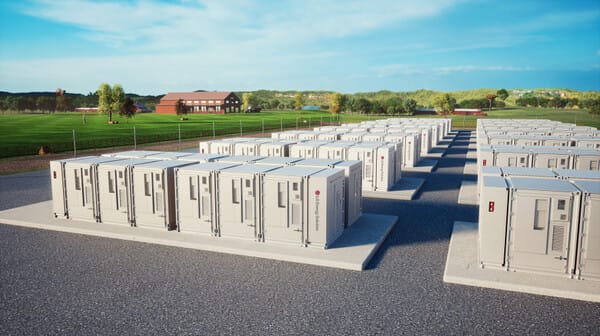
According to battery industry sources on October 21, the third ESS central contract market tender being pursued by the government and KPX covers a total of 1,180MW. This comprises 1,100MW on the mainland and 80MW on Jeju, with storage capacity reaching 7.09GWh.
Project costs are estimated at about 2 trillion won. Tender proposals are due by November 11, and successful developers are expected to be selected during November. Selected developers must complete installation by February 2029.
The tender is attracting considerable attention from the battery industry because the volume has increased substantially compared with the previous two rounds.
Developers were selected for approximately 560MW in each of the first and second tenders, but the third round will procure capacity exceeding their combined volume.
As battery makers expand their ESS businesses amid slowing growth in the electric vehicle market, this provides an opportunity to secure large supply contracts in the domestic market.
Price and non-price assessments will be central to the competition. The government changed the evaluation weighting from 60 points for price and 40 for non-price criteria in the first tender to 50 points each from the second round. The third round retains this structure.
Non-price criteria include equipment safety, industrial and economic contributions, and the adequacy of business plans. In particular, contributions to domestic supply chains for batteries and major equipment, fire prevention technologies and project execution capabilities are seen as potential determinants of competitiveness.
The second tender, which introduced the revised assessment method, saw a change in contract awards. Samsung SDI's share fell from approximately 76% of total volume in the first tender to about 35.7% in the second.
By contrast, SK On, which won no contracts in the first tender, secured the largest volume in the second with about 50.3%. LG Energy Solution's share also fell from about 24% in the first round to about 14% in the second.
Attention is therefore turning to the three domestic battery makers' strategies ahead of the third tender.
Battery makers' supply and safety strategies
LG Energy Solution is targeting the third ESS central contract market tender with the fire safety of its LFP batteries, global mass-production experience and plans to establish a domestic supply chain.
On fire safety in particular, it emphasizes its system-level verification capabilities.
LG Energy Solution has designed its ESS products to minimize fire propagation without separate extinguishing-agent spraying or water-deluge systems, and to limit fire size even under extreme conditions such as power outages and high temperatures.
The company says that, after meeting UL 9540A requirements, it became the first domestic company to conduct large-scale fire testing (LSFT) to verify system-level safety.
It also presents its mass-production experience as a competitive advantage. LG Energy Solution began producing LFP batteries for ESS applications at its Nanjing plant in China in 2024 and started mass production at its Michigan plant in the United States in June 2025.
It intends to apply the quality-control and process-operation expertise accumulated at its overseas production sites to domestic production.
It is also strengthening its localization strategy. LG Energy Solution plans to produce 1GWh of LFP batteries for ESS applications annually at its Ochang Energy Plant in North Chungcheong Province from 2027.
For the third tender, it plans to supply batteries produced in Ochang and use domestic suppliers for the four key materials: cathode materials, anode materials, separators and electrolytes.
The aim is to secure competitiveness not only in fire safety and supply reliability but also in contributions to domestic industry.
Samsung SDI intends to compete in the third tender by emphasizing its domestic manufacturing base and supply-chain competitiveness.
During its second-quarter earnings conference call, the company said it expected business opportunities in the domestic ESS market to expand, particularly through the third central contract market tender.
Its strategy is to participate actively in domestic projects using its domestic production sites and local supply chain.
Samsung SDI is expected to pursue additional contracts based on its battery supply experience and safety technologies accumulated in its existing ESS business.
SK On also aims to maintain the contract-winning competitiveness it demonstrated in the second tender. During its first-quarter earnings conference call, SK On said it was targeting a similar volume of contracts in the third tender to that secured in the second.
During its subsequent second-quarter conference call, it said it would apply the factors behind its success in the second tender to pursue a meaningful volume of contracts in the third.
SK On plans to manufacture approximately 1.8GWh of ESS batteries secured in the second tender at its production line in Seosan, South Chungcheong Province, for delivery in the third quarter of 2027.
SK On intends to continue the strategy centered on domestic production, materials localization and fire safety that delivered results in the second tender.
In the previous tender, SK On emphasized its contribution to the domestic ESS industrial ecosystem by supplying domestically produced batteries and using key materials, including cathode materials from domestic companies, in its LFP batteries.
It also presented ESS hardware safety as a differentiating factor.
An SK On representative explained: “Domestic production and materials localization were the areas that received favorable assessments in the second tender. Since contributions to the domestic ecosystem and safety are important evaluation criteria, we expect to maintain this direction in the third round.”
Attention is focused on whether its use of domestic production facilities will allow it to secure supply-chain competitiveness in the third tender as well.
Grid conditions and profitability concerns
Contributions to grid stabilization and project locations are also emerging as important variables in the third tender.
The government has combined the previously separate assessment criteria for curtailment levels and contributions to grid stabilization, and expanded eligible ESS installation locations to include power plants with substantial potential to relieve grid overloads.
Consequently, developers' sites and grid-connection conditions, as well as battery performance itself, are expected to affect competitiveness.
Industry participants see the third tender as another opportunity to assess domestic battery makers' competitiveness in the ESS business.
With price and non-price criteria carrying equal weight, it has become important to offer not only low supply prices but also contributions to domestic supply chains, fire safety and long-term operating capabilities.
However, concerns remain that competition to win contracts at low prices could undermine profitability.
Industry participants have consistently called for a greater weighting of non-price criteria, such as technology and safety, to ease price competition.
Nevertheless, the third tender retains equal weightings of 50% for price and non-price criteria.
In particular, concerns have been raised that companies could again compete to cut prices because the method of calculating price scores against the lowest bid has been retained.
A battery industry representative said: “Even a high non-price score does not guarantee a contract without price competitiveness. In the third tender too, battery makers will struggle to balance expanding contract volumes with securing profitability.”
Original Korean article: popcornnews.net
English brief by Korea Wind Intelligence, koreawindintel.com

















