

Proposed pause on data center approvals
Policy changes surrounding data center construction have emerged as a major issue in Texas, which has grown into a key hub for the U.S. artificial intelligence industry.
As AI infrastructure consuming large amounts of electricity and water increasingly affects local residents' living costs and environment, a conflict is developing between fostering advanced industries and protecting public resources.
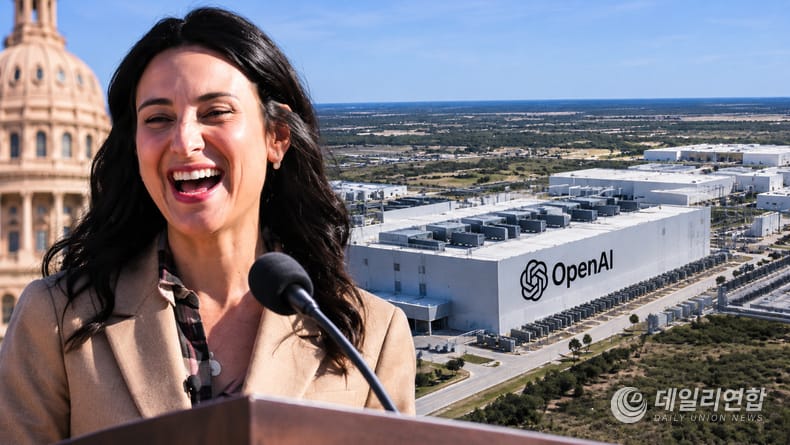
Texas Democratic Governor-elect Gina Hinojosa said in a broadcast interview on November 5, local time, that data center projects needed to be suspended until institutional safeguards to protect residents were in place.
Hinojosa said that while not opposed to the AI industry itself, residents should not be disadvantaged as companies use local resources, including Texas electricity, water and land.
During the election campaign, Hinojosa also made an immediate moratorium on approvals for new data center construction a major pledge. The stated reasons were that electricity consumption by large data centers increases upward pressure on electricity rates, while water needed for cooling facilities could strain local water supply systems.
Texas is among the U.S. regions attracting concentrated data center investment. Its extensive land, energy supply infrastructure and business-friendly regulatory environment have helped attract AI infrastructure investments by global technology companies.
Large AI data center projects involving companies including OpenAI and Oracle, in particular, are playing an important role in Texas's emergence as a key hub for the U.S. artificial intelligence industry.
However, as AI data centers grow in scale, grid stability, the cost of expanding power generation capacity and securing industrial water supplies have emerged as new policy challenges.
Unlike typical industrial facilities, data centers continuously consume substantial amounts of electricity to operate servers and cooling equipment. As the density of high-performance semiconductors needed for AI training and inference increases, power supplies and cooling facilities become more important.
These characteristics mean data center construction is regarded not simply as a matter of corporate investment, but as a complex industrial policy issue involving local electricity grids, water infrastructure and environmental regulation.
If a moratorium on new data center approvals is implemented, companies planning investments in Texas may have to review project schedules, power supply contracts and construction permitting strategies.
However, a halt to data center construction does not immediately mean existing facilities would stop operating. The facilities subject to regulation and the scope of its application could vary depending on the specific legislation and administrative measures developed later.
Resident safeguards and regulatory reviews
Hinojosa's policy shift also coincides with a change in Texas's political landscape.
Hinojosa defeated incumbent Republican Governor Greg Abbott in the gubernatorial election held on November 3. It was the first time Texas had elected a Democratic governor in 36 years, since Ann Richards in 1990. Hinojosa is also the first Latina governor in Texas history.
Hinojosa is scheduled to take office on January 19, 2027. After taking office, Hinojosa plans to pursue a moratorium on new data center approvals until the state legislature enacts laws to protect residents.
According to local media, the regulations Hinojosa is reviewing include greater resident participation in decision-making, water resource protection and measures to prevent burdens from electricity rates. Nondisclosure agreements that limit information disclosure during data center development, along with tax incentives provided to companies, are also under review.
In particular, measures requiring data center developers to disclose their effects on local communities and preventing them from passing the costs of supplying electricity and water for facility operations on to residents are being discussed as key policies.
However, some tightening of data center regulation had already begun under the Republican administration. Abbott previously ordered a temporary halt to data center grid connections and environmental permitting, along with a review of facilities' energy consumption and water use.
The new administration's policies may therefore seek to expand and institutionalize existing regulatory measures.
Changes are also expected in relations with companies led by Elon Musk.
Musk has major business operations in Texas and has politically supported Republican Governor Abbott. However, Hinojosa has made clear that corporate investment and business activities cannot take precedence over local residents' rights and interests.
After winning the election, Hinojosa intervened in the proposed sale of land at Boca Chica State Park, in which SpaceX had expressed interest.
Hinojosa contacted Texas parks and wildlife authorities and requested that further action related to the land sale be put on hold during the transition.
The Boca Chica area is home to Starbase, SpaceX's space launch facility. As the private space industry has grown, disputes over environmental conservation and the use of public land have continued.
The move indicates that the new administration intends to scrutinize the use of public assets as large companies expand their operations.
However, Hinojosa is not ruling out cooperation with companies.
Hinojosa also expressed an intention to involve Republicans in the transition and pursue bipartisan cooperation on major issues, including education policy.
This is interpreted as an approach that takes account of the practical need to maintain corporate investment and job creation while tightening regulation of data centers and advanced industries.
Investment and infrastructure implications
Industry participants have voiced concern that tighter regulation could increase uncertainty over data center investment schedules. Local communities, by contrast, see it as an opportunity to strengthen grid stability, water resource protection and environmental impact assessment.
The data center industry maintains that investment in large facilities can contribute to local economies, higher tax revenues and job creation. The balance between the regulation needed to protect residents and maintaining industrial competitiveness is therefore expected to become a major issue in future policy discussions.
Policy changes in Texas could also affect the wider U.S. AI industry.
Global technology companies are investing in large-scale computing infrastructure to expand generative AI services and develop very large language models. In this context, tighter permitting policies in major data center hubs would inevitably bring changes to companies' investment location choices and power procurement strategies.
In particular, community acceptance, environmental regulation and the cost of grid expansion could become more important criteria for data center site selection, alongside access to inexpensive electricity and land.
Texas's policy shift indicates that the focus of AI industry development is moving from simply expanding facilities toward sustainable growth that also considers energy, the environment and residents' rights and interests.
The scope of the data center approval moratorium pursued by the incoming Hinojosa administration, and the specific provisions of resident protection legislation, are expected to be key variables in assessing the U.S. AI infrastructure investment environment.
Original Korean article: dailyan.com
English brief by Korea Wind Intelligence, koreawindintel.com

















