As the government prepares to advance the Southwest semiconductor cluster, a key initiative under three mega-projects, attention is turning to whether offshore wind will play a significant role as a power source for semiconductor manufacturing.
In late June, the government announced the Southwest semiconductor project as part of national balanced development, designating semiconductors, AI data centers (AIDC), and physical AI as three major development initiatives.
The plan is to develop the Honam region as a next-generation semiconductor production base following the Seoul metropolitan area. This is expected to create substantial new electricity demand in Honam industrial complexes.
Southwest offshore wind capacity
The Honam semiconductor hub is located near the Southwest Offshore Wind zone, the nation's offshore wind center, raising questions about how much wind energy will be utilized as a power source.
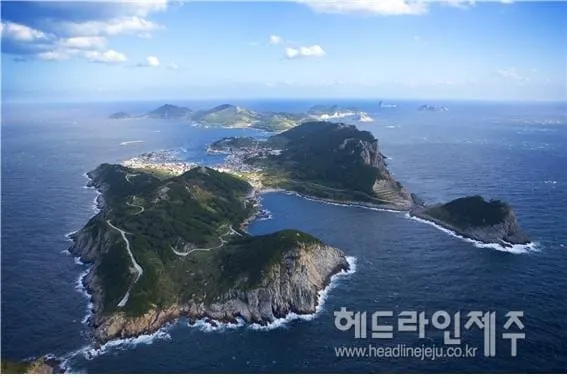
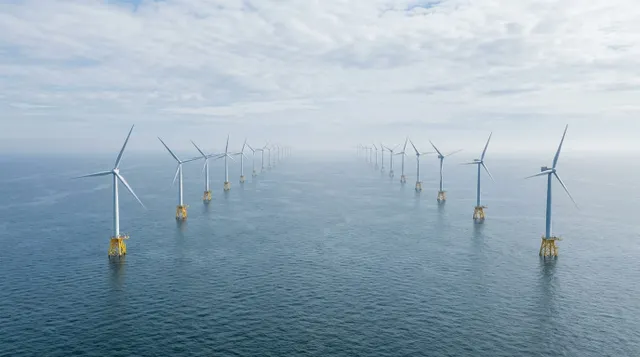
The Southwest offshore area is home to the Nagwol Offshore Wind Farm in Yeonggwang, Jeollanam-do (364 MW), set to complete in October 2026, the Sinan Ui Offshore Wind Farm (390 MW), which began construction in July 2026, and the Hanbit Offshore Wind Farm (340 MW), which launched through public-led competitive auction in the first half of 2026.
The Southwest Offshore Wind demonstration complex in Buan, Jeollabuk-do (60 MW), which completed in 2019, is already generating renewable energy.
In August, Prime Minister Han Seong-suk visited offshore wind sites in Jeollanam-do and emphasized that securing abundant clean electricity through offshore wind and other means is essential for the success of the mega-project, highlighting the utility of offshore wind energy.
Power supply challenges and solutions
Lee Seul-gi, research fellow at the Industrial Research Institute, said: "On days when renewable energy generation is high in the Southwest region, power sometimes exceeds grid capacity limits. With a semiconductor cluster expected to increase power demand in the Southwest, large-scale offshore wind farms of hundreds of megawatts have the advantage of supporting that demand."
However, he noted: "Semiconductor fabs must receive uninterrupted power to maintain stable yields, but solar and wind generation are intermittent and variable. If this is addressed through energy storage systems (ESS) and similar measures, renewable energy could potentially function as a power source for semiconductors."
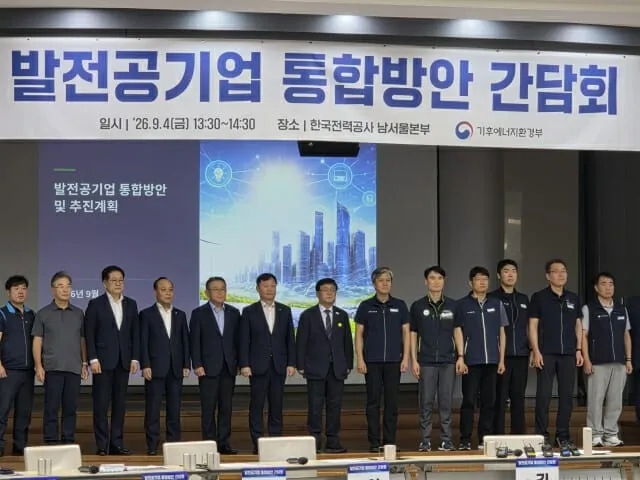
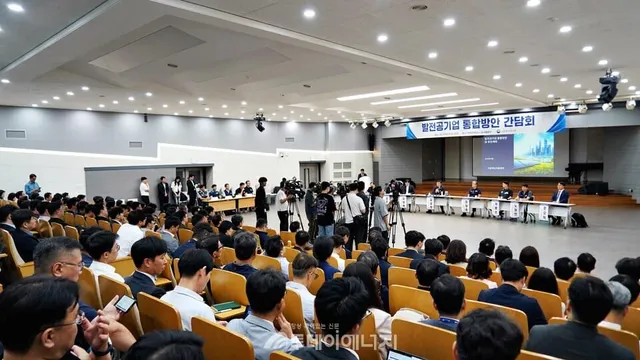
At a Climate, Energy, Environment and Labor Committee audit held in the National Assembly on October 6, 2026, MCEE (Ministry of Climate, Energy and Environment) announced its major work plan for the second half of 2026.
MCEE Minister Kim Seong-hwan stated: "According to expert opinion, the 6.3 GW power demand of the Southwest semiconductor industrial complex can be adequately met by Honam's renewable energy and the Hanbit nuclear power plant."
Grid expansion and public acceptance
The MCEE also set a target of raising the share of renewable energy generation to 30 percent or higher by 2035 through expanding large-scale power generation facilities and offshore wind deployment. It also announced plans to expand transmission and distribution networks to accommodate 100 GW of renewable energy by 2030.
The transmission and distribution network mentioned refers to the entire power grid that transmits and distributes electricity produced at power plants to demand areas. High-voltage direct current (HVDC) is cited as a representative transmission method for conveying wind power from the sea to industrial complexes.
If Honam's semiconductor complex utilizes offshore wind, expansion of HVDC networks is expected to be necessary, but public acceptance is considered critical in the network expansion process.
Lee Seul-gi said: "Previously, there were difficulties in project implementation, including securing public acceptance for building new transmission and distribution networks. If acceptance is secured, offshore wind can establish itself as an energy source to meet new power demand."
Original Korean article: Hanyang Economy
English brief by Korea Wind Intelligence, koreawindintel.com