

Construction halts and approval restrictions
Data center construction has recently faced a series of restrictions in Southeast Asia, where the artificial intelligence (AI) boom had driven rapid growth. The Thai and Indonesian governments halted data center construction, citing shortages of electricity and water, among other reasons.
According to Britain's Guardian on November 8, local time, the Thai government halted construction at 49 data center sites in September 2026 and deferred approval decisions for 117 others. The decisions reflected concerns about electricity and water shortages and a judgment that environmental reviews were insufficient.
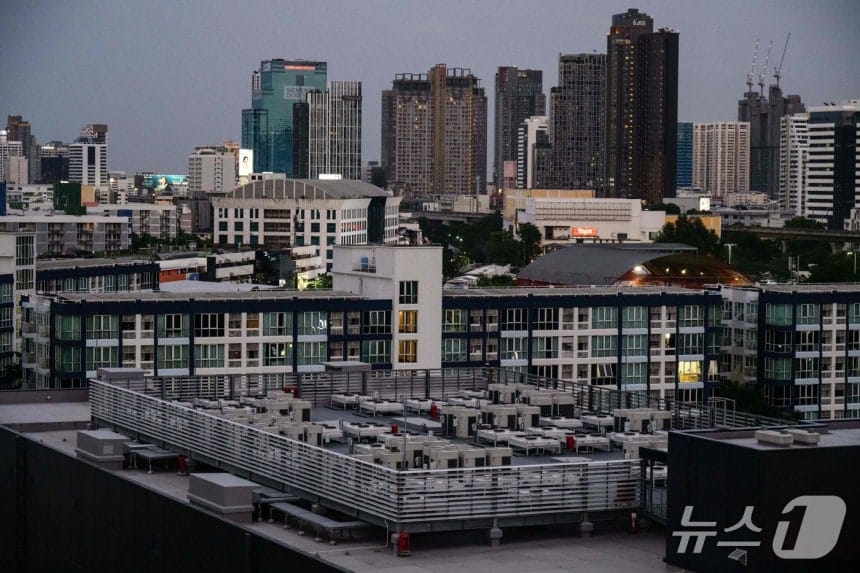
Data center construction in Thailand was still booming early in 2026. At the time, Thailand approved investment plans totaling $27 billion, approximately 36 trillion won, from TikTok, a data center company based in the United Arab Emirates (UAE), Singapore's Bridge Data Centres and others.
Southeast Asia has rapidly emerged as a location for AI data center construction. According to a report published in 2026 by real estate firm Cushman & Wakefield, Southeast Asia accounts for about 50% of data center capacity in the Asia-Pacific region.
The situation has recently changed. In Indonesia's West Java province, construction of a data center by Singaporean company BDX was also halted because of incomplete permits and an insufficient environmental impact assessment, among other reasons. Johor, Malaysia's largest data center hub, also announced that it would stop approving the largest data centers, which use up to 50 million liters of water a day.
Alvin Tan, a consultant at energy consultancy Wood Mackenzie, said, "Data center development in Johor has increased so rapidly that the electricity supply network will reach its limits." Tan added, "Major upgrades to power facilities and additional generating capacity may be needed."
Local communities are also opposing development. In February 2026, a protest took place outside a Chinese company's data center construction site in Johor.
Governments are taking greater care with data center approvals. Singapore included power efficiency and carbon emissions in its criteria for approving new data centers. Malaysia established a data center task force focusing on energy and water resources, among other issues.
Data center activity shifts from Singapore to Malaysia
Through the 2010s, Singapore served as Southeast Asia's main data center hub. Companies such as Alibaba and Facebook built facilities there. However, new data center construction was suspended until 2022 following criticism of excessive water and electricity use. Since then, construction has been approved selectively following consideration of sustainability and other factors.
Companies turned their attention to Malaysia. Johor, in southern Malaysia, has grown into Southeast Asia's largest data center hub and is expected to attract a total of $40 billion in data centers, including those of Microsoft (MS), by the end of 2026. Operating data center capacity there rose more than tenfold, from 94 MW in 2023 to 1,110 MW in 2026.
Indonesia is also pursuing plans to develop 1,699 MW of data center capacity in the Greater Jakarta area.
Original Korean article: Money Today
English brief by Korea Wind Intelligence, koreawindintel.com

















