

Samsung Electro-Mechanics said it expects record results in 2027. It forecast that tight supply and demand conditions for multilayer ceramic capacitors (MLCCs) and flip-chip ball grid array (FC-BGA) substrates would intensify in the fourth quarter and next year as strong artificial intelligence (AI) demand continues.
Samsung Electro-Mechanics gave this response to a question about its fourth-quarter and 2027 outlook during a conference call following its third-quarter earnings announcement on October 28.
“Substantial growth expected in every quarter of 2027”
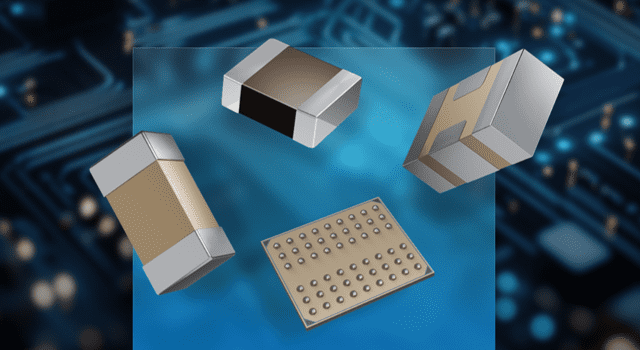
Samsung Electro-Mechanics said, “The benefits of a stronger MLCC and FC-BGA product mix and higher average selling prices (ASPs) will continue in the fourth quarter of this year,” adding, “We expect quarter-on-quarter growth well above the usual level in the fourth quarter, supported by factors including a higher share of sales for AI data centers (AIDCs).” The company said, “These market conditions and earnings growth will continue in 2027,” adding, “We expect to achieve record annual results in 2027 through substantial earnings growth in every quarter, starting in the first quarter.”
Samsung Electro-Mechanics said, “We expect tight supply and demand conditions for MLCCs and package substrates to intensify in 2027 as strong AI demand continues,” adding, “Demand for high-value-added products, including high-capacitance, high-voltage MLCCs and large-area, high-layer-count FC-BGA substrates, will also increase, so the upward trend in ASPs will continue for a considerable period.”
The company added, “For MLCCs, we will increase development of new ultra-high-capacitance and embedding-related products for AIDCs, strengthen our market position by expanding high-value-added products such as large-size, ultra-high-capacitance products for electric vehicles (EVs) and advanced driver assistance systems (ADAS), expand long-term supply agreements, and manage selling prices in light of supply and demand.” Regarding silicon capacitors, it said, “We will expand revenue and profitability by entering new applications and diversifying our customer base.”
Regarding the 6.8 trillion won investment in semiconductor substrate plants in Sejong and Vietnam announced in September, Samsung Electro-Mechanics said the investment targets “FC-BGA products for AIDCs, where market demand is surging.” It expects to begin mass production in stages from 2027, with a substantial contribution to revenue beginning in 2028. The company added, “Even this large-scale expansion will not be enough to meet all customer demand, and requests for additional volumes continue to come in,” saying, “We will review market conditions and supply and demand to determine the timing and scale of our response.”
Samsung Electro-Mechanics explained, “The increasing layer counts and surface areas of AIDC package substrates are placing greater pressure on production capacity, but a market structure has emerged in which only a few companies with the necessary technology can supply high-specification products.” It added, “Major technology customers have recognized our technological capabilities and ability to provide stable supplies. We have secured substantial investment funding support and concluded long-term supply agreements, and we are expanding FC-BGA production capacity in Sejong, Busan, and Vietnam.”
“Embedded substrate supplies to major technology companies to expand substantially from 2027 onward”
The company plans to substantially expand supplies of embedded substrates to major technology companies from 2027 onward. Embedded substrates incorporate passive components within the substrate to minimize power delivery paths and improve power efficiency and stability.
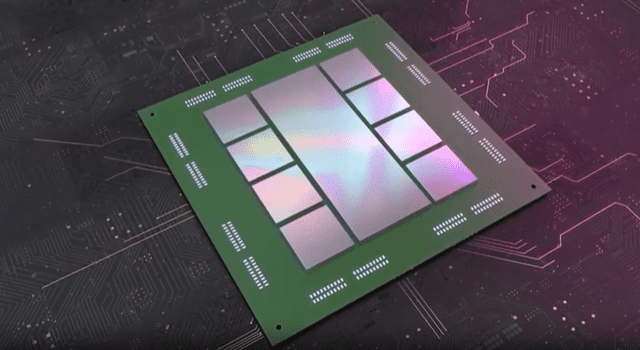
Samsung Electro-Mechanics said, “Samsung Electro-Mechanics is the only company in the world capable of supplying both passive components and FC-BGA substrates with those passive components embedded,” adding, “We currently supply embedded substrates to major technology companies and plan to expand supply volumes substantially from 2027 onward.” It added, “We expect future high-specification embedded substrates for data centers to incorporate more embedded components and eventually active components as well.”
The new MLCC plant being built in the Philippines is scheduled to begin mass production next year. Samsung Electro-Mechanics said, “We are concluding long-term MLCC supply agreements primarily with major AI server customers and have responded to increasing demand by proactively expanding production capacity, particularly for AIDCs,” adding, “We are expanding supply capacity year on year again this year.” It added, “The new plant under construction in the Philippines is also scheduled to begin mass production next year, focusing on leading-edge, high-value-added MLCCs.”
Samsung Electro-Mechanics said, “Leading-edge MLCC products for AI servers require advanced technology and stable supply capabilities,” adding, “The number of capable suppliers is limited, and expanding production capacity takes considerable time, so tight MLCC supply and demand conditions will continue.”
Regarding fourth-quarter MLCC demand, Samsung Electro-Mechanics said it expects demand to “increase across all applications, unlike in previous years.” It said, “For data center MLCCs, die counts in AI, graphics processing units (GPUs), and application-specific integrated circuits (ASICs) will increase from 2 in 2026 to 4 in 2027 and 8 from 2028 onward,” adding, “Power consumption is also increasing proportionately.” The company added, “MLCC requirements for GPU and ASIC core power are doubling every year,” saying, “Samsung Electro-Mechanics calls this the ‘AI MLCC law’ and is responding to growing demand for small-size and ultra-high-capacitance MLCCs.”
The company began mass-producing humanoid robot camera modules for a North American customer in the third quarter. Samsung Electro-Mechanics said, “We began mass production of humanoid robot camera modules for a North American customer in the third quarter,” adding, “We are also developing new projects to improve sensing precision in the next model.” It added, “Robots require specialized technologies depending on their operating environments and uses,” saying, “We are strengthening development cooperation with several leading global companies on differentiated technologies using components such as lenses and actuators, as well as integrated sensing modules.”
Samsung Electro-Mechanics posted record results in the third quarter, with revenue of 3.7633 trillion won and operating profit of 691 billion won. Revenue increased 30% year on year and 9% from the previous quarter. Operating profit rose 165% year on year and 57% from the previous quarter. Explaining its third-quarter performance, the company said, “Despite the impact of a decline in the won-dollar exchange rate, continued strong growth in demand for AIDC components and growth in ADAS demand led to a substantial increase in sales of high-value-added MLCC and FC-BGA products, resulting in record results.”
Original Korean article: ZDNet Korea
English brief by Korea Wind Intelligence, koreawindintel.com

















