Original Korean article: Incheon Today
Global offshore wind specialist Ørsted is facing criticism for planning to establish an installation and support port for its Incheon project at Dangjin Port in South Chungcheong Province, a move that conflicts with the government's port operations policy.
The Dangjin Port offshore wind support port remains in an unconfirmed state and requires a change-of-use procedure under relevant laws. Meanwhile, Ørsted has not even held formal discussions with Incheon Port Authority regarding Incheon New Port, which is already reflected in government plans and has a larger area.
Ørsted establishes Dangjin Port support port for Incheon offshore wind project
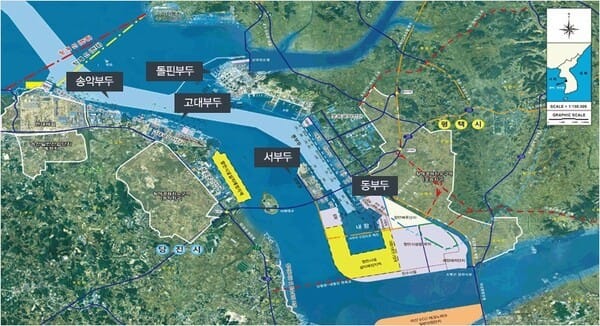
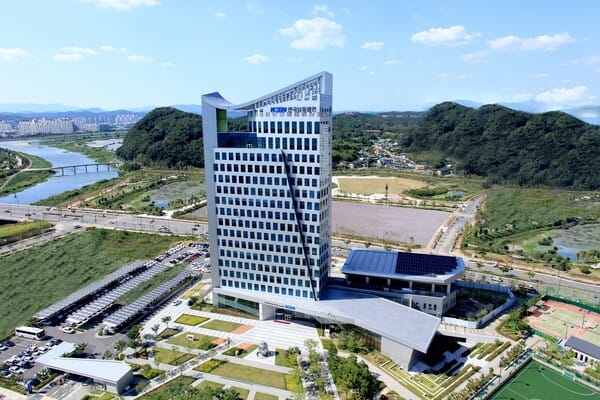
Dangjin City signed a memorandum of understanding with LX International to develop a "Dangjin Port offshore wind installation support port." The candidate site is berth 10 in the Goda district of the Asan National Industrial Complex in Songak-eup, covering 194,000 square metres. It would be developed privately at an estimated cost of about 300 billion won, with mooring facilities, a handling area for offshore wind components and an operations building. Dangjin City said it would support the administrative procedures, while LX International pledged priority hiring of local workers and participation by local construction firms. The city said the port would provide dedicated infrastructure capable of supporting more than 500 MW of offshore wind installation a year.
Two days later Ørsted signed a separate cooperation MOU with LX International on the Dangjin installation support port, creating an arrangement in which the 1.47 GW Incheon offshore wind project would be staged from Dangjin.
Dangjin berth is not in the national port plan and needs a change of use

The Dangjin offshore wind support port is not formally reflected in the Ministry of Oceans & Fisheries' revised 4th National Port Master Plan for 2026 to 2030. The berths formally included in that plan for offshore wind are the large component berths at Mokpo, Gunsan, Incheon and Ulsan, together with a maintenance berth at Taean. Dangjin appears only on a separate list of seven candidate sites the government is reviewing for additional construction by 2030, alongside Ulsan South New Port, Saemangeum New Port, Gunsan, Samcheonpo New Port, the Haenam Hwawon industrial complex and Taean. What Dangjin did secure in the 4th plan is unrelated to offshore wind: nine projects worth 1.845 trillion won covering hydrogen and ammonia berths, a grain berth and LNG terminal facilities.
There is also a legal obstacle. Berth 10 at Dangjin's Goda quay is designated for liquid cargo such as LNG, hydrogen and crude oil. It is a non vested port facility built by a private party, so using it for any purpose other than the one originally approved requires the Ministry of Oceans & Fisheries to amend the enforcement rules under the Harbour Act. That step needs consultation with the port authorities and is not covered by the current port master plan.
Incheon New Port site is 1.6 times larger and already in the plan

The Incheon New Port offshore wind support port, which is reflected in the port master plan, would sit on public waters east of the phase 1-2 container terminal with 720 metres of quay across three berths and 314,400 square metres of backup land, at an estimated cost of about 320 billion won. That is roughly 120,400 square metres more than the Dangjin candidate site, about 1.6 times the area. Incheon Today reported concern that choosing the narrower and still unconfirmed Dangjin site could delay the Incheon project further.
Incheon Port Authority says there were no formal discussions
Ørsted Korea had previously told Incheon Today that it was in continuing discussions with Incheon City and Incheon Port Authority on establishing an offshore wind support port. The port authority gave a different account. An Incheon Port Authority official said there had been no formal consultation with Ørsted and that the two sides had met only informally: "At that time the Incheon New Port offshore wind support port had not yet been reflected in the port master plan, so we talked about watching how it developed and left it there. There was no particularly advanced discussion and no formal request for opinions."
The report also raised the question of whether the commitments Ørsted has emphasised in Incheon for several years now ring hollow. In February 2024 the company signed an MOU with the then mayor of Incheon on its offshore wind project and on building an offshore wind industry base in the city, agreeing to work actively to develop a local supply chain. In May 2024 it signed a further agreement promising shared prosperity with Incheon residents and fishers.
KWI developer profile — Ørsted
2 projects in Korea totalling 1,470 MW. Compiled from the KWI database. Not part of the source article.
Incheon 2 Offshore Wind — this article
| ![]() |
Incheon 1 Offshore Wind
| ![]() |
Project data: KWI database — Electricity Business Licence records, EIA filings (ME2025C009, ME2025C010), Electricity Regulatory Commission minutes, and pre-EBL permit filings.