

Grid connections and development schedules
Building a data center near a power plant does not necessarily mean electricity can be supplied immediately. As South Korea's artificial intelligence (AI) data center investments take shape, the issue is becoming central to assessing project feasibility. Even where nearby generation capacity is sufficient, servers cannot operate unless the lines and substation facilities needed to deliver electricity reliably to the site are in place.
In a data center industry analysis report, Hana Securities assessed that domestic data center development has moved beyond announcements of large-scale plans into a stage of specifying financing, permits, construction and computing supply contracts. In this process, grid connection and electricity supply schedules determine when services can actually begin. Receiving electricity means obtaining power for a facility from the external grid.
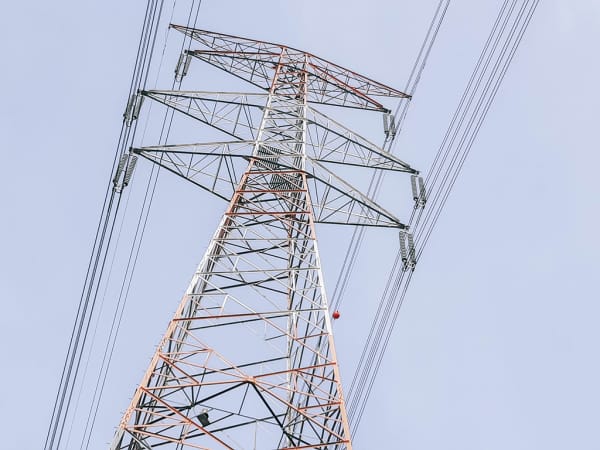
Power plants generate electricity, while transmission lines and substations deliver it to users. Even if ample electricity is available nearby, inadequate or unconnected delivery infrastructure makes it difficult to operate a large facility. Data centers therefore need to check not only nearby generation output but also spare capacity in the lines and substations to which they will connect. Citing a proposed 1-gigawatt (GW) AI data center in Gangneung, Hana Securities analyzed that transmission and substation infrastructure constraints would require phased development even with nearby generating facilities.
Grid expansion follows a different schedule from building construction. The standard transmission and substation facility construction periods published by Korea Electric Power Corporation are six years and six months to seven years and six months for 154-kilovolt (kV) facilities, and nine years to nine years and three months for 345 kV facilities. These periods include site selection, gathering residents' views, permitting, land acquisition, construction and inspection. The waiting period for an individual data center varies depending on whether existing facilities can be used and how much new construction or reinforcement is needed.
For this reason, a developer's claim to have "secured power" needs to be distinguished by its stage of progress. Applying for electricity use, discussing supply conditions and signing a contract each mean different things. Even after a contract is signed, the supply start date, initial supply capacity and conditions for completing prerequisite infrastructure work must be checked together to assess the actual operating schedule. Shorter permitting processes also have a greater effect when the necessary electrical infrastructure work is completed on time.
Misaligned schedules increase costs. Suppose, for example, that a building is completed in 2028 but electricity cannot be supplied until 2029. During that interval, the developer may face financing and facility maintenance costs without being able to launch the planned services. Server delivery and customer move-in schedules would also need adjustment. Such disruptions can arise if building completion and electricity supply schedules are not coordinated.
Matching development to electricity supply
The starting point for addressing the issue is to review electricity supply conditions when selecting a site. In addition to land prices and distance from power plants, comparisons should cover when each candidate site can receive electricity, the scale and cost of additional work, and the scope for future expansion. Even outside the Seoul metropolitan area, project schedules vary with the condition of the grid to which a site will connect. When assessing the value of "powered land," meaning sites with specified electricity supply conditions, it is also important to establish when operations can begin and at what scale.
Another option to consider is dividing development into phases that match electricity supply. If a project ultimately planned for 100 megawatts (MW) can initially receive only 20 MW, power and cooling facilities and customer contracts could be designed for phased operations, allowing services to begin in some sections first. This is an illustrative assumption; actual applicability depends on facility design and customer requirements. The timing and supply conditions for subsequent expansion must also be specified to reduce expansion risks after initial operations begin.
Developers, KEPCO and local governments also need to organize their shared schedules on a consistent basis. This means linking the first electricity supply date, capacity at each stage, required line and substation work, cost allocation and responsible parties in a single project schedule. Including resident consultations and permitting in that schedule can help identify potential delays early. Developers can use it to adjust construction, equipment procurement, customer move-in and funding disbursement schedules.
Power capacity and operating readiness
When comparing operating scale, the uses of electricity must also be distinguished. A facility's total incoming power capacity includes electricity for cooling and power supply equipment as well as servers. Power usage effectiveness (PUE), as explained by the US Department of Energy, is total facility energy use divided by the energy use of information technology (IT) equipment. The actual computing scale therefore differs depending on whether the figure for a "100 MW data center" refers to total incoming power capacity or capacity supplied to IT equipment.
Improving cooling efficiency helps reduce the energy needed for operations, but a grid connection must still be secured separately. Even after electricity is supplied, servers must be installed and power, cooling and backup power equipment tested to meet customers' operating requirements. Financing and customer contracts must also be in place for secured electricity supply to translate into revenue.
The information needed to assess the feasibility of South Korean AI data center investments consists of initial operating capacity, the expected electricity supply date, grid reinforcement conditions and the customer service launch schedule. These items need to be presented together to assess when large-scale development targets can translate into actual service capacity. Distance from a power plant can be checked on a map, but the time needed for a data center to generate revenue is set out in its electricity contract, project schedule and customer contracts.
Sources: Hana Securities data center industry analysis report "Dekkeu 2"; Korea Electric Power Corporation materials on transmission and substation facility construction procedures and standard construction periods; US Department of Energy data center energy-efficient design guide.
Original Korean article: koreaittimes.com
English brief by Korea Wind Intelligence, koreawindintel.com

















