

Tender pricing and overseas orders
LG Energy Solution's decision not to participate in South Korea's third energy storage system (ESS) central contract market tender, worth about 2 trillion won, has been analyzed as a strategic choice based on profitability.
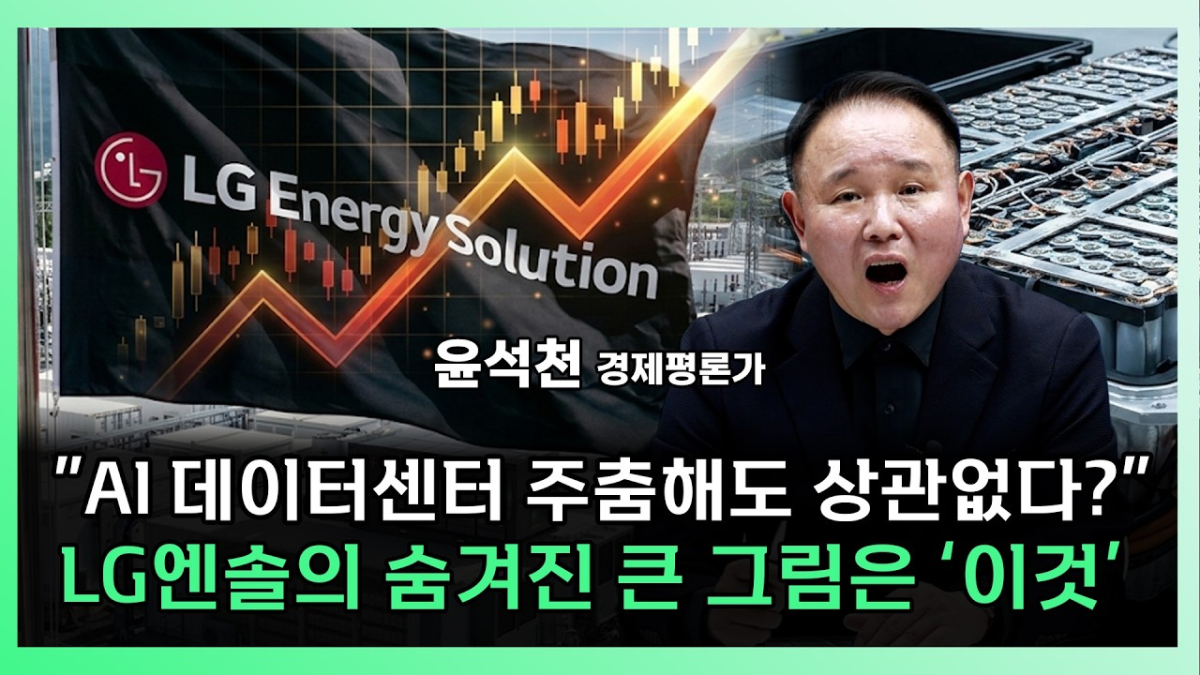
Appearing on Jjinkonomy, a program on the YouTube channel Etoday TV released on November 14, economic commentator Yoon Seok-cheon cited declining profitability caused by excessive competition and overseas orders as reasons for LG Energy Solution's withdrawal.
Yoon explained that bid prices were falling rapidly in the central contract market, where power developers and battery cell manufacturers participate in consortia. Prices in the mid-30 won range per kWh during the first tender fell to the mid-20 won range in the second, with some falling below 20 won, creating what Yoon described as a destructive price war.
Yoon said shrinking margins for power developers would inevitably lead to pressure to lower battery cell prices. The explanation was that LG Energy Solution had little incentive to participate in a business where profitability would be difficult to secure while also assuming maintenance and warranty obligations for 15 to 20 years.
Yoon also identified overseas orders as a factor behind the decision. Yoon said LG Energy Solution had an order backlog of about 160 GWh in North America, while output from its Nanjing plant in China continued to find demand both overseas and within China. With supply capacity already tight, Yoon's assessment was that there was no need to stretch resources to participate in the third domestic tender, covering 7.8 to 8 GWh.
Tax credits and profitability
Yoon also challenged market concerns about heavy dependence on the US Advanced Manufacturing Production Credit (AMPC). The third-quarter operating profit figure presented for LG Energy Solution was 756 billion won, including 416.9 billion won in AMPC benefits.
Yoon explained that LG Energy Solution operates joint ventures with automakers including GM and Hyundai Motor, and that customers also take receipt of AMPC benefits into account when negotiating battery prices. Yoon argued that, because tax credit benefits are reflected in selling prices and margins from the contracting stage, profitability is difficult to assess by simply excluding them.
Yoon said battery selling prices could rise if AMPC were eliminated. Accordingly, Yoon emphasized that assessments should consider changes in the scale of tax credits as future production increases, rather than looking only at profit excluding subsidies.
Grid infrastructure and ESS demand
Yoon also rejected the view that slower investment in AI data centers would lead to a contraction in ESS demand. Yoon explained that only about 5% to 10% of global ESS orders go directly to AI data centers, while most of the remainder is used to improve the efficiency of existing power grids and transmission lines.
Yoon identified power shortages as a major constraint on the expansion of the AI industry. Citing Texas in the United States, Yoon said the power requested by big technology companies for data center construction reached 400 GW, compared with available supply of about 10 GW.
Yoon also expected ESS to play a growing role in using existing grids efficiently, given the lengthy time required to build new transmission lines. Yoon explained that storing surplus electricity generated during the day and transmitting it at night or when transmission capacity is available could reduce the burden on the grid.
Citing this demand for power infrastructure, Yoon expected LG Energy Solution's and Samsung SDI's ESS production lines to maintain high utilization rates through 2028.
Original Korean article: etoday.co.kr
English brief by Korea Wind Intelligence, koreawindintel.com

















