Large offshore wind projects must secure decommissioning funds upfront
South Korea's Ministry of Oceans and Fisheries has amended the Public Waters Management and Reclamation Act enforcement decree, effective September 17, 2026, requiring offshore wind developers to deposit performance bonds for site restoration on projects exceeding 10,000 m².
English brief by Korea Wind Intelligence, koreawindintel.com
Cabinet approves Public Waters Management and Reclamation Act amendments on September 8, 2026
From now on, large-scale offshore wind projects must secure funding in advance for future restoration of public waters. This follows the revision of the implementing ordinance for the law governing public waters, which aims to strengthen the effectiveness of restoration orders for seas, rivers, lakes and other publicly used water surfaces.
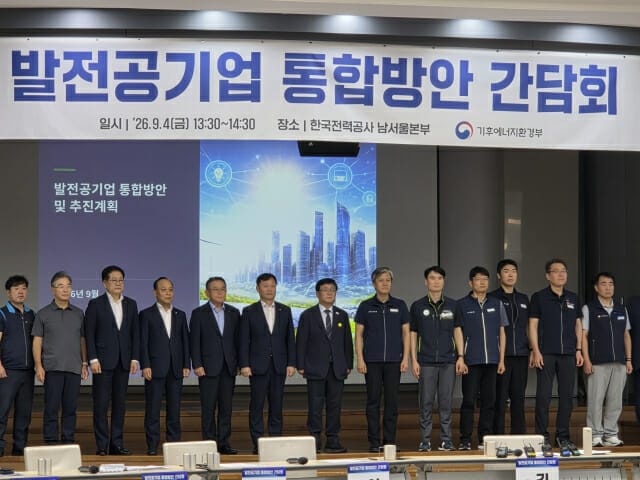
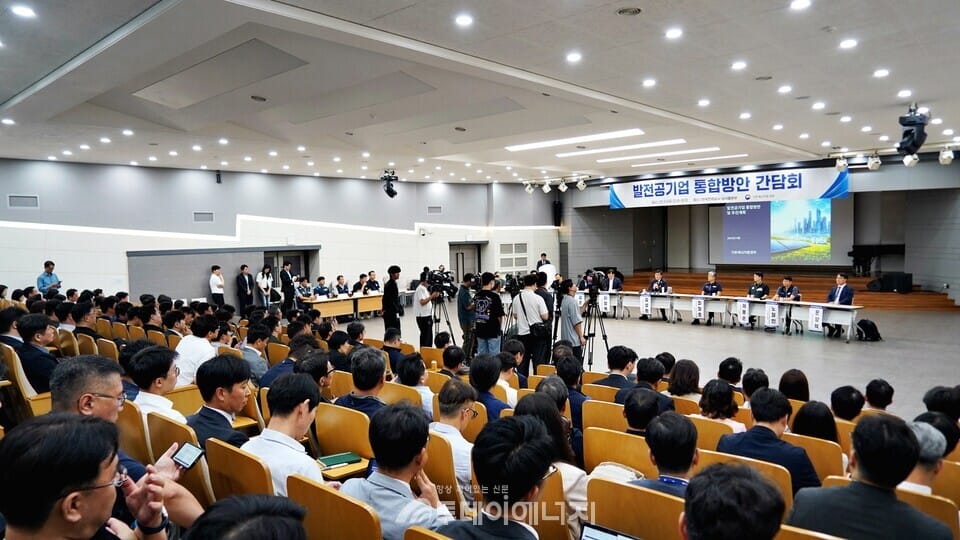
South Korea's government has decided to consolidate five state-owned power generators (Korea East-West Power, Korea Midwestern Power, Korea Western Power, Korea Southern Power, and Korea Southeastern Power) into a single entity called 'Korea Generation' after 25 years of operating separately.
Korea's five state-owned generators become one in October 2027. They hold 14.0 GW of offshore wind, a third of the national pipeline. What the merger case rests on, and what it leaves unanswered.
The Ministry of Climate, Energy and Environment's ten-year bidding plan, announced on 30 June 2026, will bring 55 GW of offshore-wind tenders to market from 2026 to 2035. It allocates 4 GW or more each year and concentrates about 28 GW into 2026–2030. Two tracks run in parallel — the existing competitive auctions (~31 GW, through 2033) and the Special Act's new development-district auctions starting in the second half of 2029 (~24 GW) — targeting 10.5 GW deployed or under construction by 2030 and 25 GW of cumulative deployment by 2035.
Special Act on Offshore Wind Deployment
The framework law that moved Korea from developer-led projects to a government-led planned-siting regime, in force since 26 March 2026 with its Decree and Rules. The state designates the wind-power districts and selects operators by competitive bidding, and a single implementation-plan approval deems roughly 28 statutory authorizations granted — the one-stop reform at the centre of the market.