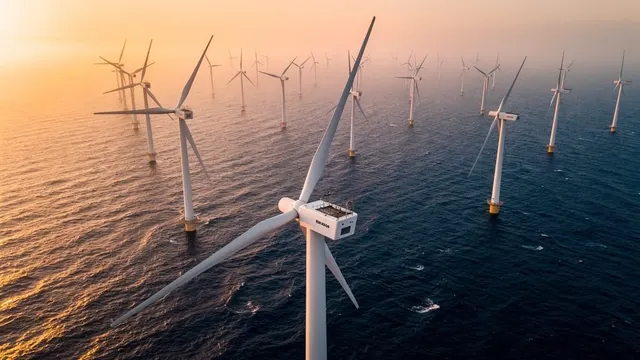
The government plans to directly choose the sea area for offshore wind farms for the first time by year-end. While expanding offshore wind capacity, experts say the government must filter out ecologically sensitive waters from the site selection stage to minimize ecosystem damage. However, civil society groups point out that the list of marine protected species that should serve as a decision-making standard has remained unchanged for seven years.
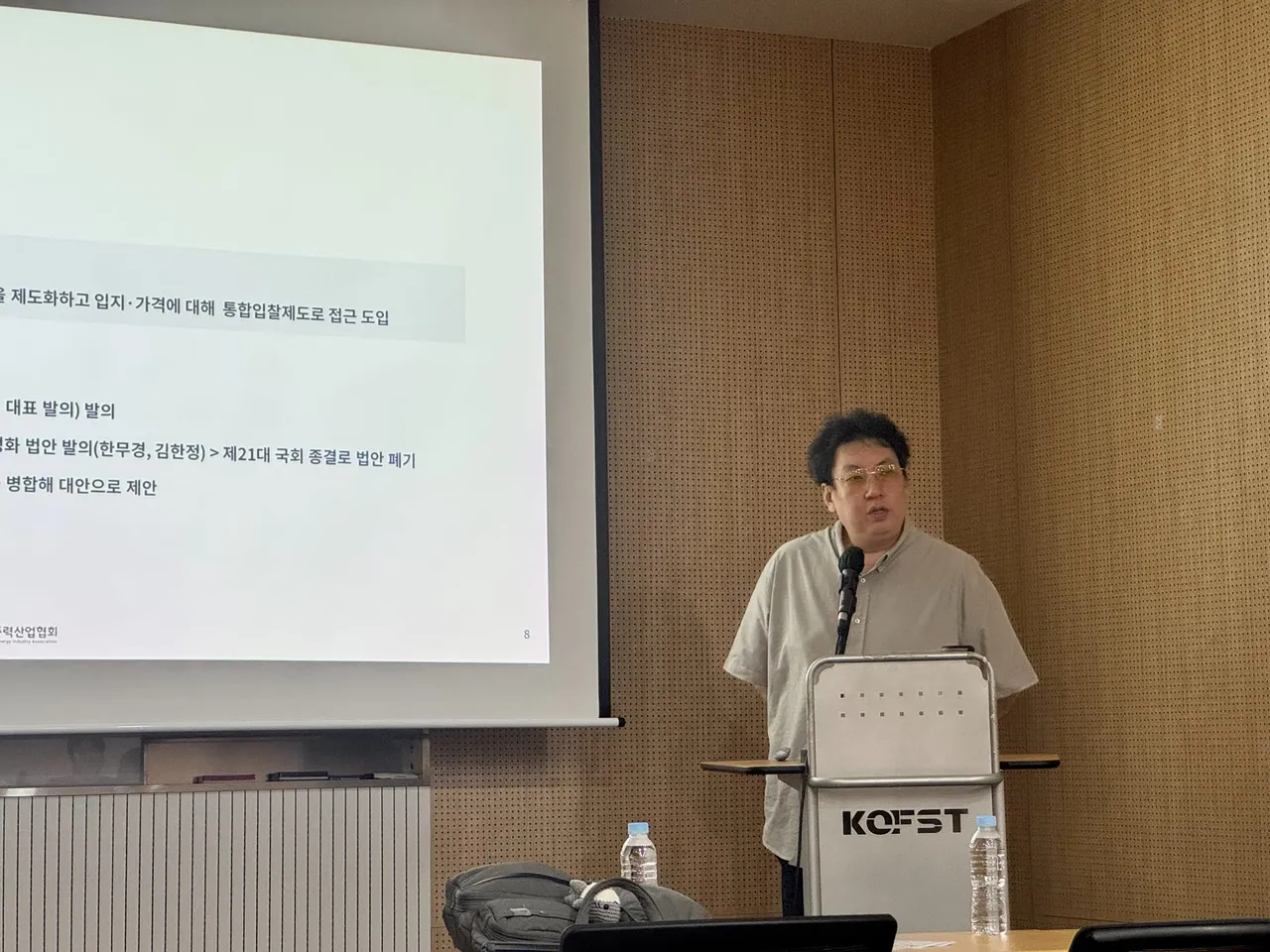
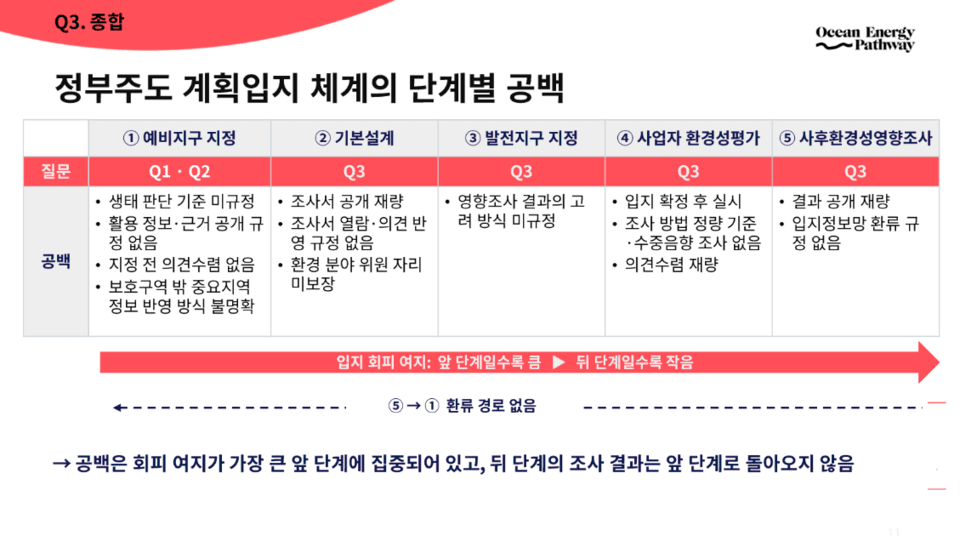
At a forum titled "Exploring Ways to Expand Offshore Wind Power in Coexistence with Ecosystems" held on November 4 at the Ireum Center in Yeouido, Seoul, concerns were raised that the criteria for assessing ecological impact ahead of the government's first designation of preliminary zones are inadequate. Jo Eun-byeol, director of Ocean Energy Pathway (OEP), explained that since preliminary zone designation is only the first stage of construction, ecological information missed at this stage will be difficult to supplement in later procedures.
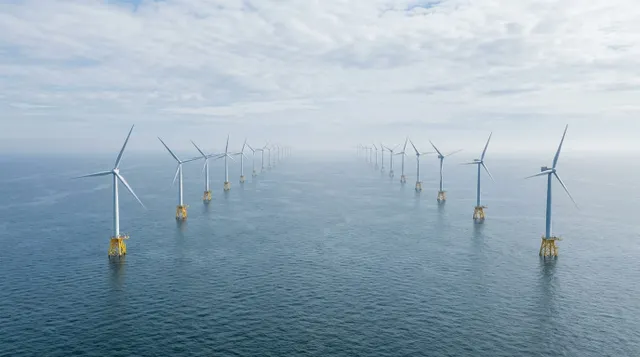
Offshore wind is a renewable energy source that the government is expanding to respond to climate crisis and energy transition. The government plans to increase cumulative offshore wind capacity to 25 gigawatts by 2035, but as of the end of 2025, operating capacity stood at 0.35 gigawatts, or 1.4 percent of the target. This is why the government has been accelerating deployment by putting at least 4 gigawatts of offshore wind projects out to tender each year starting this year.

However, large-scale facilities built at sea can affect resident marine life. According to research on Korean waters by The Biodiversity Consultancy (TBC), a British biodiversity consulting agency, the main concerns are collisions between migratory birds and turbine blades and marine mammal damage from construction noise. Korean waters lie on the East Asian-Australasian Flyway used by 23 species of endangered birds, and are home to finless porpoises and Indo-Pacific bottlenose dolphins, which are coastal resident cetaceans. The most effective way to reduce such impacts is to avoid areas heavily used by marine life when siting facilities from the outset.
Government chooses the sea: the first stage is most critical
The process for determining offshore wind sites changed this year. Previously, private developers had to directly select sea areas and obtain some 40 separate licences. This process often led to project delays due to fishermen's opposition and military security concerns. The Special Act on the Promotion of Offshore Wind Power Deployment and the Development of Related Industries, which took effect in March, introduced a planned siting system in which the government first identifies and designates suitable waters.
The approach narrows the scope in stages. When the government designates candidate waters as a preliminary zone, site surveys and basic design are conducted over about two years, and local governments operate public-private consultative bodies with resident and fishermen participation. The actual project area, called a development zone, is then confirmed and a developer is selected. Choi Seung-hyo, head of the Infrastructure Support Team at the Offshore Wind Power Promotion Group under the Ministry of Climate, Energy and Environment (MCEE), said the plan is to designate preliminary zones totaling 2.5 gigawatts by year-end, aiming to resolve licensing and community acceptance issues before developer bidding.
From an ecological protection standpoint, this system is both an opportunity and a burden. Unlike the past, when impact was assessed on sites already chosen by developers, the government can now avoid sensitive waters from the start. Conversely, if the preliminary zone designation stage fails to filter out habitats of endangered species or migratory bird routes requiring protection, it will be difficult to correct this in later procedures. Jo, the OEP director, explained that environmental assessments by developers are conducted after the development zone is confirmed, so the location cannot be changed and only layout and scale can be adjusted. This means the opportunity to avoid ecologically sensitive sites is concentrated in the preliminary zone designation stage.
Usable ecological data scarce at the first stage
The problem is that there is not much ecological information available at that first stage. The Special Act lists "minimal impact on marine environment and ecosystems" as a requirement for preliminary zones. However, it does not specify what basis should be used to judge that impact is minimal or whether that basis must be disclosed.

In practice, candidate water selection began by excluding legally protected areas. Mok Jeong-im, a section chief at the Marine Spatial Policy Division of the Ministry of Oceans and Fisheries (MOF), explained that marine protected areas and wetland protection areas managed by various government departments were prioritized for exclusion, while areas with active fishing and shipping routes were also considered. Yuk Geun-hyung, a senior research fellow at the Korea Maritime Institute, said that realistically, the ecological data that can be included at the preliminary zone stage is limited to protected areas and some protected species habitats. This is because there are no ecological data surveyed at the same level across all Korean waters.
A map of protected areas alone is insufficient to filter out all important marine areas. TBC's analysis found that data on how high migratory birds fly over the sea and what routes they take represents the largest gap in Korean information. There is also a risk that waters with no recorded data will be classified as areas with minimal impact based on existing information. According to OEP, an environmental impact assessment for one offshore wind project in Jeju concluded there would be no impact because Indo-Pacific bottlenose dolphins were not sighted once during nearly a year of visual surveys. However, when underwater acoustic surveys were later conducted in the same waters, dolphin vocalizations were recorded more than 1,000 times a day at peak.
Marine protected species list frozen since 2019
Concerns were also raised that the list of marine protected species, which serves as a criterion for filtering sites, has not kept pace with changes in the sea. Choi Hwang, an activist with the Green Korea United, said in an interview on November 5 that the marine protected species list has remained unchanged for seven years since 2019. Marine protected species are protection-designated species under the Marine Ecosystem Act, designated by the Minister of Oceans and Fisheries. Of the current 91 species, only six are fish: whale sharks, scalloped hammerhead sharks, and four seahorse species.
He pointed out that the sea has changed rapidly in the meantime. As sea temperatures rise, sharks and rays classified as endangered by the International Union for Conservation of Nature now frequently appear in Korean waters but receive no domestic protection. Choi cited the example of the dusky shark that recently appeared at Busan North Port and made headlines, which is an internationally protected species but not a protected species under domestic law. He also mentioned the case of a manta ray, classified as endangered, caught off Sokcho, Gangwon in June 2025, which passed through fish markets and was used as restaurant food.
Choi emphasized that this gap can be filled without major surveys. He explained that the Marine Ecosystem Act already lists "internationally protected species" alongside domestic endemic species and species with rapidly declining populations as designation criteria. He said the minister can immediately designate species according to international standards without needing to amend the law or conduct separate surveys, adding that it is difficult to discuss coexistence with ecosystems while such gaps exist in the system.
Choi attributed the delay in designation to the industrial character of MOF. Because the ministry's work centers on ports, shipping, and fisheries, marine ecosystem protection has been pushed to the back. Choi said that as the sea is changing rapidly due to climate crisis, the ministry must also place greater weight on marine ecology.
The state must survey first, but the foundation remains lacking
Forum participants agreed that the state must first build basic ecological data on the sea as a solution. Lee Hu-seung, a research fellow at the Korea Environment Institute (KEI), explained that Europe has been accumulating data on seabirds and fish since the 1970s by dividing the sea into grids, but Korea lacks such basic data. He said that if surveys are entrusted to developers, they consume much time and cost while producing results that are difficult to use, adding that ultimately only the state can do this.
The need for state surveys was also raised from the perspective of data reliability. Yuk cited the structure in which developers commission surveys to consulting firms as a cause of past assessment failures. He said assessment reports state there is no problem if dolphins do not appear within 800 meters of the construction site, and questioned which surveying firm would write that there is a problem when directly commissioned by the developer. He emphasized that in planned siting, since the government conducts impact surveys directly, the results should be disclosed so civil society can also review them.
There are cases where state surveys have been effective. Lee's research team attached location trackers to approximately 530 seabirds including black-tailed gulls five years ago and recorded their migration routes over two and a half years. This approach tracks common species to identify core marine areas also used by protected species like black-faced spoonbills and Chinese crested terns.
However, the foundation to continue state surveys has not yet been established. Seabird data has not been updated for five years, and follow-up survey funding of approximately 750 million won requested by this research fellow was not reflected in next year's government budget proposal. Choi, the MCEE official, said the preliminary zone basic design budget was not sufficiently reflected during government budget compilation, and that additional consultations with the Planning and Budget Commission are underway in line with National Assembly review.
In the national marine environmental impact survey that MOF began for the first time this year, seabirds and marine mammals, the species groups TBC most concerns about offshore wind impacts, were notably absent. Mok, the MOF section chief, said the survey scope will be expanded in the future.
Surveys take time. Migratory birds and marine mammals move differently by season, requiring one to two years to properly understand. Lee said that starting now would buy a minimum of three years. Choi said that while this is a new system and there may be unsatisfactory aspects, the government will work with experts and industry to ensure the system is properly established.
Original Korean article: News Penguin
English brief by Korea Wind Intelligence, koreawindintel.com