Original Korean article: Ikonominyuseu
Government Sets 100GW Renewable Energy Target by 2030 with Four Policy Sites and Mega Complexes
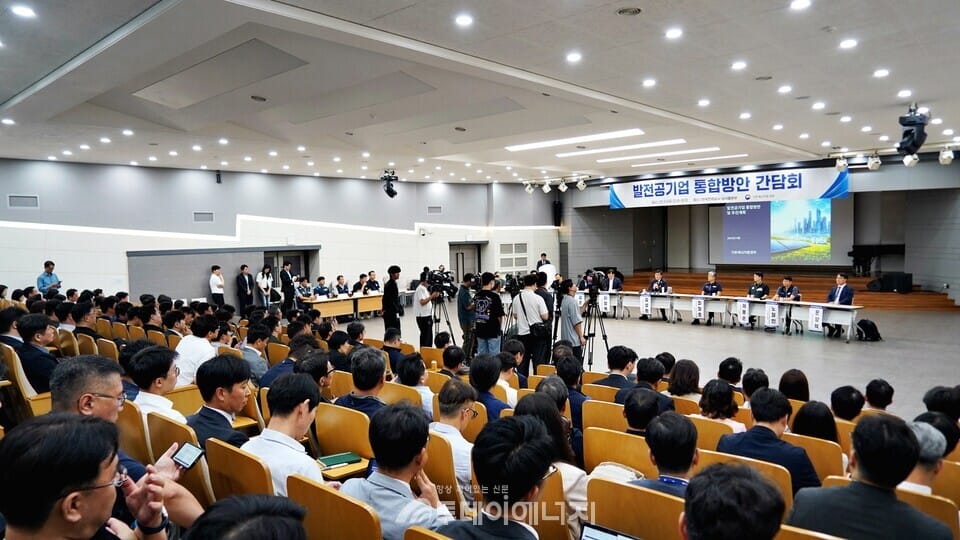
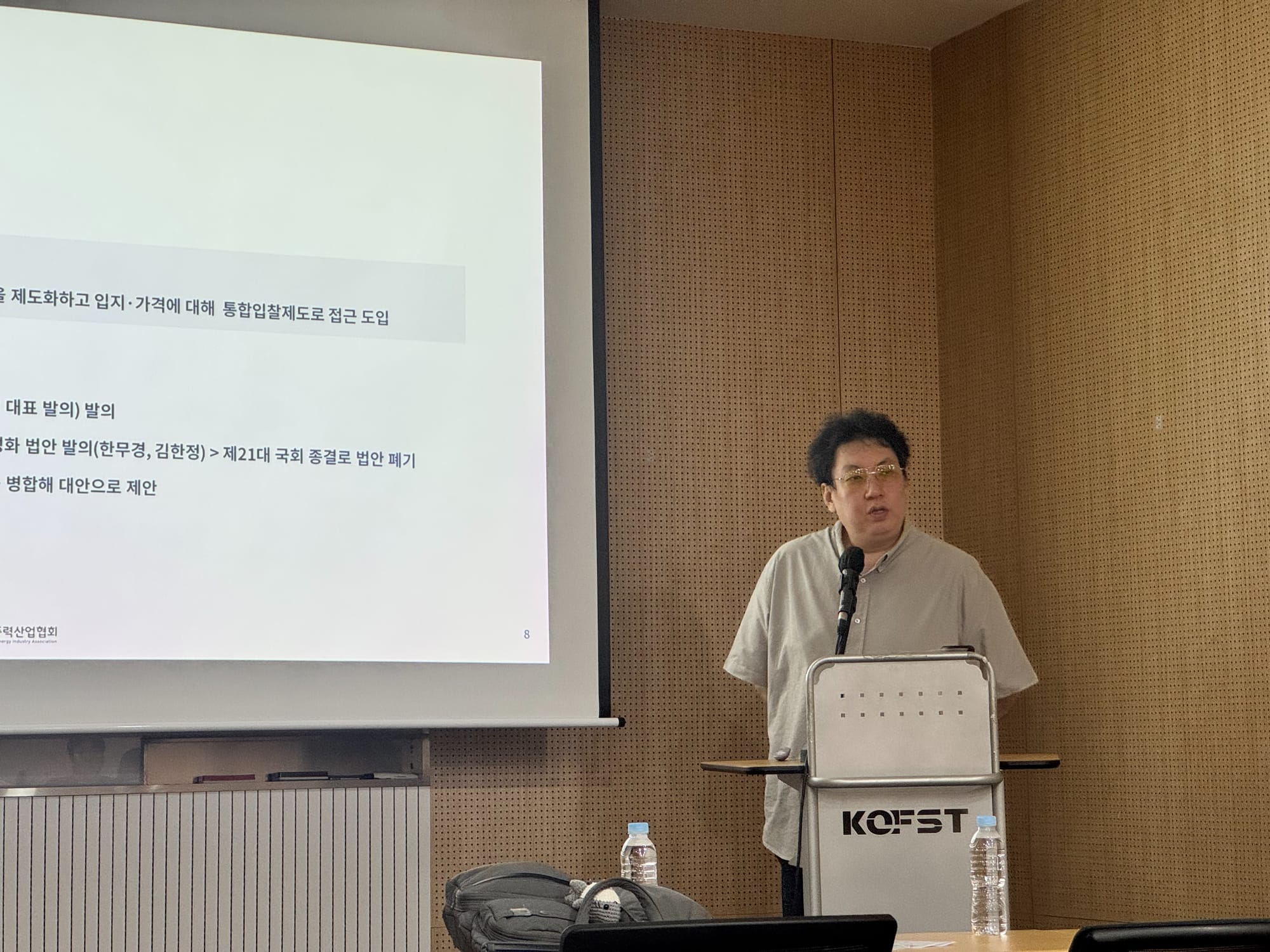
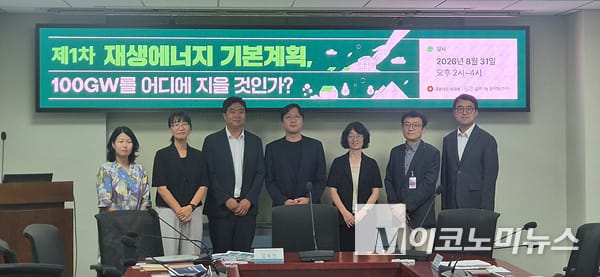
Participants at a National Assembly forum held yesterday on the theme "Basic Plan: Where Should We Build 100GW?" agreed that true energy transition is possible only when renewable energy expansion, regional ecosystem conservation, and local community acceptance are achieved simultaneously.
Park Gye-young, an official at the Renewable Energy Policy Division of the Ministry of Climate, Energy and Environment, presented on "First Renewable Energy Basic Plan Planned-Site Policy," explaining that "the government has established the First Renewable Energy Basic Plan aimed at a major energy transition centered on renewable energy."
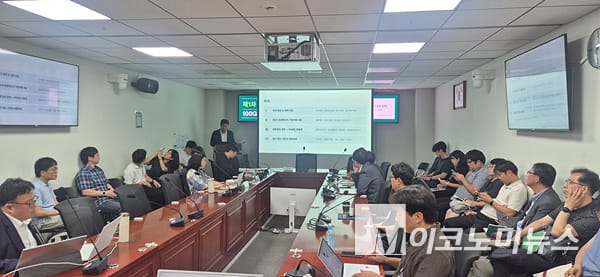
This plan was prepared to systematically expand renewable energy through government-led policy and to transform the national energy system.
It focuses on addressing major challenges including achieving the 2035 National Greenhouse Gas Reduction Target, surging electricity demand due to additional semiconductor facilities and large-scale data centers in the Honam region, vulnerable energy security, and a low renewable energy share of 9.8 percent.
Domestic Renewable Energy Share Remains Far Below OECD Average
South Korea's renewable energy generation share has increased from 1.8 percent over the past decade to 9.8 percent, but remains significantly below the OECD average of 34.4 percent. To address this, the government plans to achieve 100GW of renewable energy capacity by 2030, entering the world's top ten, and to raise the generation share to 30 percent or higher by 2035.
The implementation strategy consists of five elements: expanding supply, reducing costs, strengthening industrial competitiveness, enhancing public awareness, and establishing governance. Particularly in terms of supply expansion, the government will strengthen the supply base through creating mega flagship complexes in areas with grid capacity, identifying four policy sites, and spreading energy storage systems.
To this end, the plan sets the energy mix at 87GW for solar, 6 percent for onshore wind, 3 percent for offshore wind, and 4 percent for hydropower and biomass. The emphasis on "sites" in the plan stems from structural problems that have hindered renewable energy deployment. These include mismatches between grid and demand, a proliferation of minimum setback distance ordinances, approval delays, conflicts over local community acceptance, and the absence of a public-led site discovery system.
Shift Toward Mega Flagship Complexes and Four Policy Sites to Resolve Honam Transmission Bottleneck
The government plans to move away from its existing strategy focused on idle sites and instead shift to a method in which the state directly discovers strategic sites and designs them in coordination with the grid.
Of the 87GW in solar capacity, new capacity of 56.2GW will be composed of mega flagship complexes of 12GW, four policy sites of 37GW, and other idle spaces of 7.2GW. Flagship complexes will be developed primarily around areas with grid capacity, reclaimed land, agrivoltaic solar, border regions, and large-scale idle sites, with emphasis on resolving the transmission bottleneck in the Honam region and implementing a "local production for local consumption" model that aligns production and consumption areas.
The government plans to establish dedicated organizations across ministries and public enterprises to conduct site discovery, support approvals, and manage grid connections, and will also operate a project management support unit.
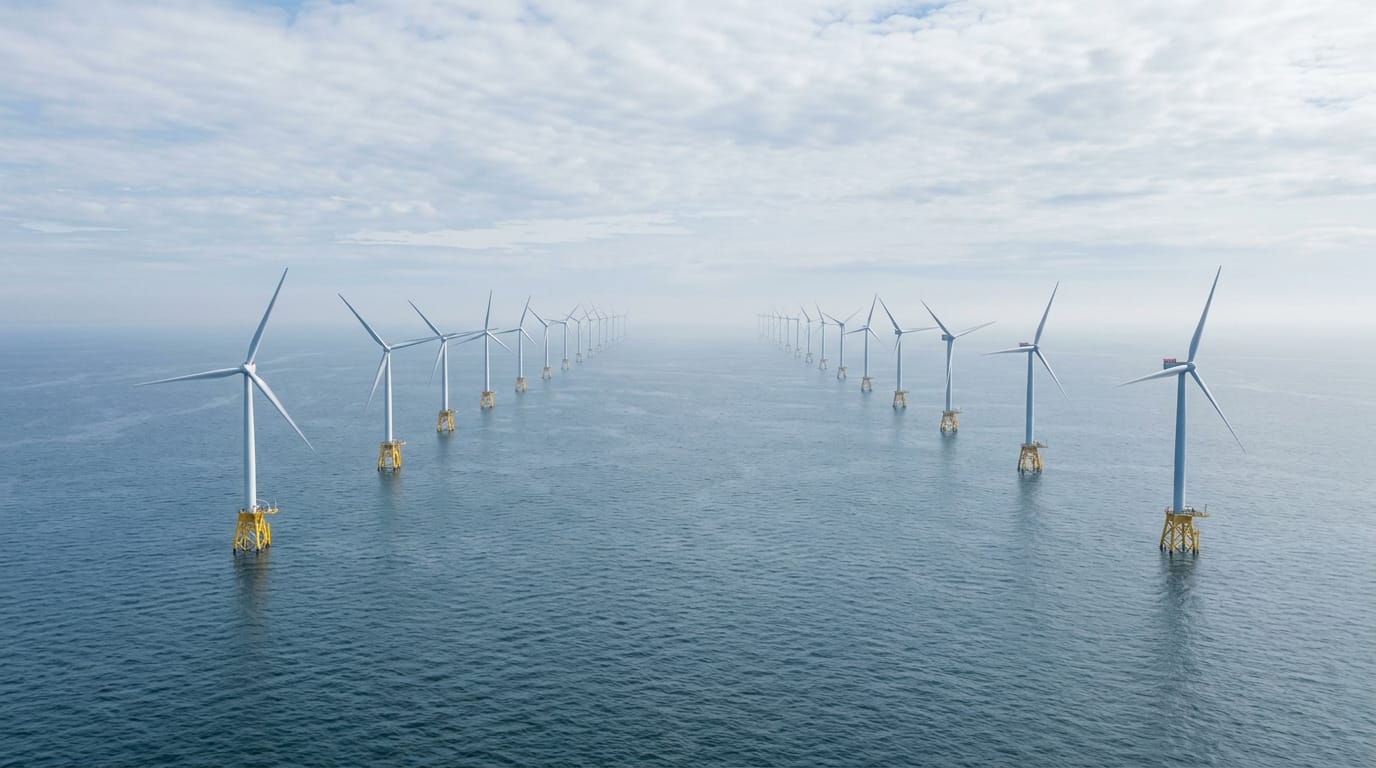
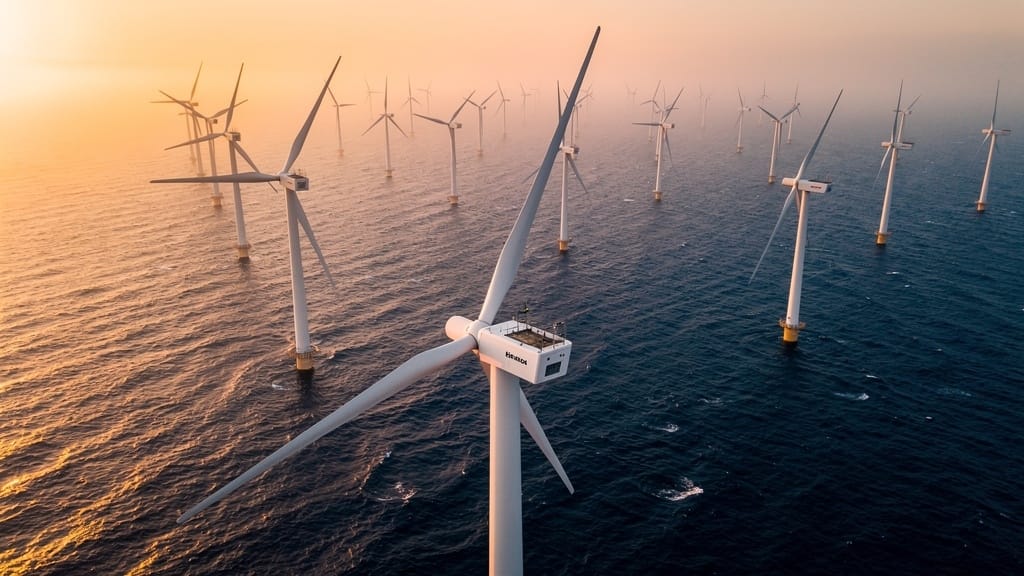
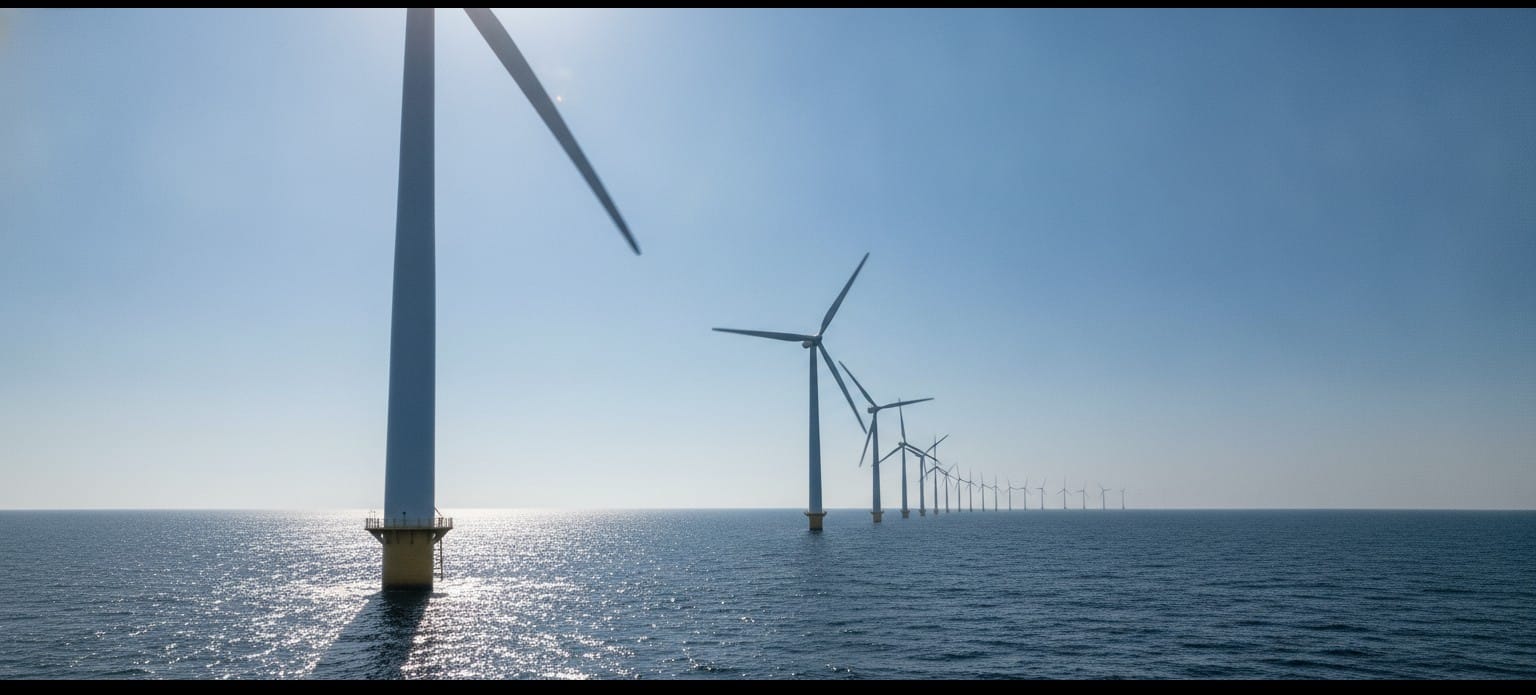
The four policy sites will concentrate a total of 44.2GW of solar capacity: industrial complexes and factory rooftops at 19GW, agrivoltaic and floating solar at 11.1GW, roads, railways, and agricultural waterways at 4.4GW, and schools, parking lots, and traditional markets at 2.5GW. In the wind sector, onshore wind will be converted to a public-led planned-site approach to secure 6GW by 2030, while offshore wind will be supplied at a total of 55GW through annual bidding of 4GW or more over the next decade.
Additionally, the government will introduce a cross-ministerial planned-site system to integrate and manage site and grid information, and will strengthen the institutional foundation for site designation. By linking with "sunshine and wind income villages," the government will enhance local community acceptance, and will pursue renewable energy as a national strategic project through joint site discovery by central and local governments.
Park explained: "The government will not simply focus on expanding supply, but will directly discover sites and design them together with the grid to transform into an electricity-centered nation."
Experts Propose Power Generation Zone Designation and Preemptive Support to Address Regional Constraints
Shin Jae-eun, director of the Forest and Sharing Seed Action Research Institute, pointed out the ambiguity and structural limitations of current site policy.
Shin noted that "the site plan within the basic plan remains unclear," and identified limitations in regional supply plans centered on public parking lots and idle sites. She expressed concern that local governments have experienced serious conflicts and complaints in the process of expanding renewable energy, and that added pressure to ease regulations is increasing administrative burden.
Shin emphasized that clear site discovery and principles centered on specialized institutions are necessary to reduce administrative risk. She particularly stressed that ecologically sensitive areas such as migratory bird arrival sites and habitats (West Sea reclaimed land, freshwater lakes, and others) and DMZ border regions must be avoided in advance to prevent ecosystem damage.
She noted: "The Honam region, which has high renewable energy potential, has a saturated power grid, and areas near the capital region face difficulties in securing sites due to high elevation." As a solution, she emphasized that predictability of grid sites should be increased through Power Generation Zone designation, and preemptive support should be strengthened.
She also stressed that the site policy in the basic plan should be converted to a multi-faceted governance system centered on the Ministry of Climate, Energy and Environment. To this end, she called for establishing regional working groups and support units, avoiding ecologically excellent areas, utilizing regional ecological data, and establishing concrete criteria including distance to demand centers.
She also proposed ensuring sufficient candidate sites and mandating spatial planning, and building broad governance involving energy, ecology, urban planning, and conflict resolution experts.
Renewable Energy Site Design Must Consider Biodiversity and Local Communities
The subsequent discussion was moderated by Lim Jae-min, secretary general of the Energy Transition Forum.
Discussants included Park Eun-jeong, team leader of the Policy Team at Green Korea United; Ko Jae-gyeong, senior research fellow at the Gyeonggi Research Institute's Climate, Environment and Energy Research Division; Jung Ok-sik, senior research fellow at the Chungnam Research Institute's Environment, Energy and Ecology Research Team; and Lee Jae-hyuk, director of the Living Environment and Social Research Division at the Korea Environment Institute.
Park Eun-jeong of Green Korea United's Policy Team pointed out that "the First Renewable Energy Basic Plan has not sufficiently reflected core principles such as demand reduction and ecological standards." She also criticized the failure to link the 100GW expansion target to actual electricity demand reduction, and expressed concern that "climate and energy policy has become a subsidiary means for fostering new industries due to large-scale electricity consumption policies and review of new nuclear power plants."
She emphasized the importance of clearly distinguishing avoidance areas from developable areas at the planned-site stage, and operating the system with a focus on public interest by ensuring that ecologically sensitive areas are avoided.
She also pointed out that the large-scale sites presented by the government, including Sihwa and Hwawong reclaimed land, border regions, and forest fire-damaged areas, carry significant concerns about ecosystem damage. She particularly noted that Sihwa and Hwawong are key stopover sites on the East Asian-Australasian Flyway migration route and face strong local opposition.
She proposed mandating solar installation plans during industrial complex development stages and expanding the use of idle sites. She emphasized that renewable energy expansion must follow the principles of demand reduction, regional distribution and self-sufficiency, energy democracy and justice, and must proceed alongside the closure of coal, nuclear, and gas power plants.
Importance of Shifting From Total Targets to Space-Based 100GW Goals
Ko Jae-gyeong, senior research fellow at the Gyeonggi Research Institute, positively evaluated the government's 2030 target of 100GW supply and the introduction of a public-led planned-site system, while emphasizing that procedural improvements such as avoiding ecologically sensitive areas and strengthening governance are necessary.
He particularly stressed the importance of shifting from simple total targets to 100GW based on actually installable space. He noted that large-scale solar expansion requires meeting complex conditions including land use, environmental impact, local community acceptance, and grid connection, and proposed that quantities and responsible parties be clearly established at each stage from site discovery to commercial operation to systematically manage bottlenecks.
He added that regional targets should be redesigned as implementation targets reflecting regional potential, electricity demand, grid conditions, and land availability, rather than as unilateral allocations from the Central Government.
He emphasized: "The success of the 100GW policy should be evaluated based on actual electricity production rather than approval, and the local production for local consumption principle should also be judged from a power cost perspective." He also stressed: "The planned-site concept should be diversified into complex types (large-scale solar, floating solar, onshore wind), distributed types (industrial complexes, rooftop solar), and rural spatial planning types (agrivoltaic), and legal foundations to support onshore renewable energy must be urgently established."
He further stated: "To strengthen local government's implementation authority and policy tools, objectives, authority, finance, data, and support systems should be designed as a package, an information system should be established, and planned-site must be an institution for implementation rather than a declaration."
Integration of Ecosystem Conservation, Community Participation, and Grid Planning Required
Jung Ok-sik, senior research fellow at the Chungnam Research Institute, positively evaluated the introduction of the public-led planned-site system and emphasized the need for sophisticated design without environmental damage or regional conflict.
He particularly pointed out that "habitat value," including the distribution of endangered species, habitat quality, and ecological connectivity, should be at the core of the site selection process.
Jung noted that to supplement the limitations of national ecological data, precise ecological data from local governments and regional research institutions should be actively utilized from the planned-site stage onward.
He also proposed reflecting the historical, cultural, and community values of regional spaces such as farmland in site evaluation, and establishing a governance system in which experts, civil society, and local residents participate from the early stages of site discovery to incorporate the region's experiential and ecological knowledge.
Jung proposed: "Renewable energy expansion and biodiversity conservation are tasks that must be achieved simultaneously. The planned-site system should be designed to prevent social conflict and realize sustainable energy transition."
Procedure More Important Than Site Selection in Planned-Site System
Lee Jae-hyuk, director of the Living Environment and Social Research Division at the Korea Environment Institute, emphasized that discussion of renewable energy planned-sites has been "focused only on site selection, making procedural questions essential: 'Who will decide, through what procedure, and at what point?'"
He also warned: "In a situation where 56.2GW of new solar capacity must be deployed by 2030, the absence of appropriate procedure design could make planned-site a factor that compresses rather than prevents conflict."
Lee pointed out the uncertainty in offshore wind (55GW) and flagship (12GW) plans, noting that "now is the right time to design the planned-site system with precision."
He presented as a core task the establishment of spatial planning that integrates site, grid, and coal phase-out schedules, and proposed including the possibility of reusing existing grid facilities in coal power plant closure areas as an evaluation criterion. He added that the electricity business information system should disclose "time-series grid capacity" and "expected output control rate" to enable realistic assessment of connection feasibility.
He also proposed a structure that includes staged environmental review and community participation in planning procedures: establishing avoidance criteria at the national planning stage, conducting preliminary surveys and presenting regional revitalization alternatives at the candidate site stage, and completing strategic environmental impact assessment and community consultation before final designation.
He emphasized that role division among central, regional, and local governments must be clarified. He noted that while solar targets are allocated to cities and provinces, approval authority rests with basic local governments, creating potential responsibility gaps. He proposed granting coordination authority to regional governments and implementation responsibility to basic governments, linked with financial support.
He also stressed that concrete institutional design is necessary for individual factory owners to deploy 19GW of solar on industrial complex and factory rooftops, including standard roof lease contracts and structural safety inspection support.
Lee reiterated that planned-site can reduce conflict and increase implementation effectiveness when designed as a procedure integrating sites, grid, environment, and local communities, rather than as simple site discovery. The proposal is that planned-site must settle as an institution for substantive implementation rather than remaining a mere declaration.
Moving Beyond Simple Site Acquisition to Implementation Institution
This forum confirmed that the government's renewable energy planned-site system must move beyond simple site acquisition to become a substantive implementation institution that integrally considers ecosystem conservation, coexistence with local communities, and the realism of the power grid.
The forum was jointly organized by the office of Representative Park Ji-hye and the Forest and Sharing Seed Action Research Institute.