Original Korean article: asiaa.co.kr
English brief by Korea Wind Intelligence, koreawindintel.com
Domestic offshore wind power facilities that entered operation over the past 10 years totalled approximately 365MW. This falls short of even one-tenth of the 4GW that the government has said it will supply annually going forward.
As permit system reforms and large-scale auctions align, the market's centre of gravity is shifting from project discovery to actual construction. Analysts say that if long-term policy consistency is secured, new markets will open for domestic shipbuilding, cable, and power equipment industries.
The Institute for Energy Economics and Financial Analysis (IEEFA) said in a report released on June 9 titled "Public-Private Cooperation Is Needed for South Korea's Offshore Wind Success" that South Korea intends to expand offshore wind at a pace over the next 10 to 15 years that would be unprecedented globally.
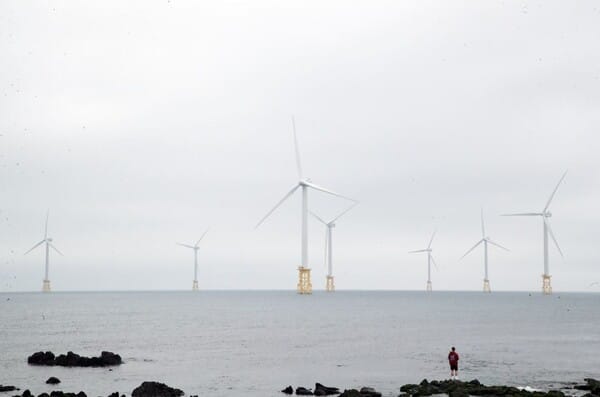
If the plan materializes, demand can spread across domestic manufacturing as a whole, including wind turbines, subsea cables, substructures, power equipment, and installation vessels.
The government's mid- to long-term offshore wind supply plan released in June calls for securing a business foundation of 55GW by 2035 and conducting auctions for approximately 4GW annually from 2026 onwards. The plan envisions starting construction on 10.5GW by 2030 and moving 25GW to the actual supply phase by 2035.
In content from the 12th Basic Plan on Long-term Electricity Supply and Demand released two months later, the 2040 offshore wind target was set at 45GW. The schedule for new capacity was also adjusted to supply 4 to 4.4GW annually from 2029 onwards. Compared with the earlier plan, the final target was reduced by about 20 percent and the achievement timeline was pushed back by five years.